
Ginger, a perennial herbaceous plant with roots that are commonly used fresh or dried, has been highly valued for its numerous health benefits. In the kitchen, it is often used as a spice to add flavor to soups, fish, vegetables, desserts, bread, and other baked goods. Additionally, ginger is used in the production of liquors, syrups, and beer.
While ginger is an Asian spice, many people believe that it is impossible to grow in your own garden: nothing could be further from the truth! To successfully cultivate ginger, follow these tips and guidelines.
When to Plant Ginger
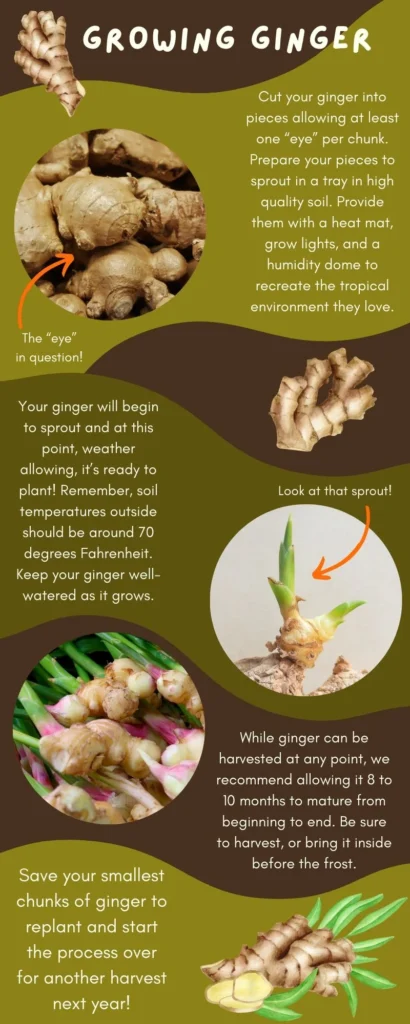
The best time to plant ginger rhizomes (roots) is between late winter and early summer. Ensure that the roots have already produced some shoots.
Because ginger roots need space to develop, you’ll want to choose a large and deep container filled with well-draining, fertile soil. A pot with a diameter of 35 cm can accommodate up to three plants.
Preparing the Soil
If your ginger rhizomes are growing many shoots, you can divide them into smaller pieces (each with at least two shoots) to obtain more plants from one root. Place each piece in the container, making sure they have roots facing upwards and water regularly, at least once a day.
When preparing the soil for your ginger plant, keep in mind that it prefers well-draining, fertile conditions. Mix in some organic matter such as compost or peat moss to improve the soil’s structure and fertility. A pH range of 5.5-6.5 is ideal for ginger growth.
Planting Ginger Rhizomes
Once planted, place the pot in direct sunlight and protect it from frost and wind. The ideal temperature is below 15°C (59°F).
When planting ginger rhizomes, make sure to handle them gently to avoid damaging the roots. Plant the rhizome in the soil, with the shoots facing upwards and the roots facing downwards. Water thoroughly after planting and keep the soil consistently moist but not waterlogged.
Tips for Planting Ginger Rhizomes
- Buy fresh ginger roots at specialty stores that sell organic products; those found in supermarkets might have been treated with chemicals to slow down germination.
- Use a large pot and fertile soil to ensure your ginger plant receives enough nutrients.
- Keep the soil consistently moist but not waterlogged.
Harvesting Ginger
To collect the root, wait until the leaves dry out. You can either use the entire root or store it for later use by drying it naturally in the sun and then grinding it into a powder.
If you don’t plan to use your ginger immediately, you can dry it naturally and grind it into a powder: this way, you can enjoy its full range of health benefits.
Drying Ginger
To dry ginger, start by cutting the root into thin slices or chunks. Place the slices on a paper towel-lined plate or tray and let them air dry for several days. Once they are completely dry, you can grind them into a powder using a spice grinder or mortar and pestle.
Using Dried Ginger
Dried ginger can be stored for up to six months in an airtight container. To use dried ginger, simply grind it into a powder and add it to your favorite recipes.
Converting Dried Ginger to Fresh Ginger
If you want to enjoy fresh ginger but don’t have the time to grow your own, you can convert dried ginger back into fresh ginger. Simply soak the dried ginger in water for several hours or overnight, then chop off the roots and use them as you would fresh ginger.
Conclusion
Growing ginger is easier than many people believe. With proper care and attention, you’ll be enjoying the flavors and health benefits of fresh ginger in no time! Whether you’re looking to grow your own for culinary use or simply appreciate its medicinal properties, we hope this guide has provided you with a solid foundation.
Frequently Asked Questions
1. What’s the best way to store ginger roots?
Ginger roots can be stored by drying them naturally in the sun and grinding them into a powder. This method allows for long-term storage without losing any of its health benefits.
2. How often should I water my ginger plant?
Keep your ginger plant consistently moist but not waterlogged. Watering once a day will ensure that it receives enough moisture to thrive.
3. Can I grow ginger indoors?
Yes, you can grow ginger indoors using a pot and providing sufficient sunlight. However, make sure the temperature remains below 15°C (59°F) for optimal growth.
4. How long does it take for ginger to mature?
Ginger typically takes 5-6 months to mature after planting. Once it flowers, you’ll need to trim the blooms to direct nutrients towards the rhizome.
5. Can I grow multiple plants from a single root?
Yes, you can divide your ginger root into smaller pieces and plant them in separate pots or containers. Each piece should have at least two shoots for optimal growth.
6. How do I know if my ginger is ready to harvest?
Wait until the leaves dry out before harvesting your ginger root. You can then dry it naturally, grind it, or use it fresh in your cooking.
7. Can I grow ginger in a container on a balcony or patio?
Yes, you can grow ginger in a container on a balcony or patio as long as it receives sufficient sunlight and is protected from frost and wind.
Common Problems with Ginger Plants
- Root rot: If the soil is too moist, the roots of your ginger plant may rot. To avoid this problem, make sure to water your plant regularly but not excessively.
- Pests: Keep an eye out for pests such as aphids, whiteflies, and spider mites that can infest your ginger plant. Use organic pest control methods whenever possible.
Tips for Growing Ginger in a Container
If you’re growing ginger in a container, make sure to choose a pot with good drainage holes to prevent waterlogged soil. You’ll also want to use a high-quality potting mix specifically designed for tropical plants like ginger.
When caring for your ginger plant in a container, keep an eye out for signs of overwatering and underwatering. Make sure the soil is consistently moist but not soggy, as this can cause root rot.
Growing Ginger from Seeds
While it’s possible to grow ginger from seeds, this method requires some specialized equipment and care. If you’re interested in growing ginger from seeds, research further to learn about the specific requirements and challenges involved.
Tips for Growing Ginger in a Greenhouse
If you have access to a greenhouse or indoor space with sufficient sunlight, you can grow ginger year-round using high-quality potting mix and adequate watering.
When caring for your ginger plant in a greenhouse, keep an eye out for signs of overwatering and underwatering. Make sure the soil is consistently moist but not soggy, as this can cause root rot.
Conclusion
Growing ginger is easier than many people believe. With proper care and attention, you’ll be enjoying the flavors and health benefits of fresh ginger in no time! Whether you’re looking to grow your own for culinary use or simply appreciate its medicinal properties, we hope this guide has provided you with a solid foundation.
By following these tips and guidelines, you can successfully cultivate ginger in your own garden. Remember to choose high-quality potting mix, provide sufficient sunlight, and maintain consistent moisture levels to ensure optimal growth. With patience and dedication, you’ll be harvesting fresh ginger in no time!
Additional Resources
If you’re interested in learning more about growing ginger or have specific questions about this topic, we recommend checking out the following resources:
- The Royal Horticultural Society (RHS) provides a comprehensive guide to growing ginger, including tips on soil preparation and pest management.
- The USDA’s Plant Hardiness Zone Map can help you determine the best time to plant ginger in your area based on climate and temperature.
By taking advantage of these resources and following our guidelines, you’ll be well on your way to successfully growing delicious and nutritious ginger!


