
As an avid cyclist, understanding slope is crucial for optimizing your ride. Whether you’re a casual rider or a seasoned enthusiast, knowing your average slope can help you distribute your efforts and conserve energy during long rides with significant uphill sections.
There are various methods to calculate slope, ranging from mathematical calculations to more intuitive approaches. Here, we’ll explore both methods and provide practical examples to illustrate their application.
Understanding Slope Calculations
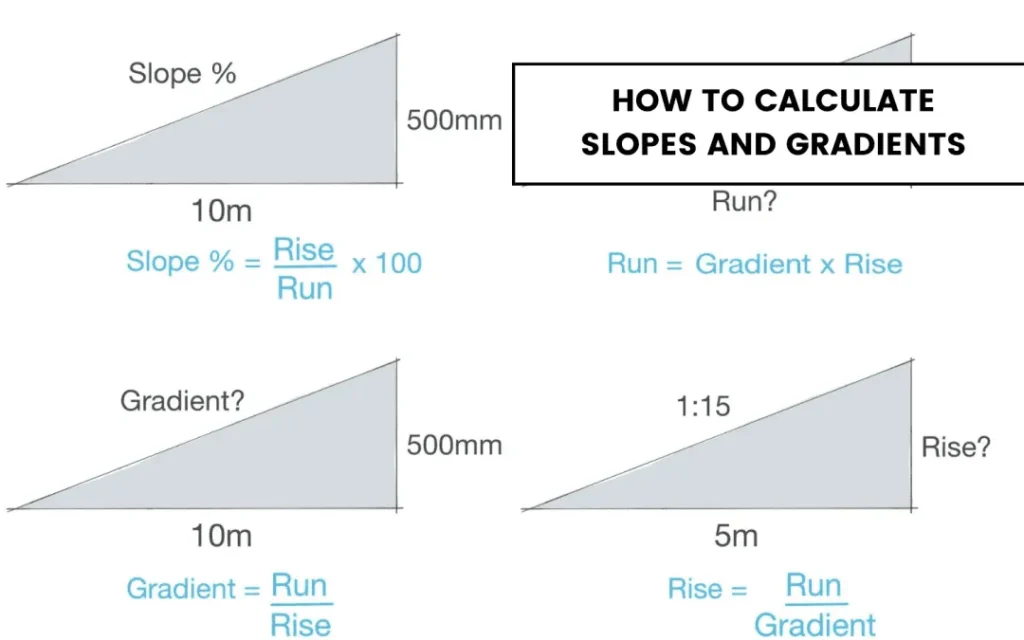
Slope is typically measured as a percentage (in %) and can be calculated using the following formula:
Pedenza in % = dislivello in metri / distanza percorsa in metri * 100
In simpler terms, this means dividing the difference between the final and initial altitudes by the distance traveled and multiplying by 100.
For instance, if you ride for 9 km with a total elevation gain of 800 meters, your average slope would be:
Pedenza % = 800 / 9000 * 100 = 8.8%
This means that over this specific route, you’re facing an uphill slope of approximately 8.8%.
Calculating Time Performed (in seconds)
Understanding how long it takes to complete a ride is equally important for planning and training purposes.
To calculate time elapsed for a given distance, use the following formula:
TIME = distanza in km x 3.600 / velocità in km/ora
Let’s say you’re riding at 40.5 km/h and cover 64 km; your completion time would be approximately:
TIME ≈ 5.688 seconds (or around 95 minutes, or 1 hour and 35 minutes)
This calculation can be useful for planning optimal arrival times based on different velocity profiles.
Modern Cycling Computers: Ranging from Basic to Advanced
With the advancement of technology, modern cycling computers have evolved significantly, incorporating various features that enhance your riding experience. These devices now provide a wealth of data beyond traditional metrics such as distance and speed.
Some key functions of these modern computers include:
- Pendenza (slope) measurement
- Wattage calculations
- Heart rate monitoring
- GPS navigation
- Weather updates
Historically, cycling computers were primarily used for tracking basic performance metrics. However, today’s models are fully-fledged digital assistants that provide valuable insights into your physical condition and the terrain you’re riding on.
Exploring the Features of Modern Cycling Computers
When selecting a modern cycling computer, consider factors such as compatibility with your smartphone or tablet (via Bluetooth), GPS accuracy, battery life, and user interface. Popular brands include Garmin, Polar, and Bryton.
To illustrate this further, let’s compare the features of some popular models:
- Garmin Edge series: Known for their advanced analytics and integration capabilities.
- Polar Vantage series: Focuses on heart rate monitoring and stress tracking.
- Bryton B520: Offers a balance between performance metrics and ease of use.
Best Practices for Choosing Your Cycling Computer
Before investing in a modern cycling computer, research the features that matter most to you. Consider your riding style, terrain preferences, and personal goals.
Additionally, don’t forget to check compatibility with other devices and platforms:
- Garmin Edge series: Works seamlessly with iOS and Android.
- Polar Vantage series: Supports iOS and Android devices.
- Bryton B520: Compatible with both iOS and Android.
Cyclical Performance Optimization
When optimizing your cyclical performance, focus on the following areas:
- Pendenza (slope) management
- Wattage calculation
- Heart rate monitoring
- Terrain analysis
Incorporating these elements into your training routine can lead to significant improvements in overall cycling efficiency.
By using a modern cycling computer and exploring advanced features, you’ll be well-equipped to tackle even the most challenging terrain with confidence.
Stay tuned for more articles on optimizing cyclical performance, featuring expert insights and practical advice.
Advanced Techniques for Maximizing Efficiency
In addition to the techniques mentioned earlier, there are several advanced strategies that can help you maximize your efficiency on the bike:
- Cadence optimization: Adjusting your pedaling cadence to find the optimal balance between speed and power output.
- Pacing and interval training: Using interval training to improve your anaerobic endurance and increase your overall performance.
- Heart rate zone training: Training within specific heart rate zones to optimize your energy expenditure and improve your cardiovascular fitness.
Real-World Applications
To illustrate the importance of slope calculation, let’s consider a real-world example:
Suppose you’re planning a long-distance ride from City A to City B, covering approximately 120 km. The route takes you through a series of hills, with an average elevation gain of 500 meters over the entire distance.
Using the formula above, your average slope would be calculated as follows:
Pedenza % = 500 / 12000 * 100 ≈ 4.2%
This means that over this specific route, you’re facing an uphill slope of approximately 4.2%.
Conclusion
Calculating the average slope of a hill is an essential skill for any serious cyclist. By understanding how to calculate slope and using advanced features like modern cycling computers, you can optimize your performance and make the most of your rides.
Stay informed about the latest developments in cyclical technology and training techniques, and continue to push yourself to new heights on the bike.


