
Introduction
As a homeowner or business owner, it’s essential to understand how to read your water meter to accurately track and manage your water consumption. In this article, we’ll walk you through the process of reading your water meter, highlighting the benefits of doing so, and providing tips for optimizing your water usage.
The Anatomy of a Water Meter
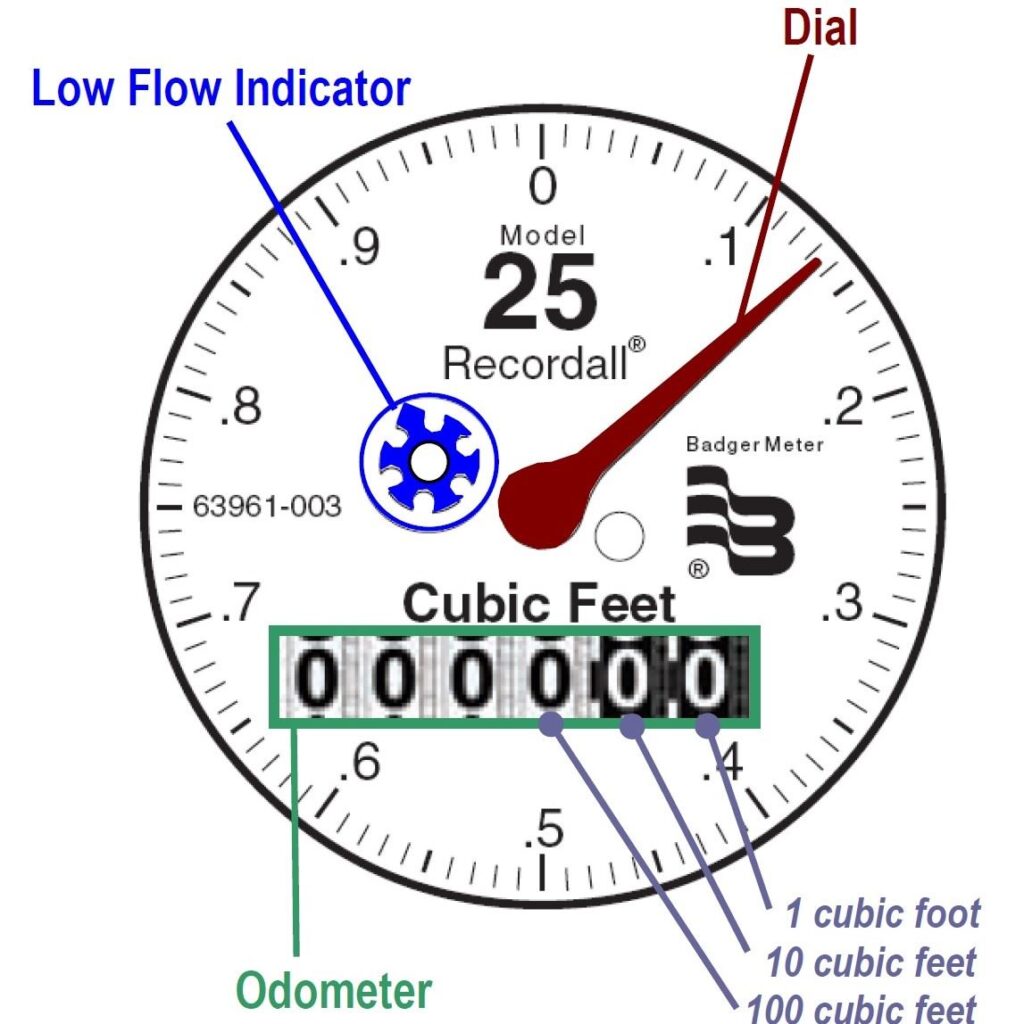
A typical water meter consists of a central dial, often referred to as the “block” or “dial,” surrounded by two tubes: one for water intake and another for water output. The dial displays measurements in cubic meters (m³) and decimal points. There are two primary types of water meters: those with analog dials (also known as “quadrant-type” meters) and those with digital screens.
Reading a Water Meter with Analog Dials
For older models, the reading process involves observing the dial’s quadrants:
- The black numerals on the quadrant indicate the cubic meter readings.
-
Red decimal points are used for precision measurements.
To read your water meter accurately: -
Identify the measurement increments: Note that each black numeral corresponds to a specific measurement increment (e.g., 1000 m³, 100 m³, 10 m³, and 1 m³).
- Observe the dial’s position: Rotate the dial clockwise until the red decimal point aligns with one of the black numerals.
- Determine the measurement: The reading is determined by the numeral on the black quadrant above the aligned red decimal point.
Example Reading:
Suppose you find a water meter with a dial showing:
- Black numeral “4” at the top
- Red decimal point aligned between “2” and “3”
The reading would be approximately 4200 m³ + 0.2 (from the partially displayed red decimal point).
Reading a Water Meter with Digital Screens
For modern models, the reading process is straightforward:
- Locate the digital display: Identify the numeric display on your water meter.
- Read the measurements: Note the integer values on the screen to determine the total cubic meter reading.
Benefits of Regular Water Meter Readings
By regularly reading your water meter, you can:
- Track and manage your water consumption: Accurately monitor your usage patterns to identify areas for improvement.
- Improve water efficiency: Make informed decisions about reducing waste and optimizing your water usage.
- Communicate with your utility provider: Inform your supplier of any changes in your water usage, ensuring accurate billing.
Tips for Effective Water Meter Readings
To ensure you’re getting the most out of your water meter readings:
- Regularly check the meter’s accuracy: Compare your readings to those provided by your utility company.
- Keep records: Document your readings and usage patterns to track changes over time.
- Communicate with your utility provider: Report any discrepancies or changes in your usage to ensure accurate billing.
Best Practices for Auto-Letting
To take advantage of auto-letting, a service that allows you to receive notifications about changes in your water consumption:
- Register for the service: Contact your utility company to sign up for their auto-letting program.
- Verify your meter’s accuracy: Ensure your meter is functioning correctly before using auto-letting.
- Monitor and respond to notifications: Regularly check your emails or phone notifications from your utility provider.
Understanding Water Meter Rounding
To accurately track water consumption, it’s essential to understand how water meters round measurements:
- Rounded measurements: Water meters often display rounded measurements due to the precision of digital displays.
- Significant figures: When reading a digital display, pay attention to significant figures to determine the precise measurement.
Measuring and Calculating Water Consumption
To calculate your water consumption accurately:
- Determine the daily usage: Divide the total cubic meters by 365 (days in a year) for an annual calculation.
- Calculate the monthly usage: Multiply the daily usage by 30 or 31, depending on the month’s length.
Improving Water Efficiency
By understanding your water meter and calculating your consumption accurately:
- Identify leaks: Regularly check for signs of leaks in pipes, fixtures, and appliances.
- Install low-flow fixtures: Replace old faucets and toilets with low-flow models to reduce consumption.
- Implement rainwater harvesting systems: Collect rainwater from roofs or other surfaces to supplement water usage.
Conclusion
Understanding how to read your water meter is a crucial step in managing your water consumption effectively. By following the steps outlined in this article, you’ll be able to track your usage patterns, communicate with your utility provider, and make informed decisions about reducing waste. Take control of your water bill by reading your meter regularly.
Frequently Asked Questions
Q: How often should I read my water meter?
A: Regularly check your meter every 1-2 months to track changes in your usage patterns.
Q: What happens if I don’t know how to read my water meter?
A: Consult the user manual or contact your utility company for assistance with reading and understanding your water meter.
Q: Can I use auto-letting without registering for a service?
A: No, auto-letting services require registration with your utility provider.
Q: How can I ensure accurate billing through regular readings?
A: Regularly compare your readings to those provided by your utility company and report any discrepancies.
Q: What are the benefits of tracking my water consumption?
A: Tracking your water consumption helps you identify areas for improvement, reduces waste, and optimizes your water usage.


