
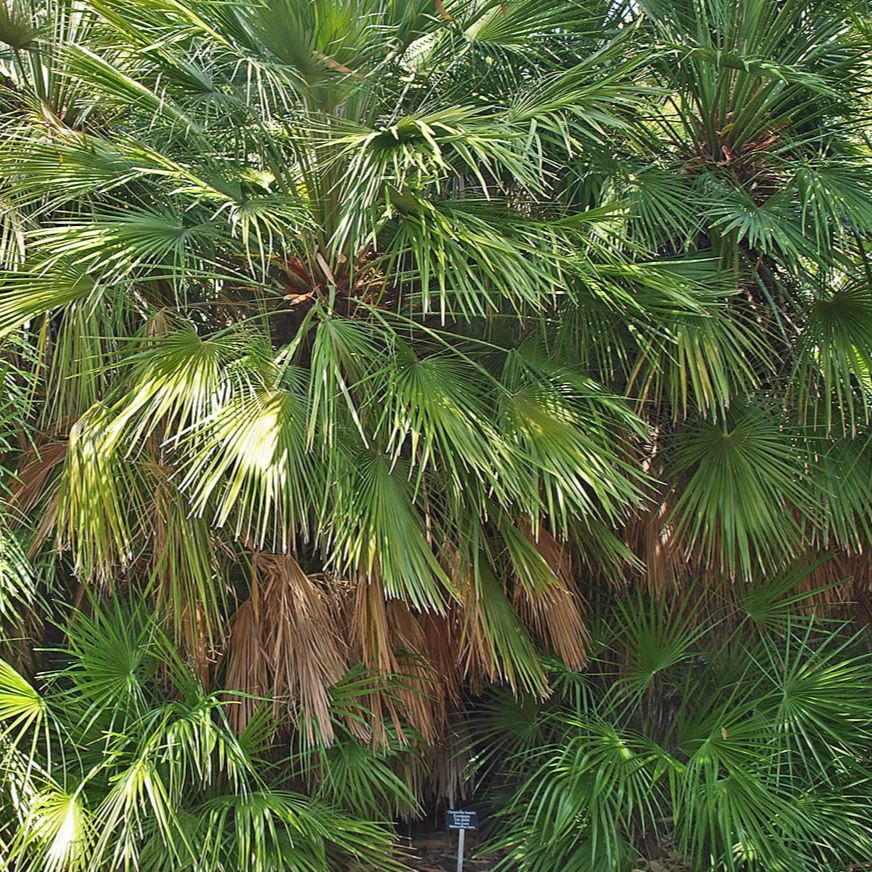
When it comes to palms, the term “Chamaerops” is synonymous with a specific type of palm that is widely recognized and enjoyed in Italy. These palms are not just any ordinary palm; they belong to a unique genus that boasts remarkable characteristics, adaptability, and uses.
Origin and Etymology
The name Chamaerops originates from the Greek words “khamai,” meaning small or prostrate, and “rhops,” which refers to an arborescent shrub. This name accurately describes the compact nature of these palms, even compared to other smaller palm species.
In the past, young stems of a Humilis species were consumed as a vegetable after being boiled. The fruits are astringent and rich in tannins; it is best not to consume them excessively. Leaves, although not eaten, are used for crafting various items such as baskets, hats, umbrellas, bedding, ropes, due to their fibrous nature.
The Humilis species is found in the Padua Botanical Garden and has been cultivated since 1585. It gained fame when Johann Wolfgang von Goethe visited Italy in 1786 and was captivated by it; he later wrote about its metamorphosis in his work “Metamorfosi delle piante.”
Chamaerops: Characteristics
These palms belong to the Arecaceae family, with only two species within the Chamaerops genus. The Chamaerops humilis grows naturally in Italy and can be found primarily in southern Italy and its main islands.
These evergreen palms have robust roots, an erect stem, and a tuft of leaves on top. Near the base of the plant, secondary shoots emerge that may appear as alternate stems. Leaves are dense green and tough to touch. They unfold from their closed shape into a fan-like form after ripening.
In spring and summer, flowers develop at the base of the leaves in beautiful inflorescences called panicles or “pannocchia” hanging downwards. The flowers have a yellow color but are very small.
After the flowers bloom, seed pods (fruits) develop, containing a hard wooden seed inside. Seeds are carried by wind to other areas where they may germinate.
Chamaerops: Cultivation
Climate is an essential factor for these plants, which can be adapted within certain limits. These palms thrive both in vases and outdoor settings if not in extremely cold climates.
They grow at a slow pace, so patience is necessary when caring for them. It is crucial to care for the leaves by gently cleaning them with soft cloth-infused water and keeping the soil consistently moist. When the container becomes too small for our palm, it’s time to repot using well-draining, leaf-based soil mixed with coarse sand.
Once a month, you can fertilize your Chamaerops during spring and summer without overdoing it, choosing a fertilizer containing macro- and microelements like iron (Fe), manganese (Mn), copper (Cu), zinc (Zn), boron (B), molybdenum (Mo), and magnesium (mg).
When noticing that one of your leaves is drying out or getting damaged, you can remove it. However, Chamaerops palms cannot be pruned.
Chamaerops: Species
There are only two species in the Chamaerops genus: Humilis and Excelsa. The Excelsa has been introduced to Europe from Japan, where it was previously identified as “Trachycarpus fortunei.” It can thrive both indoors and outdoors on various soil types and can reach heights of over 3 meters.
The leaves of Excelsa are fan-shaped but larger and softer compared to Humilis. The tips tend to become pendulous. The flowers are yellow, grouped in panicles at the base of the leaves.
Humilis is the only species that naturally grows in Italy, producing giallo infiorescenze pannocchie (yellow flower clusters) and fruit of an ellipsoidal shape with a reddish or yellow color. In our peninsula, it is also known as “palma di San Pietro” or “nana palm.”
Chamaerops: Health Issues
While not particularly vulnerable to diseases, Chamaerops palms can experience health issues if not cared for properly.
When their environment becomes too dry, the leaf tips become brittle, and to prevent further damage, we must trim off the affected parts which then regenerate.
We must also be cautious with repotting, as failure to do so at the right time may lead to negative effects on our palm plant.
Propagation of Chamaerops Palms
Chamaerops palms can be propagated using leaf cuttings, division, or seeds. However, seed propagation is more challenging and often results in weak plants.
To propagate through leaf cuttings, take a healthy leaf from the mother plant and carefully remove it from its base. Allow the leaf to dry for a few days before planting it in a well-draining potting mix. Keep the soil consistently moist until roots develop.
For division, separate the palm into smaller sections, making sure each section has a sufficient amount of roots. Plant the separated sections in a new location with adequate light and water them regularly.
Common Pests and Diseases Affecting Chamaerops Palms
While Chamaerops palms are not particularly vulnerable to diseases, they may suffer from parasitic insects if their environment is too dry or improperly cared for.
Some common pests affecting palm plants include:
- Mealybugs: Small, white, cottony insects that feed on sap and can cause damage to the plant.
- Spider mites: Tiny, spider-like insects that feed on sap and can cause yellowing of leaves.
- Scale insects: Armored or soft-bodied insects that feed on sap and can cause damage to the plant.
To control pests, treat your palm with insecticidal soap or neem oil according to the product’s instructions. Remove any affected areas of the plant to prevent further infestation.
Common Health Issues Affecting Chamaerops Palms
While not particularly vulnerable to diseases, Chamaerops palms can experience health issues if not cared for properly.
Some common health issues affecting palm plants include:
- Leaf tip damage: When leaf tips become brittle due to dryness or overwatering, it’s essential to trim them off and allow the plant to regenerate.
- Root rot: Overwatering can cause root rot, which can be fatal to the plant. Make sure to water your palm sparingly and ensure good drainage in the potting mix.
- Nutrient deficiencies: Chamaerops palms require macro- and microelements like iron (Fe), manganese (Mn), copper (Cu), zinc (Zn), boron (B), molybdenum (Mo), and magnesium (mg). Fertilize your palm regularly to prevent nutrient deficiencies.
Conclusion
This article aimed to introduce you to the fascinating world of Chamaerops palms. These plants offer a unique blend of adaptation, beauty, and utility.
By understanding their characteristics, cultivation requirements, and health concerns, you can enjoy having these wonderful plants in your home or garden.
Whether you are an experienced gardener or just starting out, it is worth learning more about the many benefits Chamaerops palms have to offer.
Frequently Asked Questions
- What type of climate do Chamaerops palms prefer?
They prefer a moderate climate with some humidity, which they can adapt within certain limits.
- How often should I fertilize my Chamaerops palm?
Fertilization should be done once a month during spring and summer without overdoing it.
- Can I trim the leaves of my Chamaerops palm?
No, Chamaerops palms cannot be pruned; instead, damaged leaves can be removed.
- How often do Chamaerops palms need watering?
The soil should always remain consistently moist.
- What are the common health issues affecting Chamaerops palms?
Chamaerops palms can experience health issues if not cared for properly, including leaf tip damage, root rot, and nutrient deficiencies.
- Can I propagate my Chamaerops palm using seeds?
Yes, but seed propagation is more challenging and often results in weak plants.
- How do I control pests affecting my Chamaerops palm?
Treat your palm with insecticidal soap or neem oil according to the product’s instructions and remove any affected areas of the plant to prevent further infestation.
- Can I grow a Chamaerops palm indoors?
Yes, but ensure that it receives adequate light and maintains a moderate temperature (around 65-75°F).


