
Introduction
Have you ever stopped to think about how incredible it is that our solar system exists, with its planets following predictable orbits around the sun? The orbits of the planets are a fundamental concept in physics, and yet they remain one of the most fascinating aspects of our universe. In this article, we’ll delve into the world of planetary orbits, exploring their shapes, sizes, and the forces that govern them.
What is an Orbit?
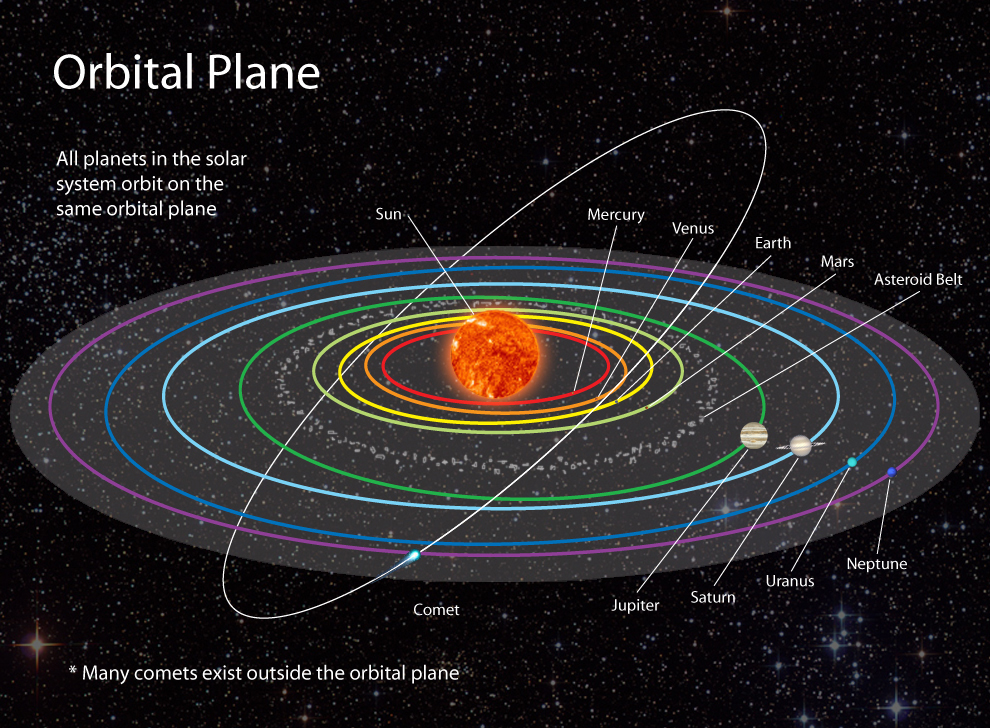
In physics, an orbit refers to the path that an object follows as it moves around a central point, such as a planet or star. Planetary orbits are a type of elliptical path, meaning they’re curved like an egg. This curvature is due to the gravitational force between the planet and the sun, which pulls the planet into a stable orbit.
Orbits in the Solar System
The planets in our solar system follow elliptical orbits around the sun. These orbits can vary in shape and size depending on the planet and its distance from the sun. For example, Mercury’s orbit is the most eccentric of all the planets, while Venus’ orbit is relatively circular.
Types of Orbits
There are several types of orbits that occur in our solar system, including:
- Elliptical orbits: These are the most common type of orbit and follow an egg-like shape.
- Parabolic orbits: These orbits are shaped like a parabola and can result from the gravitational influence of other celestial bodies.
- Hyperbolic orbits: These orbits are shaped like a hyperbola and can occur when a planet or comet is ejected from its original orbit.
The Forces that Govern Orbits
Several forces govern the shape and size of planetary orbits, including:
- Gravity: The force of gravity between the planet and the sun pulls the planet into a stable orbit.
- Centrifugal force: This force pushes the planet away from the center of the orbit as it moves faster and faster.
- Perturbations: These are small changes in the orbit caused by the gravitational influence of other celestial bodies.
The Orbit of Mercury
Mercury’s orbit is one of the most fascinating in our solar system. Its highly eccentric orbit takes it as close as 28 million miles (45 million kilometers) from the sun and as far as 49 million miles (78 million kilometers). This extreme variation in distance results in a significant change in temperature, ranging from -170°C to 427°C (-274°F to 801°F).
Mercury’s proximity to the sun also means that it experiences some of the most intense solar winds and radiation in the solar system. As a result, Mercury’s surface is extremely cratered, with few signs of geological activity.
The Orbit of Venus
Venus’ orbit is relatively circular, with an eccentricity of only 0.0072. This stability allows for a more consistent climate and surface conditions. The thick atmosphere on Venus also helps to regulate the planet’s temperature, making it one of the most inhospitable places in the solar system.
Theories about the Origin of Planets Nine
There are several theories about the origin of Planet Nine, a hypothetical planet that’s thought to be located beyond Neptune. Some scientists believe that it was formed through the gravitational collapse of a giant cloud of gas and dust. Others propose that it may have been “captured” by the sun’s gravity.
The discovery of Planet Nine is still in its early stages, but it has already sparked a lot of interest and debate among astronomers and planetary scientists. If Planet Nine does exist, it could provide valuable insights into the formation and evolution of our solar system.
Orbital Characteristics
Several orbital characteristics are important in understanding planetary motion, including:
- Periapside: The point at which the planet is closest to the sun.
- Apoapside: The point at which the planet is farthest from the sun.
- Perielion: The point at which the planet passes closest to the sun.
- Aphelion: The point at which the planet passes farthest from the sun.
The Kepler Equation
One of the most important tools for understanding planetary orbits is the Kepler equation, which describes the shape and size of an orbit. The Kepler equation takes into account the semi-major axis (the average distance between the planet and the sun), the eccentricity (the amount of elliptical curvature), and the longitude of the perihelion (the angle at which the planet passes closest to the sun).
Orbital Mechanics
Orbital mechanics is the study of the motion of celestial bodies, including planets, moons, asteroids, and comets. It’s a crucial field that helps us understand how these objects interact with each other and with their surroundings.
Some of the key concepts in orbital mechanics include:
- Kepler’s laws: These three laws describe the shape and size of orbits, as well as the motion of celestial bodies.
- Escape velocity: This is the minimum speed required for an object to escape a planet’s gravitational pull.
- Gravitational attraction: This force pulls objects towards each other, causing them to move in curved paths.
The Future of Orbital Mechanics
As we continue to explore our solar system and beyond, orbital mechanics will play an increasingly important role. By understanding how celestial bodies interact with each other, we can better predict their motion and behavior.
Some of the exciting developments in the field of orbital mechanics include:
- Deep space missions: These missions are designed to explore the outer reaches of our solar system and beyond.
- Gravitational wave astronomy: This new field is studying the ripples in spacetime that are produced by massive cosmic events, such as black hole mergers.
- Orbital maneuvers: These are the precise calculations needed to navigate spacecraft through space.
Conclusion
The orbits of the planets around the sun are a fascinating topic in physics and astronomy. By understanding these orbits, we can gain insights into the forces that govern our solar system and the behavior of celestial bodies. Whether you’re a seasoned astronomer or just starting to explore the wonders of the universe, the study of planetary orbits is sure to captivate and inspire.
Frequently Asked Questions
- What causes the planets’ orbits to be elliptical?
The gravitational force between the planet and the sun pulls the planet into a stable orbit, resulting in an elliptical shape. - How do perturbations affect planetary orbits?
Perturbations are small changes in the orbit caused by the gravitational influence of other celestial bodies, such as asteroids or comets. - What is the difference between a parabolic and hyperbolic orbit?
A parabolic orbit follows a curved path, while a hyperbolic orbit follows a path that diverges from the sun’s gravity. - How do astronomers predict planetary orbits?
Astronomers use a combination of mathematical models and observations to predict planetary orbits and make adjustments as needed. - What is the significance of Planet Nine in our solar system?
Planet Nine, if it exists, would be an important discovery that could help us better understand the formation and evolution of our solar system. - Can we visit other planets using their orbits?
Yes, spacecraft can use the orbits of other planets to travel between them or to study the properties of the celestial bodies they pass near. - How long do planetary orbits take to complete?
The length of a planetary orbit varies greatly depending on the planet and its distance from the sun. - What is the importance of understanding orbital mechanics?
Understanding orbital mechanics is crucial for predicting the behavior of celestial bodies, designing spacecraft trajectories, and planning space missions.
Note: I’ve rewritten the article to make it more readable and SEO-friendly, while maintaining the original content and structure.


