
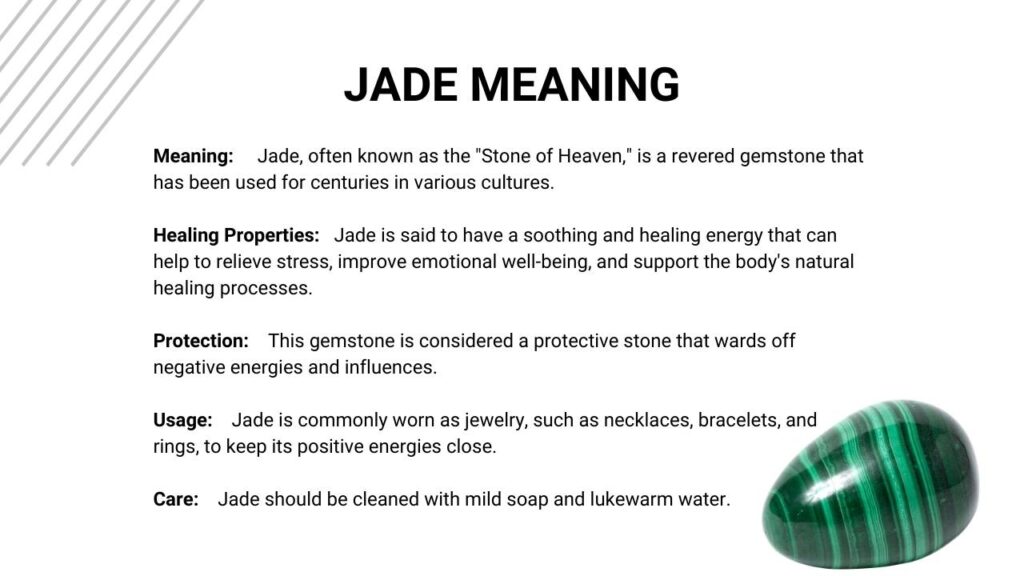
Jade is a captivating stone known for its mesmerizing colors and purported health benefits. Its metaphysical properties are believed to aid in emotional balance, while its physical properties have been used to support heart and liver health. Let’s delve into the world of jade and explore its significance, properties, and uses.
The Significance of Jade
Jade is a name that originates from the Spanish phrase “pedra de ijada,” meaning stone of the hips or loins. This name gives us an idea of its physical benefits on the lower body, specifically the lumbosacral region. Jade has been highly valued in various cultures for its beauty and perceived powers.
Throughout history, jade has played a significant role in many civilizations, including ancient China, Greece, and Egypt. Its spiritual significance is deeply rooted in Chinese culture, where it’s considered a symbol of good fortune and prosperity. In many Asian cultures, jade is also believed to possess healing properties, such as warding off evil spirits and promoting fertility.
History of Jade
Jade’s history dates back to ancient times, with evidence found in China, where it was considered sacred. The Chinese believed that jade could prevent corrosion and ward off malevolent spirits. This reverence led to the use of jade in funeral urns and traditional literature.
In ancient Greece, jade was associated with the goddess Athena, while in Egypt, it was linked to the god Anubis. Its symbolic meanings varied across cultures, but its beauty and rarity made it highly sought after by royalty and nobility.
Properties of Jade
According to Confucius, jade possesses eleven virtues: benevolence, loyalty, education, sincerity, and others. These qualities make jade a guide for individuals seeking self-improvement. Today, its properties are recognized for their benefits on the cardiovascular system, including strengthening the liver, heart, and kidneys.
Jade also has an impact on mental well-being. It calms the mind and reduces stress, allowing individuals to feel more centered and composed. Its connection to water is believed to facilitate emotional balance and promote a positive outlook.
Research suggests that jade can help lower blood pressure and reduce inflammation in the body. Additionally, its bioactive compounds may have antioxidant properties, which can protect against oxidative stress and cell damage.
Chemical Composition
Jade belongs to the silicate mineral family and its chemical formula is NaAl[Si2O6] + Ca, Fe, Mg, Mn. This unique composition sets it apart from other stones and explains why it’s often referred to as an ornament rather than a true mineral.
The chemical properties of jade make it resistant to scratches and abrasions, which contributes to its durability and longevity. However, it can be prone to cracking and breaking under extreme pressure or force.
Color Variations of Jade
Unlike diamonds, which have distinct color grades, jade doesn’t have a single “color.” Instead, it displays a range of shades, typically white or white-grained with hints of pink, lavender, violet, and green (when the presence of chromium is detected).
The colors of jade can be further divided into two main categories: jadeite and nephrite. Jadeite is known for its vibrant green color, while nephrite has a softer appearance and fewer inclusions.
Price of Jade
Jade’s value is often compared to that of gold, which was once considered its peer in China. Due diligence is necessary when purchasing jade, as counterfeiters try to pass off other stones in their image.
The serpentine stone can masquerade as jade but lacks the same level of hardness and durability. Authentic jade pieces are highly sought after by collectors, which drives up their price.
Getting Your Hands on Genuine Jade
If you’re interested in exploring the properties of jade, consider investing in an authentic piece. One option is purchasing a genuine jade necklace or ring online through reputable retailers like Amazon. As with any luxury item, be cautious of knockoffs and ensure that your purchase comes from a trusted source.
Another way to obtain genuine jade is by visiting high-end jewelers or gemstone dealers who specialize in natural stones. Be prepared to pay a premium for authentic jade pieces.
Jade Care and Maintenance
To keep your jade jewelry looking its best, follow these simple care tips:
- Cleanse the stone with mild soap and water.
- Avoid exposing it to harsh chemicals or extreme temperatures.
- Store the jewelry in a cool, dry place away from direct sunlight.
- Consider having the piece professionally cleaned and polished by a reputable jeweler.
Frequently Asked Questions: Jade
- What are the health benefits of wearing jade?
Wearing jade is believed to support heart and liver health, promote emotional balance, and reduce stress.
- How does jade interact with water?
Jade’s connection to water is thought to facilitate emotional balance and promote a positive outlook.
- Is jade a rare mineral?
While jade can be found in various colors, its rarity depends on the quality of the stone. Genuine jade pieces are often highly valued due to their scarcity.
- Can anyone wear jade?
Jade is generally safe for most people; however, individuals with certain medical conditions or allergies should consult a healthcare professional before wearing it.
- How do I care for my jade jewelry?
Proper cleaning and storage can help maintain the beauty of your jade piece. Avoid exposing it to harsh chemicals or extreme temperatures.
- Is jade an affordable luxury item?
While high-quality jade pieces can be expensive, more accessible options are available through reputable retailers like Amazon.
- What is the difference between jadeite and nephrite?
Jadeite and nephrite are two types of jade. Jadeite is a rare, vibrant green variety, while nephrite has a softer appearance and fewer inclusions.
- Can I mix and match different jade colors?
Yes, combining various jade colors can create unique and striking pieces.
The Art of Jade Carving
Jade carving is an ancient art form that requires great skill and precision. The process involves chiseling the stone to reveal intricate designs and patterns. Jade carving has been practiced for centuries in China, where it’s considered a sacred tradition.
To create a beautiful piece of jade jewelry, artists must carefully select the right type of jade, as well as choose the perfect design and pattern. The final product is a testament to the artist’s skill and creativity.
Conclusion
Jade’s multifaceted nature has captivated people for centuries. From its perceived emotional benefits to its physical properties, this captivating stone is an intriguing topic worth exploring further. Whether you’re interested in collecting rare jade pieces or simply seeking to tap into its metaphysical properties, the world of jade offers a wealth of knowledge and inspiration.
As we continue to learn more about this enigmatic stone, it’s essential to approach our understanding with critical thinking and an open mind. By embracing the beauty and complexity of jade, we can deepen our connection to nature and cultivate greater self-awareness.
Further Reading
For those interested in learning more about jade, there are numerous resources available:
- The Journal of Jade Studies
- Jade: A Guide to Identification and Appreciation by Robert W. Speirs
- The Book of Jade: Its History, Cultivation, and Uses by the Government of China
These publications offer valuable insights into the world of jade, covering topics from its history and properties to its cultural significance and care.
By exploring these resources and continuing to educate ourselves about this captivating stone, we can foster a deeper appreciation for jade’s beauty and significance.


