
Introduction to Photocatalysis
Photocatalysis, also known as photochemical reaction or photoreaction, is a process that uses light energy to activate chemical reactions. This technology has been used for decades to purify the air by reducing concentrations of suspended particles in the atmosphere through the action of titanium dioxide and sunlight.
What is Photocatalysis?
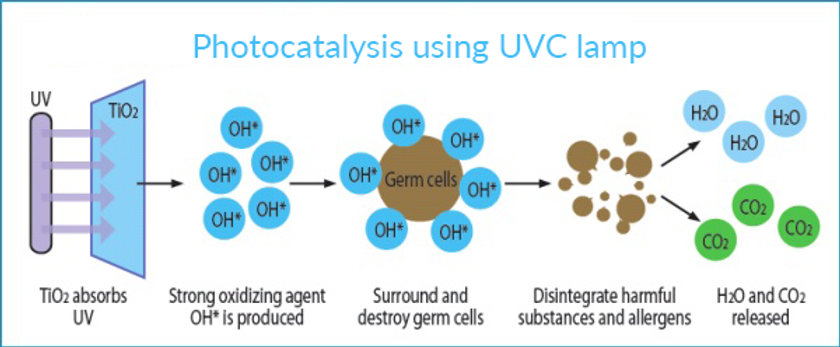
Photocatalysis is an electrochemical reaction that involves the interaction between a catalyst, light, and reactants. The catalyst, typically a metal oxide, absorbs light energy from the sun or artificial sources, which triggers a chemical reaction that breaks down pollutants into harmless substances.
How Does Photocatalysis Work?
The process of photocatalysis works as follows:
- Light (solar or UV) is absorbed by the catalyst, typically titanium dioxide.
- The light energy excites the electrons in the catalyst, creating a reactive species called radicals.
- These radicals interact with pollutants such as nitrogen oxides and particulate matter, breaking them down into harmless substances.
Photocatalysis in Building Construction
In building construction, photocatalytic technology is used to create “mangi-smog” materials that can absorb and break down pollutants. These materials are made from titanium dioxide mixed with cement and other binders, creating a durable and long-lasting surface that can reduce air pollution.
History of Photocatalysis
The use of photocatalysis in building construction dates back to the early 2000s, when Italian architects began experimenting with “mangi-smog” materials. The technology gained popularity after Expo 2015 in Milan, where the Palazzo Italia building featured a large-scale application of photocatalytic tiles.
Applications of Photocatalysis
Photocatalysis has applications beyond building construction:
- Air and Water Purification: Photocatalysis is used to clean polluted air and water by breaking down pollutants into harmless substances.
- Medical Applications: Photocatalysis is used to kill cancer cells and treat diseases caused by pollutants.
- Industrial Applications: Photocatalysis is used to produce self-cleaning surfaces, such as glass and ceramics, that can reduce the need for cleaning chemicals.
Photocatalytic Materials
Titanium dioxide is the most commonly used photocatalyst in building construction and other applications. This material has several benefits:
- Durability: Titanium dioxide is resistant to weathering and UV radiation.
- Effectiveness: Titanium dioxide is highly effective at breaking down pollutants.
- Safety: Titanium dioxide is non-toxic and does not release hazardous chemicals.
Types of Photocatalytic Materials
There are several types of photocatalytic materials, including:
- Titanium Dioxide (TiO2): The most commonly used photocatalyst in building construction.
- Zinc Oxide (ZnO): Used in self-cleaning surfaces and air purifiers.
- Copper Oxide (CuO): Used in solar cells and air purifiers.
Photocatalytic Materials for Building Construction
Photocatalytic materials can be used in various building construction applications, including:
- Roofs: Photocatalytic tiles can be applied to roofs to reduce air pollution.
- Walls: Photocatalytic paints can be applied to walls to reduce air pollution.
- Floors: Photocatalytic coatings can be applied to floors to reduce air pollution.
Photocatalytic Materials for Air and Water Purification
Photocatalytic materials can also be used in air and water purification applications, including:
- Air Purifiers: Photocatalytic materials can be used in air purifiers to remove pollutants from the air.
- Water Purifiers: Photocatalytic materials can be used in water purifiers to remove pollutants from water.
Photocatalytic Materials for Medical Applications
Photocatalytic materials can also be used in medical applications, including:
- Cancer Treatment: Photocatalytic materials can be used to kill cancer cells.
- Disease Treatment: Photocatalytic materials can be used to treat diseases caused by pollutants.
Challenges and Limitations of Photocatalysis
While photocatalysis has several benefits, it also faces challenges and limitations, including:
- Efficiency: The efficiency of photocatalytic reactions can vary depending on the catalyst and reaction conditions.
- Cost: The cost of photocatalytic materials and applications can be high.
- Scalability: Photocatalytic technology is still in its early stages of development, and scaling up production can be challenging.
Future Developments and Applications
Research and development are ongoing to improve the efficiency and scalability of photocatalysis. Potential future developments and applications include:
- New Catalysts: Research into new catalysts with improved efficiency and stability.
- Improved Materials: Development of improved materials with enhanced photocatalytic activity.
- Integration with Other Technologies: Integration of photocatalysis with other technologies, such as solar cells and energy storage systems.
Conclusion
Photocatalysis is a powerful technology that uses light energy to activate chemical reactions. With its applications in building construction, air and water purification, medical applications, and industrial applications, photocatalysis has the potential to significantly reduce air pollution and improve indoor air quality. While challenges and limitations exist, ongoing research and development are addressing these issues, paving the way for further growth and adoption of this technology.
FAQs
What are the benefits of photocatalytic materials?
Photocatalytic materials offer several benefits, including:
- Reduced air pollution
- Improved indoor air quality
- Longer-lasting surfaces
- Cost-effective cleaning
How do photocatalytic materials work?
Photocatalytic materials work by absorbing light energy from the sun or artificial sources, which triggers a chemical reaction that breaks down pollutants.
Are photocatalytic materials safe?
Yes, titanium dioxide is non-toxic and does not release hazardous chemicals. However, it’s essential to follow proper safety protocols when handling photocatalytic materials.
Can I use photocatalytic materials for any application?
Photocatalytic materials can be used in a variety of applications, including building construction, air and water purification, medical applications, and industrial applications.



