
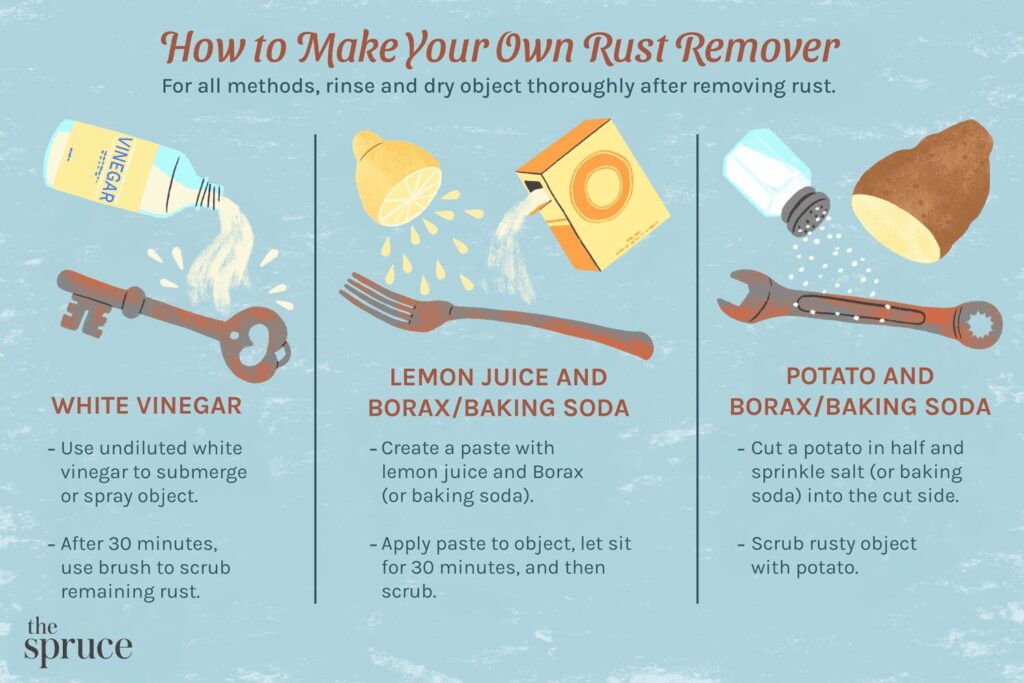
Rust is a common problem that can affect various materials, including iron and other metals. It’s essential to understand the causes of rust and how to remove it effectively to prevent further damage. In this article, we’ll explore different methods for removing rust from metal surfaces and textiles.
What Causes Rust?
Rust is a type of corrosion that occurs when iron or its alloys, such as steel, react with oxygen and moisture in the presence of other environmental factors. This reaction leads to the formation of iron oxide, which forms a flaky, reddish-brown substance known as rust.
Methods for Removing Rust from Metal Surfaces
There are several methods for removing rust from metal surfaces, including mechanical and chemical approaches.
Mechanical Removal Methods
Mechanical removal involves using tools or materials to physically remove the rust from the surface. Here are a few methods:
- Sanding: Using a sanding block or sandpaper can help remove loose rust particles.
- Welding: In some cases, welding can be used to repair damaged areas and remove rust.
- Blasting: Using compressed air or water to blast away rust particles.
Chemical Removal Methods
Chemical removal involves using chemicals to dissolve or break down the rust. Here are a few methods:
- Converters: These are specialized substances that convert rust into an inert, colored compound that can be easily painted over.
- Acidic solutions: Certain acids, such as vinegar or citric acid, can help dissolve and remove rust.
Types of Converters
There are several types of converters available on the market, including:
- Ferox Convertitore Ruggine: A popular converter that creates a protective film to prevent future rust formation.
- Arexon Ferox Convertitore Ruggine: Another well-known converter that is effective at removing rust.
Important Notes
When using chemical removal methods, it’s essential to follow proper safety precautions and use the correct chemicals for the job. Additionally, some converters may require additional preparation or maintenance to ensure optimal performance.
Removing Rust from Textiles
Rust can also affect textiles, particularly wool, silk, and other natural fibers. Here are a few methods for removing rust stains:
- Salt and lemon juice: Mix salt and lemon juice to create a paste, apply it to the stain, and let it sit before washing.
- Hydrogen peroxide: Apply hydrogen peroxide to the stain, let it sit, and then wash as usual.
Preventing Rust from Returning
To prevent rust from returning, follow these best practices:
- Regularly clean and maintain metal surfaces: Regular cleaning and maintenance can help prevent rust formation.
- Apply a protective coating: Applying a protective coating, such as paint or varnish, can help prevent rust from forming.
- Store metals properly: Store metals in dry, well-ventilated areas to prevent moisture buildup.
- Avoid exposure to saltwater and acidic environments: Saltwater and acidic environments can accelerate rust formation.
Common Mistakes to Avoid
When removing rust, avoid the following common mistakes:
- Using the wrong cleaning solution: Using the wrong cleaning solution can damage the metal surface or leave behind residues that attract dirt.
- Not following safety precautions: Not following safety precautions can result in injury or illness.
- Applying too much pressure: Applying too much pressure can damage the metal surface or cause it to weaken.
Conclusion
Removing rust can be a challenging task, but with the right techniques and materials, it’s possible to effectively remove rust from metal surfaces and textiles. By understanding the causes of rust and using the correct methods for removal, you can prevent further damage and restore your materials to their original condition.
Frequently Asked Questions (FAQs)
- What is the best way to remove rust from a metal surface?
- The best method for removing rust from a metal surface depends on the type of metal, its condition, and the desired outcome. Mechanical removal methods may be effective for small areas, while chemical removal methods can be more suitable for larger areas or severe rust damage.
- What are some common converters used to remove rust?
- Ferox Convertitore Ruggine and Arexon Ferox Convertitore Ruggine are two popular converters used to remove rust from metal surfaces.
- How do I remove rust stains from textiles?
- Mix salt and lemon juice to create a paste, apply it to the stain, and let it sit before washing. Alternatively, apply hydrogen peroxide to the stain, let it sit, and then wash as usual.
- What safety precautions should be taken when using chemical removal methods?
- When using chemical removal methods, always follow proper safety precautions, including wearing protective gloves, eyewear, and a mask. Ensure you’re working in a well-ventilated area, and use the correct chemicals for the job.
- Can rust damage metal surfaces beyond repair?
- In some cases, severe rust damage can be irreversible, but it’s often possible to remove rust and restore the surface to its original condition.
By understanding the causes of rust and using the correct methods for removal, you can effectively remove rust from metal surfaces and textiles, restoring them to their original condition.


