
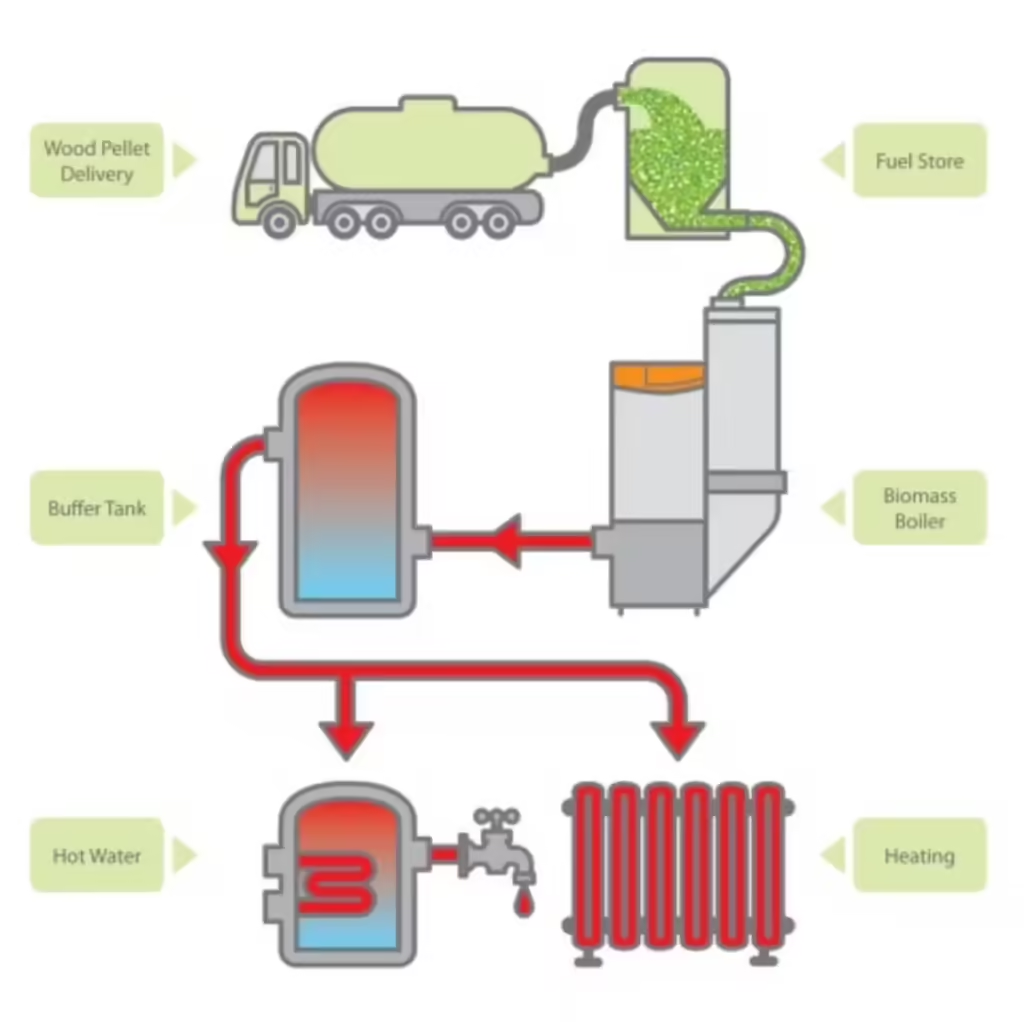
Heating with biomass has become increasingly popular in Italy and beyond, but what exactly is it? And how does it work? In this article, we’ll explore the basics of biomass heating, including what a biomass boiler is, its environmental benefits, and its potential drawbacks.
What is a Biomass Boiler?
A biomass boiler is a type of heating system that burns wood pellets or logs to produce heat. It works similarly to traditional gas boilers, but instead of using fossil fuels, it uses organic matter like wood waste. This reduces greenhouse gas emissions and helps combat climate change.
Biomass boilers come in various sizes, from small, portable units for homes to large, industrial-scale systems for commercial buildings. They are designed to burn a specific type of fuel, such as wood pellets or logs, and can be fueled by a variety of materials, including:
- Wood pellets: These are compressed, dried logs that burn efficiently and produce minimal emissions.
- Logs: Some biomass boilers can burn logs directly, although this may require additional equipment and maintenance.
How Does a Biomass Boiler Work?
A biomass boiler functions by burning fuel, typically wood pellets or logs, to generate heat. The heat is then used to warm water, which can be used for heating homes and businesses. Biomass boilers are often larger than traditional boilers because they require more fuel to operate. Additionally, some biomass boilers come with automatic feeding systems, which store a large quantity of fuel in a separate compartment.
The combustion process typically involves:
- Air supply: A constant flow of air is supplied to the boiler to ensure efficient burning.
- Fuel injection: Wood pellets or logs are fed into the combustion chamber, where they burn to produce heat.
- Heat transfer: The heat generated by the burning fuel is transferred to a heat exchanger, which produces warm water or steam.
Why Choose Biomass Heating?
Biomass heating offers several advantages over traditional fuels like gas or oil. For one, it’s a renewable energy source that reduces greenhouse gas emissions and supports sustainable forestry practices. Additionally, biomass is often cheaper than fossil fuels, especially if you purchase it directly from a supplier.
Some of the key benefits of biomass heating include:
- Renewable Energy Source: Biomass is a renewable energy source that reduces greenhouse gas emissions and supports sustainable forestry practices.
- Cost-Effective: Biomass can be cheaper than fossil fuels, especially if you purchase it directly from a supplier.
- Low Maintenance: Once installed, biomass boilers require minimal maintenance. However, they do need regular fuel replenishment and occasional cleaning.
Is Biomass Heating Suitable for My Home?
Not all homes are suitable for biomass heating. If you live in a small space or have limited access to fuel storage, a biomass boiler might not be the best choice. However, if you have a larger property with ample space for fuel storage, a biomass boiler could be an excellent option.
Before investing in a biomass boiler, consider your specific needs and circumstances. Factors to consider include:
- Space constraints: Ensure that you have enough space for the biomass boiler and its associated equipment.
- Fuel availability: Consider the cost and accessibility of fuel, as well as any potential storage requirements.
- Maintenance access: Think about how easy it will be to maintain and clean the biomass boiler.
What Are the Benefits of Biomass Heating?
Biomass heating has several benefits, including:
- Renewable Energy Source: Biomass is a renewable energy source that reduces greenhouse gas emissions and supports sustainable forestry practices.
- Cost-Effective: Biomass can be cheaper than fossil fuels, especially if you purchase it directly from a supplier.
- Low Maintenance: Once installed, biomass boilers require minimal maintenance. However, they do need regular fuel replenishment and occasional cleaning.
What Are the Drawbacks of Biomass Heating?
While biomass heating has many benefits, there are some drawbacks to consider:
- Higher Upfront Costs: Biomass boilers can be more expensive than traditional boilers.
- Space Requirements: Biomass boilers require ample space for fuel storage, which can be a challenge for smaller homes or properties.
- Maintenance Requirements: While biomass boilers require minimal maintenance, they do need regular fuel replenishment and occasional cleaning.
Conclusion
Biomass heating is a sustainable and cost-effective alternative to traditional fuels. However, it’s not without its drawbacks. By understanding the benefits and limitations of biomass heating, you can make an informed decision about whether it’s right for your home or business. With the right equipment and proper maintenance, biomass heating can be a reliable and environmentally friendly choice for heating homes and businesses.
Frequently Asked Questions
- What is the difference between a biomass boiler and a traditional boiler?
A biomass boiler burns organic matter like wood pellets or logs to produce heat, whereas traditional boilers burn fossil fuels like gas or oil. - How much space do I need for a biomass boiler?
Biomass boilers require ample space for fuel storage, which can be a challenge for smaller homes or properties. - What is the average lifespan of a biomass boiler?
The average lifespan of a biomass boiler is around 20-25 years, depending on usage and maintenance. - Can I use wood logs instead of pellets in my biomass boiler?
While it’s technically possible to use wood logs in a biomass boiler, they can be more difficult to burn efficiently than wood pellets. - What are the environmental benefits of using a biomass boiler?
Biomass boilers produce significantly less greenhouse gas emissions than traditional fossil fuel-based boilers, making them an environmentally friendly choice.
Biomass heating is a sustainable and cost-effective alternative to traditional fuels. However, it’s not without its drawbacks. By understanding the benefits and limitations of biomass heating, you can make an informed decision about whether it’s right for your home or business.


