
Introduction
The Belgian Malinois is a versatile and intelligent breed that has gained popularity worldwide as a guardian dog, companion, and athlete. Originating from Belgium, this short-haired herder has characteristics in common with other breeds, such as the Groenendael, Laekenois, and Tervueren. In this article, we will delve into the history, physical appearance, temperament, care requirements, and uses of the Belgian Malinois.
History
The Belgian Malinois is named after the ancient city of Malines in Anvers Province, Belgium. This breed has a long history, with early selection starting at the Veterinary School of Cureghen in Belgium. The first standardized breed standard was established on March 20th, 1894, and later refined to its current form in 2001.
The Belgian Malinois’ ancestors were working dogs, bred to herd sheep and protect farms from predators. Over time, their intelligence, athleticism, and protective instincts made them an ideal choice for various roles, including guard duty and herding.
Physical Appearance
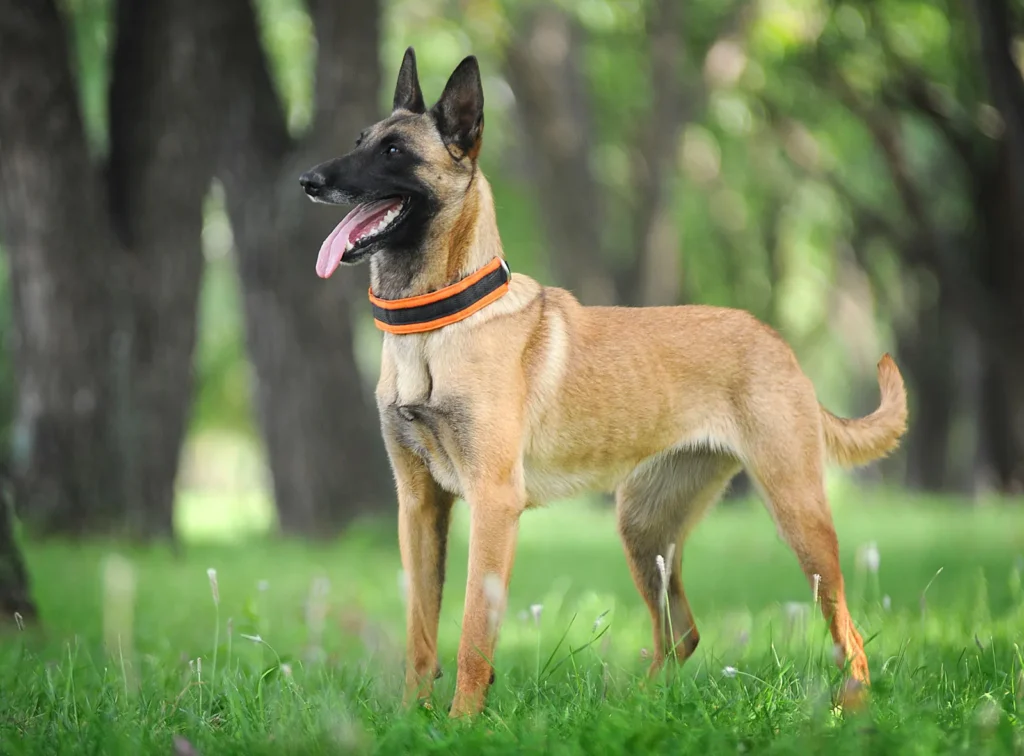
The Belgian Malinois stands over 60 cm tall at the shoulder, making it a medium-sized dog. Its structure is balanced and harmonious, with a well-placed tail that gradually tapers to the end. The breed’s distinctive coloration features a rich golden coat with black mask markings. The short, smooth coat requires minimal grooming.
In terms of body type, the Belgian Malinois has a muscular build with broad shoulders and a deep chest. Its head is wedge-shaped, with a flat skull and a moderate stop (the area where the muzzle meets the forehead). The ears are triangular and erect, while the tail is carried high with a slight curve at the end.
Temperament
The Belgian Malinois is known for its friendly, versatile nature, making it an ideal companion dog. They are naturally calm and patient, but can also become assertive when necessary. As a guardian dog, they possess excellent protective instincts and a strong work ethic. However, they are not inherently aggressive and respond well to training.
One of the key characteristics of the Belgian Malinois is their high energy level, which requires regular exercise to maintain their physical and mental health. They thrive on activity, whether it’s herding sheep, playing fetch, or engaging in agility training.
Care Requirements
The Belgian Malinois requires a balanced diet with minimal supplements, as their digestive system is sensitive. Their short coat does not require regular grooming. However, early socialization and proper training are crucial for this breed’s development, as they can become stubborn if not trained consistently.
A well-balanced diet should include high-quality protein sources such as chicken, beef, or lamb, along with complex carbohydrates like whole grains and fruits. Avoid overfeeding, as the Belgian Malinois is prone to obesity, which can lead to various health problems.
Uses
Today, the Belgian Malinois is primarily used as a companion dog, but its versatility has also made it a popular choice for various roles, including:
- Guardian dog: The Belgian Malinois’ protective instincts and high energy level make them an excellent guardian dog.
- Police dog: Their intelligence, athleticism, and trainability have made them a popular choice for police departments worldwide.
- Search and rescue dog: With their keen sense of smell and agility, the Belgian Malinois is well-suited for search and rescue operations.
- Agility dog: Their high energy level and trainability make them a popular choice for agility training and competitions.
Conclusion
The Belgian Malinois is a remarkable breed that has captivated the hearts of many dog enthusiasts worldwide. Its unique blend of loyalty, athleticism, and protectiveness makes it an ideal choice for various roles. By understanding its history, temperament, care requirements, and uses, you can make an informed decision about bringing this exceptional breed into your life.
Frequently Asked Questions
- How much does a Belgian Malinois cost?
- The price of a Belgian Malinois puppy can range from €500 to €2,000, depending on factors such as bloodline, breeder reputation, and location.
- What are the different types of Belgian Malinois?
- There are four recognized varieties of the Belgian Malinois: Groenendael, Laekenois, Tervueren, and Mechelaar.
- How do I care for my Belgian Malinois’s coat?
- The short, smooth coat of the Belgian Malinois requires minimal grooming. Regular brushing can help distribute skin oils and prevent matting.
- Can a Belgian Malinois be trained to perform agility tasks?
- Yes, Belgian Malinois are highly intelligent and athletic, making them well-suited for agility training.
- Are Belgian Malinois suitable for families with children?
- While Belgian Malinois are generally gentle with their family members, they can be protective of their territory and may not tolerate young children’s behavior. Early socialization and proper supervision are essential to ensure a harmonious household.
Additional Resources
- American Kennel Club (AKC) – Belgian Malinois Breed Standard
- Fédération Cynologique Internationale (FCI) – Belgian Shepherd Dog Standard


