
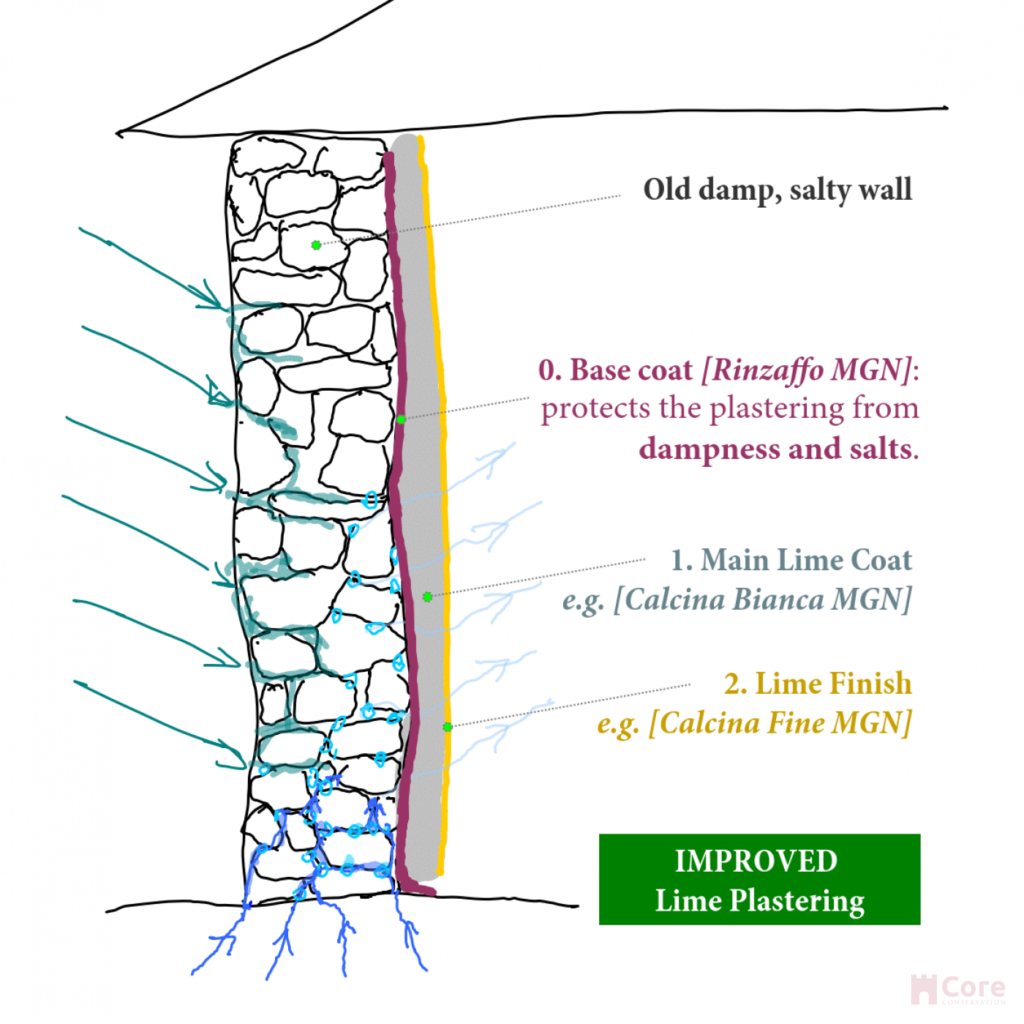
Effective Solutions Against Rising Moisture in Buildings
The water is responsible for a significant portion of the degradation that occurs on buildings. Often, it affects the lower parts of walls, due to the rise of moisture from the ground, causing damage and compromising the internal spaces.
Understanding Rising Moisture: Causes and Consequences
Rising moisture occurs when there is no barrier between the structure and the ground. Water in the soil, caused by a flood or precipitation, comes into direct contact with wall surfaces, allowing it to seep into the building’s materials through tiny channels. This phenomenon causes damage not only to the aesthetic but also to the structural and sanitary aspects of buildings.
Symptoms of rising moisture include recurring dampness patterns at the base of the walls, accompanied by crystallization of salts in the water, leading to efflorescence and subsequent peeling. Rising moisture also encourages mold growth and corrosion of iron reinforcement, potentially causing structural damage if left unaddressed.
Identifying Rising Moisture: Symptoms and Effects
In affected buildings, one can observe a recurring dampness pattern at the base of the walls, accompanied by crystallization of salts in the water, leading to efflorescence and subsequent peeling. Rising moisture also encourages mold growth and corrosion of iron reinforcement, potentially causing structural damage if left unaddressed.
Treatment Options for Rising Moisture
One approach is to apply a chemical barrier that repels water, isolating walls from groundwater. This innovative method involves injecting microemulsions containing silicone-based compounds into wall cavities. The treatment requires the expertise of trained professionals, who create precise holes in the wall surface, about 10-20 cm above the floor level.
Injections and Barrier Formation
After injecting the emulsion, which contains silicone particles with a thickness range of 5 to 15 microns, the mixture undergoes a chemical reaction that renders it water-resistant. The resulting barrier provides a uniform coating, allowing air to pass through while preventing moisture infiltration. The complete drying process typically takes anywhere from six months to two years.
Benefits and Applications
These innovative treatments offer numerous benefits for affected buildings, including:
- Improved aesthetic appeal
- Preventing structural damage and degradation
- Reducing the risk of mold growth and corrosion
- Allowing for easy maintenance and repair
- Enhancing overall building performance and longevity
Moreover, this method can be applied to any type of wall surface, ensuring a consistent and effective result.
Prevention Strategies
While treatment is essential, prevention is also crucial. To prevent rising moisture, building owners should consider the following strategies:
- Conduct regular inspections for signs of water damage or dampness
- Maintain good drainage systems around buildings
- Ensure that walls are properly waterproofed during construction
- Address any gaps or cracks in wall surfaces promptly
Conclusion
The treatment against rising moisture in walls is an essential solution for addressing the consequences of groundwater infiltration. By understanding the causes and effects of moisture rise, we can develop comprehensive strategies for prevention and restoration. With the right approach and techniques, building owners can prevent damage and ensure their structures remain safe and functional.
Additional Considerations
When dealing with rising moisture, it’s essential to consider additional factors that may impact the effectiveness of treatments. These include:
- Building materials: Different materials have varying levels of water resistance. Understanding these differences is crucial for selecting the right treatment.
- Climate: Weather conditions can significantly affect the rise of moisture in buildings. Building owners should consider local climate conditions when implementing prevention strategies.
- Design and construction: The design and construction of a building can impact its susceptibility to rising moisture. Building owners should work with experienced professionals to ensure that their structures are designed and built with moisture protection in mind.
By taking a comprehensive approach to addressing rising moisture, building owners can protect their properties from damage and ensure a safe and functional living or working space.
Innovative Solutions for Rising Moisture
The treatment against rising moisture is an evolving field, with new technologies and techniques being developed regularly. Some of these innovative solutions include:
- Advanced materials: New materials are being developed that offer improved water resistance and durability.
- Non-invasive treatments: Non-invasive treatments are becoming increasingly popular, as they allow for damage-free restoration without requiring extensive excavation or drilling.
- Integrated systems: Integrated systems that combine multiple treatment methods are providing comprehensive solutions to rising moisture problems.
By embracing these innovative approaches, building owners can stay ahead of the curve and ensure their structures remain safe and functional in a rapidly changing environment.
Best Practices
When implementing treatments against rising moisture, it’s essential to follow best practices to ensure maximum effectiveness. These include:
- Conducting thorough assessments: Building owners should conduct thorough assessments of their properties before selecting a treatment method.
- Working with experts: Building owners should work with experienced professionals who specialize in treating rising moisture issues.
- Following manufacturer guidelines: Building owners should follow the manufacturer’s guidelines for treatment applications and materials.
By following these best practices, building owners can ensure that their treatments are effective and long-lasting.


