
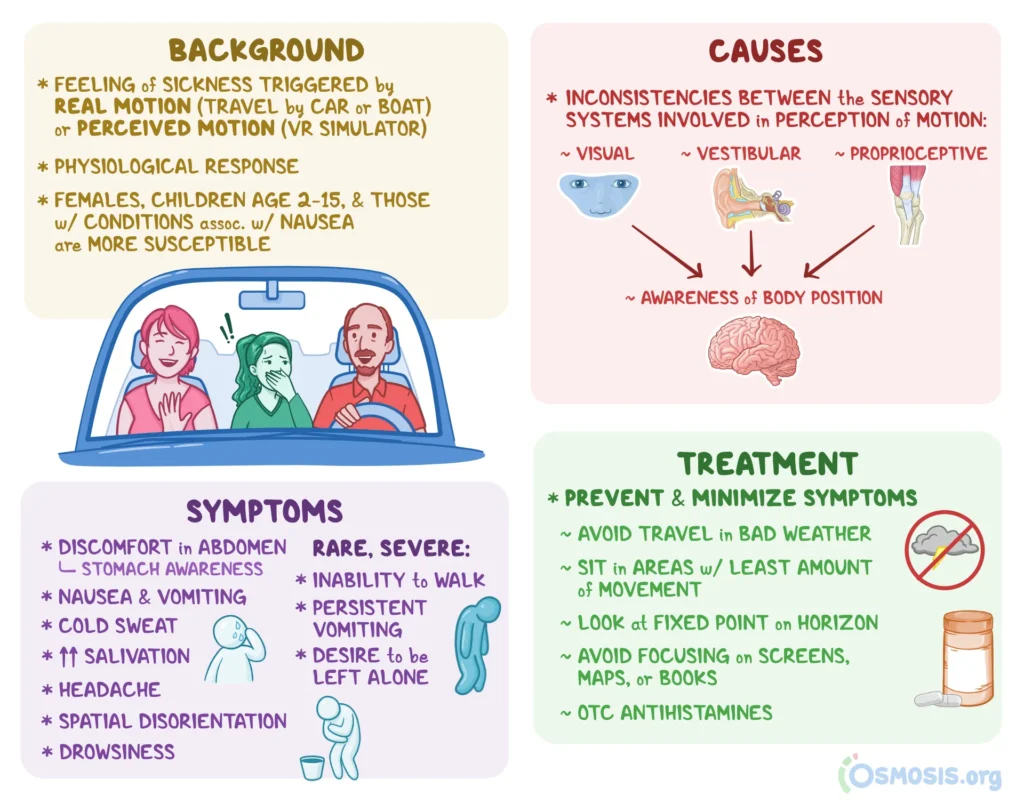
Motion sickness, also known as car sick, is a common issue that affects many individuals who struggle with traveling by car. Despite its prevalence, few people are aware of this problem, and it can cause discomfort, nausea, vomiting, or headaches.
In this article, we will delve into the characteristics, symptoms, causes, treatments, and prevention strategies for motion sickness.
Understanding Motion Sickness
Motion sickness is a neurologic disorder that affects how your body interprets signals from the vestibular (inner ear), visual, and proprioceptive apparatuses. When you experience repetitive or irregular movements of the body, your brain can become confused, leading to discomfort.
The concept of motion sickness was first described by French physician Charles-Étienne Brissot-Surlet in 1768. Since then, research has shed more light on its causes and symptoms. However, understanding the underlying mechanisms behind this issue remains an ongoing topic of study and debate among scientists.
Symptoms of Motion Sickness
To better understand how motion sickness impacts our lives, let’s examine its symptoms. The first feeling is nausea and discomfort in the upper abdomen. This can be followed by other unpleasant signs like paleness, sweating, vertigo, profuse salivation, or vomiting.
Each person develops their unique combination of symptoms, with some experiencing headaches, drowsiness, fatigue, weakness, or a feeling of fainting. The severity of symptoms can vary widely, and some people may experience mild discomfort while others may be severely affected.
Causes of Motion Sickness
When you feel ill on a journey, it’s because various stimuli are presented to your system, which cannot be properly integrated. Typically, there are three pathways in the nervous system that must interact: those from the inner ear (registering movements and accelerations), those from the eyes, and those from proprioceptors (sensing the position and movement of body parts). If these stimuli cannot be combined effectively by your brain, it becomes confused, leading to symptoms like those described.
Motion sickness is often associated with car, air, or sea travel but isn’t limited to these situations. The term “motion sickness” refers to a disorder related to an irregular motion of the body that you can’t handle. This could happen when playing video games with virtual reality and augmented reality technologies, as these stimulate your body similarly, confusing your vestibular system.
Other factors that contribute to motion sickness include:
- Genetics: Some people are more prone to motion sickness due to their genetic makeup.
- Sensitivity to movement: Individuals who are sensitive to movement may be more likely to experience symptoms.
- Age: Children and the elderly may be more susceptible to motion sickness.
- Visual-vestibular mismatch: When the visual information from your eyes doesn’t match the sensory input from your body, it can lead to confusion.
Treating Motion Sickness
Since each case can vary in severity, treatments must also be tailored accordingly. Some people manage the discomfort without medication or use natural remedies to alleviate their symptoms more. Others might need prescription drugs. When symptoms aren’t too severe, you can try distracting yourself with music or focusing on a fixed horizon instead of observing the scenery passing by.
Medication should only be used in extreme cases. In some instances, it’s best to consult a doctor if your discomfort is intense and unexpected. This could help rule out other possible causes such as labyrinthitis, an infection of the inner ear.
Natural Remedies for Motion Sickness
Before resorting to medication, consider trying these natural remedies:
- Ginger: Ginger has natural anti-inflammatory properties that may help alleviate symptoms.
- Acupressure bands: Wearing acupressure bands on your wrists can apply pressure to a specific point that helps reduce nausea and vomiting.
- Peppermint oil: Inhaling peppermint oil or applying it to your skin may help calm the stomach.
- Vitamin B6 supplements: Some research suggests that taking vitamin B6 supplements before traveling may help prevent motion sickness.
Prescription Medications for Motion Sickness
If natural remedies don’t work, prescription medications can be an effective solution. Common options include:
- Dimenhydrinate (Dramamine): This antihistamine is available over-the-counter and works quickly to alleviate symptoms.
- Meclizine (Bonine): Another popular medication that’s used to treat motion sickness, meclizine is often prescribed for its effectiveness.
- Scopolamine patches: These adhesive patches are applied behind the ear and can provide long-lasting relief from symptoms.
Preventing Motion Sickness
Before embarking on any trip by car or public transportation, you can take steps to minimize your risk of experiencing symptoms. Fixate your gaze on a stable object instead of focusing on something moving next to you. Closing your eyes might also be beneficial. When possible, avoid making unnecessary movements with your head and body; instead, maintain a comfortable position.
A little fresh air is good. While it’s not always feasible in airplanes, taking the window down for a few minutes can give relief. It may seem obvious, but it’s worth repeating: don’t overeat before traveling and avoid alcohol.
Traveling Comfortably
We’ll explore how to sit comfortably without experiencing discomfort in different modes of transportation.
- In air travel, sitting near the front or close to an aisle tends to be better for many people. Avoid seats near the lavatories, as these can be prone to motion sickness.
- On a boat, being in the bow (front) or central section is preferred. Sitting in the middle of the ship may provide less motion than sitting at the front or rear.
- In trains, seating near the front and adjacent to a window can also reduce symptoms.
Tips for Travelers
Here are some additional tips that may help alleviate discomfort during travel:
- Pack snacks: Bring healthy snacks like crackers, nuts, or dried fruit to keep your stomach stable.
- Stay hydrated: Drink plenty of water throughout your journey to avoid dehydration.
- Take breaks: If you’re on a long trip, take breaks every few hours to stretch and move around.
Conclusion
Motion sickness is a common issue that affects many individuals who struggle with traveling by car. By understanding its characteristics, symptoms, causes, treatments, and prevention strategies, you can take steps to alleviate your discomfort and enjoy your travels.
Remember, it’s always better to be prepared and take preventative measures before embarking on any journey. With the right knowledge and techniques, you can minimize the risk of motion sickness and make your travels more enjoyable.
Frequently Asked Questions
-
What are the most effective ways to prevent motion sickness?
- Fixate your gaze on a stable object
- Close your eyes when possible
- Avoid making unnecessary movements with your head and body
- Take fresh air breaks in airplanes
-
Can motion sickness be serious?
- No, it’s not a serious health issue, but frequent travelers may experience frustration.
-
How can I treat motion sickness?
- Try distracting yourself with music or focusing on a fixed horizon
- Use medication only in extreme cases and consult a doctor if necessary
-
Can virtual reality games cause motion sickness?
- Yes, they can stimulate your body similarly to car travel, confusing your vestibular system.
-
What is the most effective way to sit comfortably while traveling?
- Sit near the front or close to an aisle in air travel
- Be in the bow or central section of a boat
- Seat near the front and adjacent to a window in trains


