
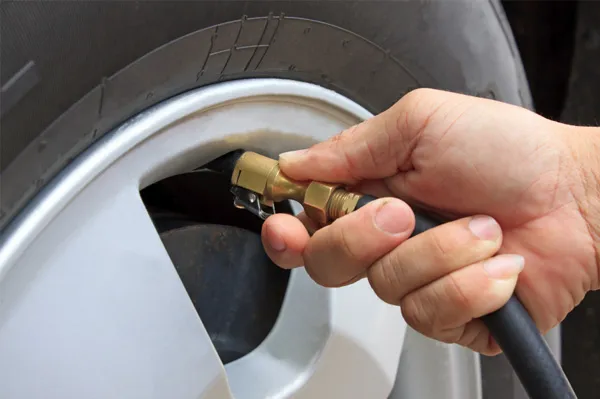
As you pull into the gas station to refuel, you might wonder how to properly inflate your car’s tires. Do you use a compressor at home or simply take them to the gas station? Understanding the right pressure and technique can make all the difference in your vehicle’s performance, safety, and longevity.
Why Proper Tire Pressure Matters
Regularly checking and maintaining the correct tire pressure is essential for your car’s overall health and well-being. It not only affects fuel efficiency but also impacts handling, braking distance, and even safety. Underinflated tires can lead to reduced traction, increased wear, and higher risk of accidents.
What is the Ideal Tire Pressure?
Each vehicle manufacturer provides specific tire pressure recommendations for their models. You can find this information in your owner’s manual or on a sticker on the driver’s side doorjamb. Typically, the ideal pressure ranges from 2 to 2.4 bar (28-35 psi) for most passenger vehicles, but some cars may require higher pressures up to 3 bar (43 psi).
Can You Tell the Difference Between Front and Rear Tires?
While it’s generally true that front tires tend to wear faster than rear tires, this isn’t always the case. The pressure difference between the two can be minimal, especially if you drive aggressively or frequently in stop-and-go traffic.
To determine the correct tire pressure for your vehicle, consult the owner’s manual or look for a placard on the driver’s side doorjamb.
How to Choose the Right Tire Pressure Gauge
You’ll need a reliable tire pressure gauge to ensure accurate readings. There are two main types: analog and digital gauges. Digital gauges provide more precise measurements and are often less expensive than their analog counterparts.
When purchasing a gauge, look for one that’s calibrated according to the SAE (Society of Automotive Engineers) standards and has good reviews from other users.
Where to Buy a Tire Pressure Gauge
You can find tire pressure gauges at most auto parts stores or online retailers like Amazon. A basic digital gauge costs around $10-$20, while more advanced models with extra features may range from $50-$100.
Some popular options include:
- AmazonBasics Digital Tire Pressure Gauge: This affordable gauge is available for under $15 and has excellent customer reviews.
- Schraubendreher Digital Tire Pressure Gauge: A high-quality gauge with a long-lasting needle and accurate readings, priced around $30-$40.
How Often Should You Check Your Tires?
It’s recommended to check your tire pressure at least once a month, especially during the warmer months when air can escape from the tires more quickly. If you drive in extreme temperatures or frequently carry heavy loads, you may need to check your tires more often.
The Importance of Checking Tire Pressure During Extreme Weather Conditions
Check your tire pressure during these conditions:
- Extreme heat: High temperatures can cause tire pressure to decrease rapidly.
- Freezing temperatures: Low temperatures can cause tire pressure to increase significantly.
- Humidity: High humidity can lead to increased tire pressure due to water absorption.
How to Inflate Your Tires Properly
To ensure even inflation and prevent damage to your tires:
- Remove the valve cap: Take off the valve cap from each tire stem.
- Check the pressure: Use a reliable gauge to measure the current pressure in each tire.
- Add air as needed: If the pressure is too low, add air slowly while checking the gauge regularly.
- Replace the valve cap: Put the valve cap back on once you’ve finished inflating the tires.
What Happens If You Don’t Inflate Your Tires Properly?
Underinflated tires can lead to a range of problems, including:
- Reduced traction and increased stopping distance
- Increased wear on the tire and surrounding components
- Higher risk of tire failure or blowouts
- Poor fuel efficiency and increased emissions
Frequently Asked Questions (FAQs)
- Can I use a gas station air compressor to inflate my tires?
Yes, you can use a gas station air compressor to inflate your tires, but make sure it’s compatible with the valve type on your vehicle. - How often should I check my tire pressure?
It’s recommended to check your tire pressure at least once a month, especially during warmer months. - Can I use a digital gauge instead of an analog one?
Yes, digital gauges are more accurate and provide precise measurements. - What happens if I don’t inflate my tires properly?
Underinflated tires can lead to reduced traction, increased wear, and higher risk of accidents.
By following these guidelines and best practices, you’ll be able to keep your car’s tires properly inflated, ensuring optimal performance, safety, and longevity.


