
When it comes to goats, many people think of them as a nuisance or a pest. However, they can also be seen as a valuable asset, providing us with milk, meat, and wool. In this article, we will explore the different breeds of goats and their characteristics.
What is a Goat Breed?
A goat breed refers to a specific type of goat that has been developed through selective breeding for certain desirable traits. Goats are descended from the wild goat species found in the Caucasus and Asia Minor, which were domesticated thousands of years ago. Today, there are over 300 breeds of goats worldwide.
Characteristics of Goat Breeds
While all goats have some common characteristics, such as their distinctive horns and agile bodies, they also exhibit unique traits that set them apart from one another. Some of the key characteristics of goat breeds include:
- Coat type: Goats can have short or long coats, with different lengths and colors.
- Horn shape: Horns come in a variety of shapes and sizes, ranging from curved to straight.
- Size: Goats vary greatly in size, from the small Nigerian Dwarf goat to the large Boer goat.
Caprine Breeds: Characteristics
Caprine breeds are a subset of goat breeds that have been developed for their milk production. Some of the most popular caprine breeds include:
- Saanen: Originating from Switzerland, this breed is known for its high milk production and gentle nature.
- Maltese: This breed comes from the Mediterranean region and is prized for its rich, creamy milk.
Types of Goat Breeds
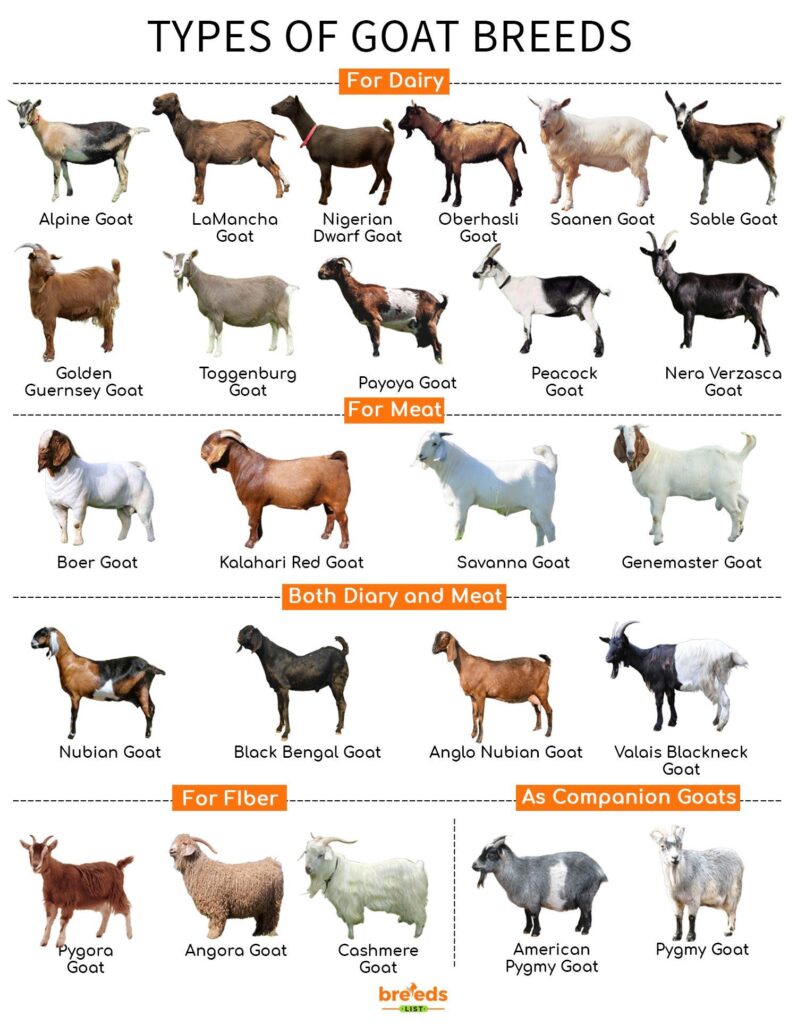
Goat breeds can be classified into several categories, including:
- Dairy breeds: These breeds are specifically developed for their milk production, such as the Saanen and Maltese.
- Meat breeds: These breeds are raised primarily for their meat, such as the Boer goat.
- Fiber breeds: These breeds are prized for their wool or hair production, such as the Angora goat.
Goat Breeds: Origin and History
Many goat breeds have a rich history and cultural significance. For example:
- The Saanen breed originated in Switzerland and is still widely kept there today.
- The Maltese breed has its roots in the Mediterranean region and was introduced to Italy by Arab traders.
Goat Breeds: Modern Uses
Today, goat breeds are used for a variety of purposes, including:
- Dairy production: Goat milk is rich in nutrients and is often used in cheese production.
- Meat production: Goat meat is leaner than beef and is often consumed in its raw form or cooked in traditional dishes.
- Fiber production: Goat wool is highly prized for its softness and warmth.
Goat Breeds: Care and Management
To keep goats healthy and happy, they require regular care and management. This includes:
- Providing a nutritious diet
- Ensuring access to clean water
- Offering shelter from the elements
By understanding the characteristics of different goat breeds, we can appreciate their unique qualities and uses.
FAQs: Goat Breeds
Here are some frequently asked questions about goat breeds:
- What is the most popular goat breed in the world?
- The Saanen breed is widely kept worldwide for its high milk production.
- How long does it take to get a goat to produce milk?
- It can take several months for a goat to reach full lactation, but this can vary depending on factors such as breed, nutrition, and health.
- Can goats be used for meat production?
- Yes, many breeds of goats are raised specifically for their meat, which is leaner than beef.
Conclusion
In conclusion, the different breeds of goats offer a wide range of characteristics that make them well-suited to various uses. From dairy production to fiber production, each breed has its unique traits and attributes that set it apart from others. By understanding these characteristics, we can appreciate the value of goats as livestock animals and their potential for providing us with milk, meat, and wool.
Appendix
Here is a list of some popular goat breeds:
- Dairy breeds:
- Saanen
- Maltese
- Alpine
- LaMancha
- Meat breeds:
- Boer
- Kiko
- Spanish Goat
- Myotonic
- Fiber breeds:
- Angora
- Pygora
- Cashmere
By exploring the characteristics of these goat breeds, we can gain a deeper understanding of their unique qualities and uses.


