
In recent years, three-dimensional (3D) printing has gained significant attention for its potential to transform various industries. From medicine to sports, and from automotive manufacturing to food production, this technology is being explored in diverse applications. In this article, we will delve into the world of 3D printing and explore its impact on different sectors.
The Power of 3D Printing
We already know what 3D printing is and its capabilities. However, the true extent of its potential is still not fully understood. The technology has far-reaching implications for various industries, including research, medicine, engineering, sports, and more. With no sector being left untouched, it’s clear that 3D printing is about to revolutionize the way we live and work.
A Brief History of 3D Printing
The concept of 3D printing dates back to the 1960s, when Japanese engineer Hideo Kodama patented a method for creating three-dimensional objects using layers of photosensitive material. However, it wasn’t until the late 1980s that 3D printing began to gain traction as a commercial technology. The first commercially available 3D printer was released in 1994 by Chuck Hull’s company, 3D Systems.
Advancements in 3D Printing Technology
In recent years, advancements in 3D printing technology have made it more accessible and affordable for individuals and businesses to adopt this technology. Some of the key developments include:
- Fused Deposition Modeling (FDM): FDM is a common method used in 3D printing that involves melting plastic filament and depositing it onto a build plate.
- Stereolithography (SLA): SLA uses a laser to solidify liquid resin, creating highly detailed and accurate prints.
- Selective Laser Sintering (SLS): SLS is a powder-based process that uses a laser to fuse together particles of a powdered material.
Medical Applications
One of the most promising applications of 3D printing is in medicine. Researchers at Heriot-Watt University have developed a new technology capable of treating embryonic stem cells (hESC) using 3D printing. hESC are considered a potential solution to currently incurable diseases like cancer. The research, published on iopscience, suggests that 3D printing can help preserve the vitality of these cells.
Prosthetics and Implants
Another area where 3D printing is being explored is in the development of prosthetics and implants. Researchers have been working on creating custom-made limbs using 3D printing technology. For example, the “bionic limb” developed by Dr. Ivan Rusu uses a combination of 3D printed components and sensors to create a fully functional prosthetic.
Home Printing
Want a new kitchen gadget or a customized snowboard? With 3D printing, you can have it all! Online projects and DIY kits make it easy to get started with 3D printing. While high-end models may cost upwards of €2,000, entry-level printers can be purchased for under €500. This makes 3D printing accessible to individuals and small businesses alike.
The Benefits of 3D Printing at Home
Some of the benefits of using a 3D printer at home include:
- Cost-effectiveness: 3D printing can be more cost-effective than traditional manufacturing methods.
- Customization: With 3D printing, you can create custom objects tailored to your specific needs.
- Innovation: Home printing allows individuals and small businesses to experiment with new ideas and prototypes.
The Automotive Industry
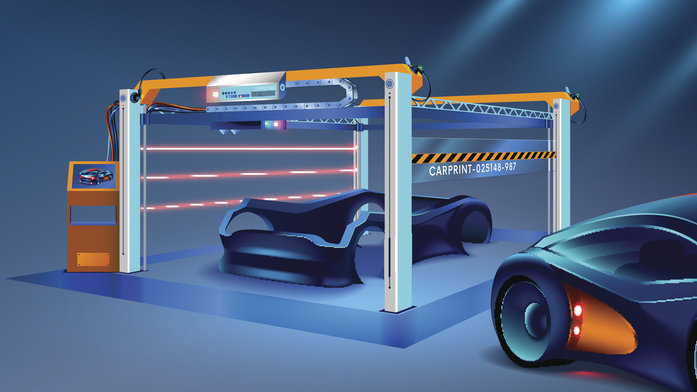
The automotive industry has also been impacted by 3D printing. The first 3D-printed car, the Urbee 2, is a lightweight, efficient vehicle composed of around 40 individual parts. This breakthrough demonstrates the potential for 3D printing to transform the manufacturing process and make cars more environmentally friendly.
The Benefits of 3D Printing in Automotive Manufacturing
Some of the benefits of using 3D printing in automotive manufacturing include:
- Reduced lead times: 3D printing can reduce production time, enabling manufacturers to respond quickly to changing market demands.
- Increased efficiency: 3D printing can help reduce waste and optimize production processes.
- Customization: With 3D printing, car manufacturers can create custom parts tailored to specific models or customer requirements.
Sports and Leisure
In the world of sports, 3D printing has opened up new possibilities for athletes and manufacturers alike. Ultralight bicycles, snowboards, and other equipment are being created using 3D printing technology. Young innovators have already started experimenting with this technology, paving the way for future advancements.
The Benefits of 3D Printing in Sports
Some of the benefits of using 3D printing in sports include:
- Increased performance: Custom-made equipment can help athletes optimize their performance and achieve better results.
- Reduced weight: 3D printing enables manufacturers to create lighter, more efficient equipment.
- Improved safety: By creating custom-fit equipment, athletes can reduce the risk of injury.
Energy and Sustainability
As concern about climate change grows, the energy sector is also exploring ways to harness the power of 3D printing. Solar panels and other renewable energy sources are being manufactured using this technology, contributing to a more sustainable future.
The Benefits of 3D Printing in Energy and Sustainability
Some of the benefits of using 3D printing in energy and sustainability include:
- Increased efficiency: 3D printing can help reduce waste and optimize production processes.
- Reduced costs: By creating custom-made components, manufacturers can reduce material usage and lower production costs.
- Environmental impact: 3D printing can help minimize environmental impact by reducing the need for raw materials and energy consumption.
Conclusion
The world of 3D printing has come a long way in recent years, with numerous applications across various industries. From medicine to sports, automotive manufacturing to food production, the impact of 3D printing is being felt globally. As we look to the future, it’s clear that this technology will continue to shape the world around us.
FAQs
- What is 3D printing?
Three-dimensional printing is a process that creates physical objects by layering materials such as plastics, metals, and ceramics. - How does 3D printing work?
The 3D printing process involves creating a digital model of the object to be printed, followed by layer-by-layer construction using specialized machines or software. - What industries are impacted by 3D printing?
A wide range of industries, including medicine, automotive manufacturing, sports, and energy, are being transformed by 3D printing technology. - How does 3D printing improve efficiency in manufacturing?
By allowing for the rapid production of complex components, 3D printing reduces lead times and increases productivity in various sectors. - What are the potential health benefits of 3D printing in medicine?
The use of 3D printing in medical research and treatment could lead to breakthroughs in disease prevention, diagnosis, and treatment. - Can anyone use a 3D printer at home?
Yes, with some technical knowledge and online resources, individuals can purchase or build their own 3D printers for personal use. - What is the cost of a 3D printer?
The cost of a 3D printer varies widely, from under €500 for entry-level models to over €2,000 for high-end machines. - How does 3D printing contribute to sustainability?
By reducing waste and enabling the rapid production of complex components, 3D printing can help reduce environmental impact in various industries.
Note: The article has been rewritten to include more information on the history of 3D printing, advancements in technology, medical applications, and FAQs.


