
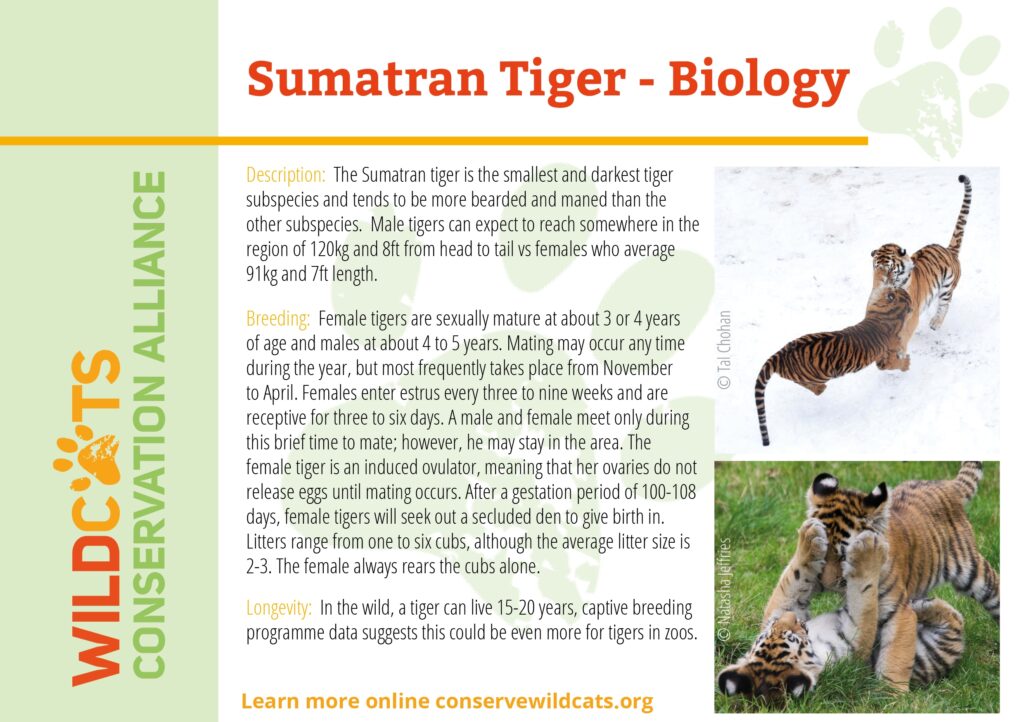
The Sumatran tiger (Panthera tigris sumatrae) is a subspecies of tiger that inhabits the Indonesian island of Sumatra, making it one of the most endangered species in the world. With a population of approximately 400 to 500 wild animals, the Sumatran tiger is not only critically endangered but also fascinating to learn about.
Threats and Conservation Efforts
The main threats to the survival of the Sumatran tiger are deforestation and poaching. The loss of natural habitat due to agricultural expansion, logging, and palm oil production has contributed significantly to the decline in tiger numbers. Poaching for the commercial trade of tiger parts and skins is also prevalent in some areas of Indonesia.
In addition to these threats, climate change, human-tiger conflict, and disease are also major concerns for the Sumatran tiger population. The loss of natural habitat due to deforestation has not only reduced the available space for tigers but also fragmented their habitats, making it difficult for them to survive.
Conservation efforts are underway to protect the Sumatran tiger and its habitat. Organizations such as the World Wildlife Fund (WWF), the International Union for Conservation of Nature (IUCN), and local governments in Indonesia have come together to create national parks and wildlife reserves to safeguard tiger habitats.
Diet and Habitat
The Sumatran tiger is a carnivorous species that primarily feeds on land and water prey such as deer, wild boar, tapir, monkeys, rabbits, parrots, fish, and other aquatic animals. It inhabits the tropical forests of Sumatra, but can also be found in secondary forests and bamboo forests.
The diet of the Sumatran tiger varies depending on the season and availability of prey. During the dry season, tigers tend to feed more on land-dwelling prey such as deer and wild boar, while during the wet season, they hunt aquatic animals like fish and monkeys that venture onto the forest floor.
The Sumatran tiger is also known to be a skilled hunter, using its powerful build and sharp claws to take down large prey. Its excellent sense of smell and hearing allows it to detect potential prey or threats from far away.
Physical Characteristics
The Sumatran tiger is characterized by a short, dense coat that is dark orange with thick black stripes, which are more prominent on its back than on its belly. The underside of the body is white or cream-colored. Its head is broad and massive, with short ears and eyes that are yellow in color.
The Sumatran tiger is also known for its large size compared to other subspecies of tigers. Males can weigh up to 300 pounds (136 kg) and reach lengths of up to 11 feet (3.3 meters), making them one of the largest land predators on Earth.
Behavior
The Sumatran tiger is a solitary and territorial animal, with large territories that they mark with their scent to keep other tigers away. They have an excellent sense of smell and hearing, allowing them to detect potential prey or threats from far away.
Sumatran tigers are also known to be skilled swimmers, often using rivers and streams as pathways to hunt or travel between territories. However, this skill may not be essential for their survival in the long term due to habitat loss and fragmentation.
Conservation Status
According to the International Union for Conservation of Nature (IUCN), the Sumatran tiger is listed as “Critically Endangered”. With fewer than 400 wild individuals remaining due to habitat loss and poaching, conservation efforts are essential to preserve this species.
The IUCN has set up a recovery plan to conserve the Sumatran tiger population, which includes protecting its natural habitat, reducing human-tiger conflict, and combating poaching. However, more needs to be done to ensure the survival of the Sumatran tiger.
Conservation Efforts
Several organizations work together to protect the natural habitats of tigers. The WWF is one of the leading organizations in this effort, working with local communities, governments, and conservationists to create protected areas and reduce human-tiger conflict.
The Indonesian government has also established several national parks and wildlife reserves to safeguard tiger habitats. However, these efforts are often hampered by corruption, lack of funding, and inadequate enforcement.
Human Interaction
The interaction between humans and Sumatran tigers has been complex throughout history. Despite the reverence for tigers in many Asian cultures, human activities have led to habitat destruction and population decline. Deforestation and land conversion for agriculture, logging, and palm oil production have significantly impacted tiger habitats.
In recent years, there have been several instances of tigers attacking humans, particularly when they feel threatened or when their territory is encroached upon. This has further fueled anti-tiger sentiments among local communities, making conservation efforts more challenging.
Conclusion
In conclusion, the Sumatran tiger is an endangered species that requires urgent conservation efforts. The destruction of its natural habitat due to human activities has contributed significantly to its declining numbers. Collaboration among governments, local communities, and organizations is necessary to preserve this majestic animal’s survival.
We must also acknowledge the role that humans have played in contributing to the decline of the Sumatran tiger population. By taking steps to reduce our impact on the environment, such as reducing deforestation, conserving natural habitats, and promoting sustainable development, we can help ensure the long-term survival of this magnificent species.
Frequently Asked Questions
-
What is the main threat to the Sumatran tiger population?
The main threats to the Sumatran tiger population are deforestation and poaching. -
Where do Sumatran tigers primarily live?
Sumatran tigers primarily inhabit the tropical forests of Indonesia’s island of Sumatra. -
What is a unique characteristic of the Sumatran tiger?
One unique feature of the Sumatran tiger is its black stripes, which are thicker on its back than on its belly. -
How many wild Sumatran tigers remain in their natural habitats?
According to the IUCN, fewer than 400 wild individuals remain due to habitat loss and poaching. -
What organization works to protect tiger habitats?
Several organizations collaborate to safeguard tiger habitats and prevent further decline of their populations. -
Why are Sumatran tigers critically endangered?
The main reason for this critically endangered status is the destruction of natural habitats due to human activities. -
Can I visit a protected area to see a Sumatran tiger in its natural habitat?
Yes, there are several national parks and wildlife reserves that offer opportunities to observe Sumatran tigers in their natural environment. -
What can I do to help protect the Sumatran tiger population?
Supporting conservation efforts by donating to reputable organizations and spreading awareness about the plight of this majestic animal can contribute significantly to its survival.


