
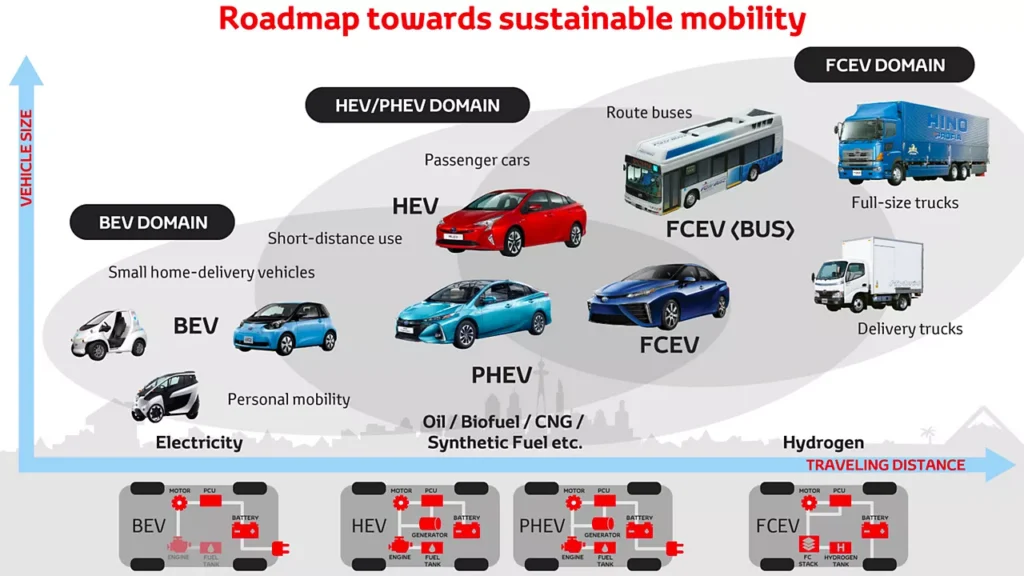
As the World Business Council for Sustainable Development (WBCSD) defines it, “sustainable mobility must meet the social need to move freely, travel, communicate, trade, and establish contacts without sacrificing other essential human and ecological needs.” This is a crucial principle that all automotive manufacturers should adhere to. Fortunately, Toyota has been working tirelessly towards this goal for over 40 years, developing innovative solutions that prioritize environmental sustainability while maintaining optimal performance.
Toyota’s Commitment to Sustainable Mobility
Garnering maximum freedom of movement without compromising on respect for the environment has become one of Toyota’s core objectives. Since the 1970s, the Japanese automaker has been deeply committed to researching and developing eco-friendly mobility solutions with no compromise on performance or driving style. This unwavering dedication has led to groundbreaking innovations that represent concrete alternatives to traditional propulsion systems.
One of Toyota’s most significant advancements is its Full Hybrid technology. Known as a key solution for the 21st century and future mobility, it remains the most viable option at present. Thanks to this innovation introduced by the Hybrid Synergy Drive (HSD) system, Toyota already sells 4.5 million hybrid vehicles worldwide, contributing significantly to CO2 emission reductions.
Full Hybrid: The Engine of Sustainable Mobility
Toyota sees Full Hybrid as a pivotal tool in addressing the needs of drivers seeking cutting-edge solutions that respect the environment without compromising on quality and driving pleasure. By representing a progressive electrification path that has already set significant milestones towards achieving zero-emission vehicles, Toyota’s innovative approach to mobility offers hope for a more sustainable future.
The revolutionary leap forward made by Toyota’s hybrid technology lies in its intelligent management of energy flow from these two distinct power sources. This means that every driving condition – acceleration, deceleration, braking, and cruising at moderate speeds – is optimized to maximize efficiency without compromising performance. The synergy between the electric motor and internal combustion engine allows for the battery to be recharged during braking and deceleration. When more power is required, the hybrid system switches seamlessly to the petrol engine.
A Transcendent System: Harnessing All Energy Sources
This cross-modal approach makes Toyota’s hybrid technology a top-of-the-line solution in its field. Since the debut of Prius in 1997, the Toyota and Lexus brand has expanded its lineup with an increasing number of models across various segments. In 2012, Toyota celebrated an all-hybrid year with three new models being introduced: Yaris Hybrid (the world’s first city car hybrid), Prius + (the world’s first monovolume 7-seat hybrid with lithium-ion batteries), and PriusPlug-in (the world’s first plug-in hybrid).
Prius Plug-in offers the added benefit of running on electric power alone for approximately 25 km at speeds up to 85 km/h. Users can select this mode via a button, which is ideal for short trips or quiet city commutes.
Benefits of Toyota’s Full Hybrid Technology
The numerous benefits of Toyota’s Full Hybrid technology are multifaceted and diverse. Some of the key advantages include:
- Improved Fuel Efficiency: By utilizing both power sources in harmony, Full Hybrid Technology maximizes fuel efficiency without compromising performance.
- Reduced Emissions: The hybrid system reduces CO2 emissions by an average of 35% compared to conventional gasoline-powered vehicles.
- Increased Performance: The seamless switching between the electric motor and internal combustion engine ensures optimal acceleration and smooth driving experiences.
- Enhanced Environmental Sustainability: Toyota’s Full Hybrid Technology is a crucial step towards achieving zero-emission vehicles, contributing significantly to reducing greenhouse gas emissions.
Real-World Applications of Toyota’s Full Hybrid Technology
Toyota’s innovative Full Hybrid technology has numerous real-world applications that are being utilized in various settings. Some of these include:
- Urban Mobility: Toyota’s hybrid models are ideal for urban mobility, providing a cleaner and more efficient alternative to traditional gasoline-powered vehicles.
- Long-Distance Travel: Prius Plug-in offers an added layer of efficiency by allowing users to run on electric power for short distances at low speeds, reducing emissions and enhancing the overall driving experience.
- Rural Areas: Toyota’s hybrid models can be used in rural areas where access to public transportation is limited, providing a cleaner and more efficient alternative to traditional gasoline-powered vehicles.
Conclusion
Toyota has made significant strides in its pursuit of sustainable mobility by leveraging its innovative Full Hybrid technology. This forward-thinking approach underscores the company’s continued dedication to driving a cleaner future without sacrificing driving pleasure. As we look towards the future, Toyota’s commitment to hybrid and electric vehicles will undoubtedly play a pivotal role in shaping a more environmentally conscious automotive landscape.
Frequently Asked Questions
-
What is Full Hybrid Technology?
Full Hybrid Technology is a revolutionary system developed by Toyota that combines an internal combustion engine with an electric motor, allowing for optimal efficiency and reduced emissions. -
Why is Full Hybrid important for sustainable mobility?
It represents the most viable solution for achieving environmentally friendly transportation without compromising on performance or driving pleasure. -
What is Hybrid Synergy Drive (HSD)?
Hybrid Synergy Drive (HSD) is a system developed by Toyota that enables seamless switching between the electric motor and internal combustion engine, optimizing energy flow based on driving conditions. -
How does Full Hybrid Technology improve efficiency?
By utilizing both power sources in harmony, Full Hybrid Technology maximizes fuel efficiency without compromising performance, making it an ideal choice for environmentally conscious drivers. -
What are some of Toyota’s hybrid models available today?
Toyota currently offers a range of hybrid vehicles, including the Prius, Yaris Hybrid, and Prius Plug-in, among others. -
Can I run my car on electric power alone using Full Hybrid Technology?
Yes, with the PriusPlug-in model, you can select an electric-only mode for short trips or quiet city commutes, reducing your carbon footprint further. -
What is Toyota’s plan for achieving zero-emission vehicles in the future?
Toyota aims to continue its hybrid and electric vehicle development strategy, leveraging Full Hybrid Technology as a stepping stone towards cleaner mobility solutions. -
How does Prius Plug-in benefit drivers?
Prius Plug-in provides an added layer of efficiency by allowing you to run on electric power for short distances at low speeds, further reducing emissions and enhancing the overall driving experience.
By expanding its hybrid and electric vehicle offerings, Toyota is committed to making sustainable mobility a reality. As we look towards a cleaner, more environmentally conscious future, Toyota’s Full Hybrid technology will undoubtedly play a pivotal role in shaping this landscape.


