
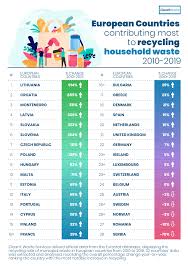
As the world grapples with the challenges of climate change, environmental degradation, and resource depletion, it’s clear that recycling and waste management have become crucial components of sustainable development. In this article, we’ll explore the current state of recycling and waste management in European countries, highlighting the most virtuous nations and their innovative approaches to reducing waste.
The EU’s Recycling Targets: A Call to Action
The European Union has set ambitious targets for recycling, aiming to recycle at least 50% of domestic and similar waste by 2020. This goal is crucial in reducing greenhouse gas emissions, conserving natural resources, and promoting a circular economy. Currently, five countries – Austria, Germany, Belgium, the Netherlands, and Switzerland – have already met or exceeded this target.
The Recycling Champions: A Review of Top Performers
Austria leads the way with an impressive 63% recycling rate, closely followed by Germany with a 62% rate. Belgium comes in third with a 58% rate, which is significantly higher than Italy’s 51%. The Netherlands and Switzerland also make significant strides, with 51% and 51% recycling rates, respectively.
The UK and Ireland Make Progress
The United Kingdom has made notable progress in increasing its recycling rate from 12% in 2001 to 39% in 2010. Similarly, Ireland has seen a significant boost in its recycling rate from 11% to 36%. These positive trends indicate that with concerted efforts, countries can make meaningful strides in reducing waste.
Italy’s Progress: A Mixed Bag
While Italy has made progress in increasing its recycling rate from 18% in 2001 to 35% in 2010, the country still faces significant challenges. The main issue is the heterogeneity of regions, with some areas being more virtuous than others. This disparity is further exacerbated by the “tassa sulle discariche” (tax on waste disposal), which was introduced in 1996.
The Impact of Regional Variability
The differences between regions are stark, with some areas having much higher recycling rates and lower taxes on waste disposal. For example, the Campania region has a tax rate of 5.2 euros per tonne of waste, while the Piemonte region has a tax rate of 25.8 euros per tonne. This regional variability hinders efforts to reduce waste nationwide.
The Role of Education and Awareness
Education and awareness are crucial in promoting recycling and waste management. Governments and industries must work together to educate the public about the importance of reducing, reusing, and recycling. By raising awareness, they can encourage individuals to make conscious choices that benefit the environment.
Implementing Circular Economy Principles
Circular economy principles aim to reduce waste by promoting sustainable consumption patterns. Companies can implement strategies such as designing products for recyclability, using recycled materials, and promoting sharing and collaboration. By adopting these principles, industries can significantly reduce their environmental footprint.
The Importance of Policy and Regulation
Policy and regulation play a crucial role in promoting recycling and waste management. Governments must establish policies that encourage recycling, provide incentives for companies to adopt sustainable practices, and regulate waste disposal. By creating an enabling environment, policymakers can foster a culture of sustainability and encourage individual actions.
Challenges and Opportunities
Despite the challenges, there are opportunities for growth and improvement. One opportunity is the development of new technologies that enable more efficient recycling processes. Another opportunity is the creation of closed-loop production systems where materials are continuously cycled back into production.
The Future of Recycling and Waste Management
As we move forward, it’s essential that we prioritize recycling and waste management. By working together and sharing knowledge, we can create a better future for our planet. We must also recognize that sustainability is a journey, not a destination. It requires continuous effort, innovation, and collaboration.
Case Study: The Austrian Recycling Model
Austria has been at the forefront of recycling efforts in Europe, achieving an impressive 63% recycling rate. One key factor contributing to this success is Austria’s “Green Dot” program, which introduced a small tax on packaging waste in 1991. This innovative approach encouraged companies to design more sustainable products and led to a significant reduction in waste.
Conclusion: A Call to Action for Italy and Europe
As we conclude this article, it’s clear that recycling and waste management require immediate attention from governments, industries, and individuals alike. Italy and other European countries must work together to address the challenges of regional variability, tax policies, and public awareness. By doing so, we can create a more sustainable future for our planet.
Frequently Asked Questions
- What is the EU’s recycling target for 2020?
The EU aims to recycle at least 50% of domestic and similar waste by 2020. - Which countries have already met or exceeded the EU’s recycling target?
Austria, Germany, Belgium, the Netherlands, and Switzerland are among the top performers. - What is the main challenge facing Italy in terms of recycling?
The heterogeneity of regions and the “tassa sulle discariche” (tax on waste disposal) are significant hurdles. - How has the UK’s recycling rate improved over the years?
The UK’s recycling rate has increased from 12% in 2001 to 39% in 2010. - What is the European average for the “tassa sulle discariche” (tax on waste disposal)?
The European average tax rate is lower than Italy’s, indicating a need for reform. - Can individual actions make a difference in reducing waste?
Yes, every small action counts, from recycling at home to reducing paper usage and choosing eco-friendly products. - How can governments promote recycling and waste management across regions?
Implementing policies like tax incentives, public education campaigns, and infrastructure development can help bridge the gap between regions. - What role can industries play in promoting sustainable practices?
By adopting circular economy principles and implementing sustainable practices, industries can significantly reduce waste and contribute to a more environmentally friendly future.
Final Thoughts
As we move forward, it’s essential that we prioritize recycling and waste management. By working together and sharing knowledge, we can create a better future for our planet.


