
As Nick Sandy, a British progettista, once said, “The changes we’ve made to our house have saved us a fortune! I’d like to encourage everyone to follow this example!” Every year, they spent over £4,000 on bills, so he decided to implement green strategies to reduce costs and rethink his 1960s home, now valued at £2.5 million!
From Expensive Bills to Eco-Friendly Dreams
Nick’s house has been transformed into an elegant eco-friendly home, worthy of James Bond. After 18 months of renovation, the cost of the bill has decreased from approximately £4,300 to just £1,000 annually, a significant saving on gas and electricity.
“I want to show people how simple it is,” says Nick Sandy. “We now have a spacious house that meets all our needs, whether working or family-related.”
Green Strategies for a Sustainable Home
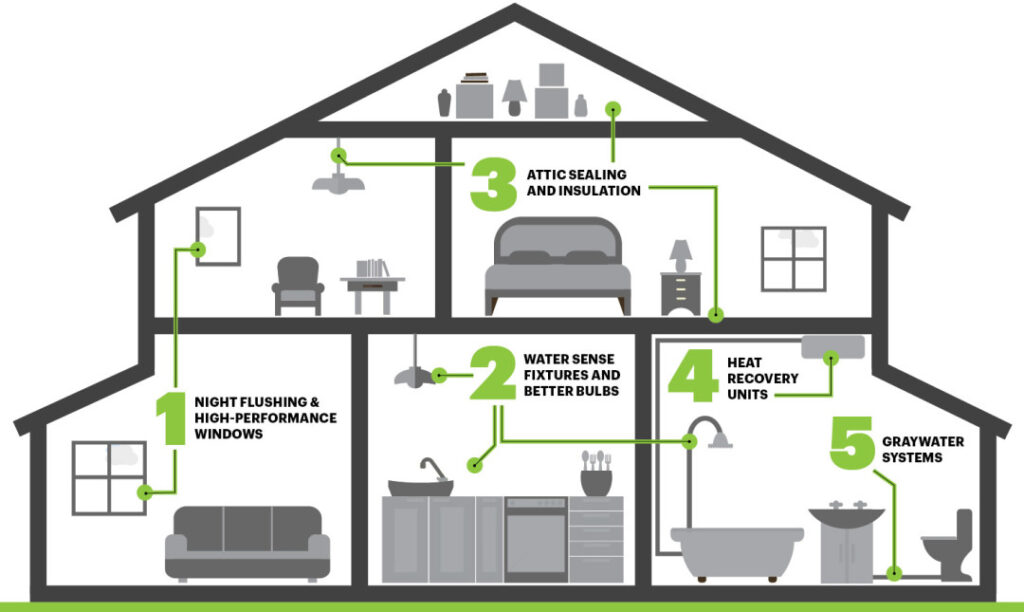
In 18 months, Nick equipped his home with:
- Motion sensors that control lighting
- A low-impact air control system
- A heat recovery system
- Solar panels on the roof
- And even a cistern to collect rainwater installed beneath the garden
The solar panels cost £10,000 but provide energy for the entire house and take care of heating and hot water.
Energy Efficiency and Insulation
To improve thermal efficiency, Nick installed insulation walls in all areas of his home. This was achieved by using high-performance insulation materials such as foam boards, which are designed to minimize heat transfer and reduce energy loss.
Nick also invested in a new boiler that is Energy Performance Certificate (EPC) A-rated, the highest rating possible. This ensures that his home is extremely efficient and produces minimal greenhouse gas emissions.
Water Conservation and Rainwater Harvesting
The collected rainwater is used for bathroom purposes, reducing the demand on the mains water supply. Nick also installed a gray water system, which collects and reuses water from sinks, showers, and washing machines to irrigate his garden.
Sustainable Materials and Design
Nick was meticulous about selecting sustainable materials for his renovation project. He chose wood from FSC-certified sources for furniture and flooring, and opted for low-VOC paints and adhesives to minimize indoor air pollution.
In addition, Nick designed the home’s layout to maximize natural light and ventilation, reducing the need for artificial lighting and heating. The result is a bright, airy interior that feels spacious and welcoming.
Sustainable Landscaping
The garden has also been transformed into an eco-friendly oasis. A rainwater harvesting system collects and stores water from the roof for irrigation, eliminating the need for mains water.
Nick also installed a meadow lawn, which requires less maintenance than traditional grass lawns and provides a natural habitat for wildlife.
The Department of Energy and Climate Change Reaction
The Department of Energy and Climate Change was impressed with Nick’s eco-friendly home and invited him to demonstrate the project.
“We wanted to see the completed project,” says Fiona Gruber, responsible for the department. “It’s amazing to see how much has been achieved. This house is fantastic, and I’m impressed!”
Selling His Eco-Friendly Home
Nick put his eco-friendly home on the market for £2.5 million!
Tips for Creating Your Own Green Abode
- Start by assessing energy efficiency in your current home, identifying areas where improvements can be made.
- Upgrade insulation to reduce heat loss and minimize energy bills.
- Consider renewable energy sources like solar panels or wind power to generate electricity.
- Choose sustainable materials for renovation projects, such as FSC-certified wood and low-VOC paints.
- Incorporate rainwater harvesting systems and gray water reuse into your design.
- Design the home’s layout to maximize natural light and ventilation.
Common Challenges and Solutions
One of the biggest challenges homeowners face when creating a green abode is finding affordable ways to implement eco-friendly features. Here are some common challenges and solutions:
- Challenge: High upfront costs
- Solution: Research government incentives, grants, or loans available for sustainable home improvements.
- Challenge: Limited knowledge about sustainable materials and practices
- Solution: Consult with experts, such as architects, engineers, or sustainability consultants, to ensure that your home is designed and built with minimal environmental impact.
Conclusion
Creating a green abode requires careful planning, research, and investment. However, the benefits of an eco-friendly home are numerous – reduced energy bills, improved air quality, and a lower carbon footprint.
By embracing sustainable design principles and technologies, homeowners can create beautiful, functional homes that not only save them money but also contribute to a more sustainable future.
FAQs
- How did Nick save so much money on bills?
- By implementing green strategies such as solar panels, insulation walls, a heat recovery system, and rainwater harvesting.
- What was the most challenging part of the renovation process?
- Nick says it was finding the right materials for energy-efficient windows that fit his budget.
- How did the Department of Energy and Climate Change react to the eco-friendly home?
- They were impressed with the results and saw a tangible demonstration of sustainability in action.
- Can you recommend any specific products or tools used in the renovation process?
- Nick mentions that the solar panels were a significant investment, but worth it for energy efficiency and cost savings.
- How did Nick balance his desire for an eco-friendly home with maintaining its value?
- He chose sustainable materials and modernized features while preserving the original character of the 1960s house to maintain its value.
- What advice would you give someone looking to renovate their own home to go green?
- Start by assessing energy efficiency, upgrading insulation, and considering renewable energy sources like solar panels or wind power.


