
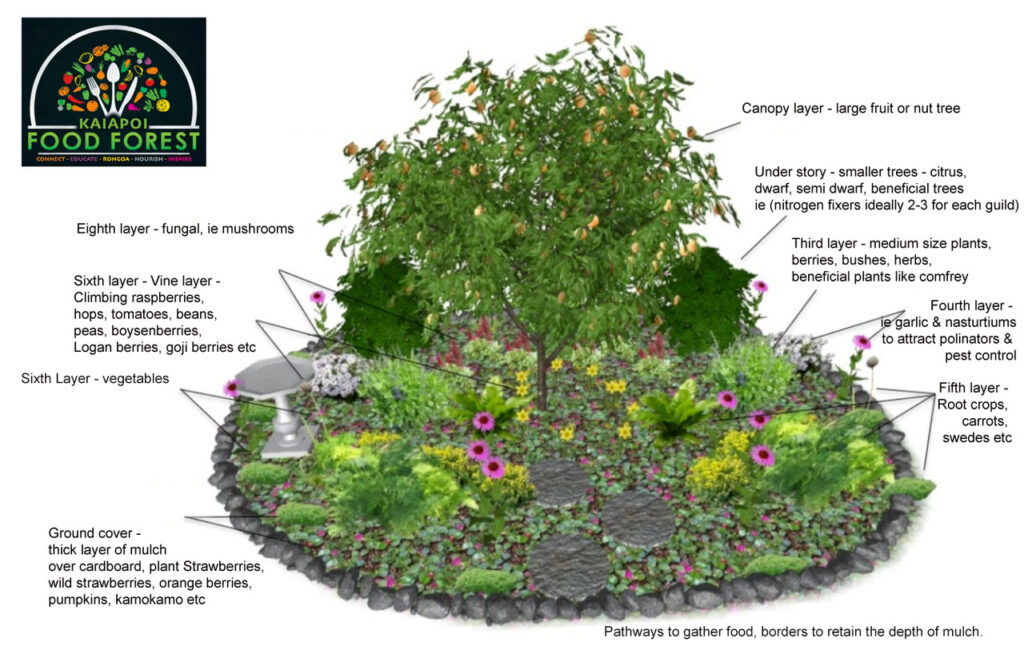
A food forest, also known as a permaculture garden or forest garden, is a diverse cultivation of edible plants that aims to mimic nature’s ecosystems and models. These multi-layered projects utilize every available space and area to maximize yields.
It’s this reason why careful planning is essential for each of the seven traditional strata that compose a food forest: the overstory, understory, shrub layer, herbaceous layer, root layer, soil cover layer, and vine layer (with some people also including an eighth layer, the mycelial layer). By utilizing each of these layers effectively, you can insert multiple plants into a single area without causing detrimental interactions between different species.
The Benefits of a Food Forest
There are numerous benefits to creating a food forest. One key advantage is that it allows for a harmonious integration of multiple plant species. This diversity not only creates a resilient ecosystem but also provides a rich source of nutrients, which can lead to improved soil health and fertility over time.
Moreover, a well-designed food forest does not need to be replanted every year like traditional gardens. Once established correctly, it can thrive for many years with minimal maintenance. This reduced maintenance requirement is largely due to the fact that perennials play a significant role in food forests. These plants grow, mature, and produce fruit and seeds, which in turn support other plant species within the ecosystem.
Of course, this doesn’t mean neglecting the necessary care. Animals may still be attracted to such varied plant life, “tasting” some species while leaving others that they deem unpalatable or unreachable. This natural selection process can actually help promote biodiversity and resilience within the food forest.
In summary, food forests derive their primary benefits from three key characteristics: a predominantly perennial plant composition, maximizing vertical space, and filling every ecological niche available.
By utilizing mostly perennials, you can reduce the need for annual replanting and minimize watering needs. This approach also impacts soil health less than traditional gardening, allowing the forest to support more plants overall.
Another significant advantage of food forests is their ability to boost yields due to optimized space utilization, including vertical spaces that often go unused in traditional gardens.
For example, consider a fruit orchard. While the trees provide the primary harvest, there may be little else growing beneath them. In contrast, a well-designed food forest could include berries or other shade-tolerant plants on one side and sun-loving crops and perennials on the other, all working in harmony.
Creating a Food Forest: A Biologically Balanced Approach
The term “food forest biologica” might seem redundant since, by definition, a true food forest must be biological. However, contemporary discussions emphasize the need for this type of sustainable ecosystem to thrive.
In reality, creating a healthy food forest demands careful management and patience. Without an undisturbed ecosystem, which often takes years to develop, especially in urban settings or open fields, it’s not uncommon for gardeners to rely on chemicals like herbicides, pesticides, and synthetic fertilizers.
This could lead to long-term soil degradation and diminish the overall biodiversity of your food forest. To cultivate a thriving and balanced system, adopt an approach that supports ecosystem health rather than disrupting it.
By focusing on providing nourishment, water, and habitat for all components within your ecosystem, you’ll allow natural processes to unfold and foster resilience in your food forest over time.
This approach involves creating a diverse range of plant species, which can include trees, shrubs, herbaceous plants, and flowers. By incorporating native plants into your food forest, you can also promote local biodiversity and support pollinators like bees and butterflies.
Choosing the Right Plants for Your Food Forest
When it comes to choosing plants for your food forest, there are many factors to consider. Climate adaptability, growth habits, sun exposure preferences, soil tolerance, and potential impact on ecosystem balance all play important roles in selecting suitable species.
Some popular choices for a food forest include fruit trees like apple, pear, and plum, which can provide shade and support biodiversity through their flowers and fruit. Berries like strawberries, blueberries, and raspberries are also excellent options, as they require minimal maintenance and can thrive in a variety of conditions.
Other plants that can do well in a food forest include herbs like mint, basil, and rosemary, which can add flavor and fragrance to your cooking while also supporting beneficial insects. Vegetables like tomatoes, peppers, and leafy greens can also be incorporated into your food forest, taking advantage of the soil’s nutrient-rich properties.
Soil Health: A Key Component of a Food Forest
Soil health is a critical component of any successful food forest. By focusing on building healthy soils through organic amendments, cover cropping, and minimal tillage, you can create an ecosystem that supports biodiversity and promotes ecological balance.
One key aspect of soil health is the incorporation of organic matter. This can include compost, manure, and other nutrient-rich materials that can help improve soil fertility and structure.
Another important factor is cover cropping, which involves planting crops like legumes or grasses between fruit trees or other plant species to support soil health and reduce erosion.
Finally, minimal tillage is essential for maintaining healthy soils. By reducing the disturbance of soil through tillage or other methods, you can preserve soil organic matter and promote beneficial microbial activity.
Managing Animals in Your Food Forest
One potential challenge when creating a food forest is managing animals that may be attracted to your plants. While some animals like bees and butterflies are essential for pollination and ecosystem health, others can cause significant damage through overgrazing or pest activity.
To manage these pests effectively, consider incorporating animal-friendly crops into your food forest. These plants, like clover or dill, can attract beneficial insects while also providing a source of nutrition for animals like bees and butterflies.
Another approach is to use physical barriers to protect vulnerable plant species from overgrazing or other forms of damage. This can include fencing, netting, or other methods that allow you to control access to specific areas of your food forest.
Conclusion
The concept of food forests represents a new frontier in sustainable agriculture worldwide. While this practice has been employed on a smaller scale throughout history, its contemporary applications offer numerous opportunities for increased biodiversity and ecological balance.
Before embarking on the journey to create your own food forest, take the time to plan carefully, embracing the complexity of nature and its intricate interconnectedness.
Frequently Asked Questions
-
What is a food forest?
A food forest is a diverse cultivation of edible plants that aims to replicate natural ecosystems and models, utilizing every available space and area to maximize yields. -
How do I create a food forest?
Creating a food forest involves careful planning, considering the seven traditional strata (sovereign layer, understory, shrub layer, herbaceous layer, root layer, soil cover layer, and vine layer) to ensure optimal ecosystem balance and biodiversity. -
Are food forests biologically balanced?
A well-managed food forest must prioritize biological balance by adopting sustainable practices that support the entire ecosystem’s health and resilience over time. -
What are some key benefits of a food forest?
The primary advantages include increased biodiversity, reduced annual replanting needs, minimized watering requirements, enhanced yields due to optimized space utilization, and reduced reliance on chemicals. -
How do I choose plants for my food forest?
Choosing the right plant species is crucial; it’s essential to consider factors like climate adaptability, growth habits, sun exposure preferences, soil tolerance, and potential impact on ecosystem balance. -
Can I grow a food forest in an urban setting?
Yes, but this may require more planning due to space limitations and the need for carefully managing environmental stressors like pollution and extreme weather conditions. -
What is the role of perennials in a food forest?
Perennials play a significant role by allowing reduced maintenance needs over time, minimizing watering requirements, and supporting ecosystem balance through their long-term presence in the environment. -
Can I still experience setbacks or losses with a well-designed food forest?
Yes; however, these issues can often be mitigated through careful planning, biodiversity promotion, and long-term commitment to maintaining ecological harmony within your garden.


