
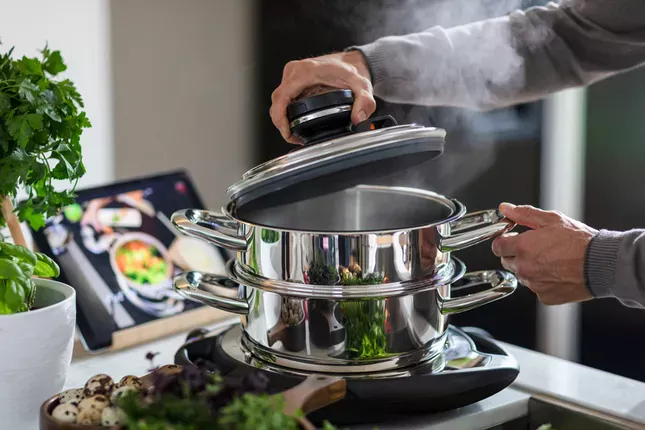
What is Steaming?
Steaming is a cooking method that involves exposing food to high-moisture steam, which helps retain the nutrients and flavor of the ingredients. This method is considered one of the healthiest ways to cook because it doesn’t require adding extra fats or oils.
While steaming may not be as exciting as frying or roasting, it can still bring out the best flavors in your food with the right herbs and spices. In fact, steaming is an excellent way to preserve the nutritional value of your ingredients, making it a great option for those looking to adopt a healthier diet.
Benefits of Steaming
So, what makes steaming such a great cooking method? Here are some key benefits:
- Retains Nutrients: Steaming helps retain the nutrients in food because it doesn’t involve high temperatures that can break down or destroy them. This is especially important for vitamins C and B1, which are commonly lost during cooking.
- Low Fat Content: Unlike frying or roasting, steaming requires minimal fat to cook your food, making it a low-fat option.
- Easy to Digest: Steamed food is often easier to digest because the heat from the steam helps break down the fibers in the ingredients.
What Can Be Steamed?
Steaming can be used to cook a wide variety of foods, including:
- Vegetables and leafy greens
- Fish and seafood (especially delicate fish like sole or flounder)
- Thinly sliced meats (like beef or chicken breast)
Tips for Steaming
- Use the Right Water: Use fresh, filtered water to steam your food. You can also add aromatics like lemon slices, garlic, or herbs to give your dish extra flavor.
- Don’t Overcook: Steamed food should be cooked until it’s just tender. Overcooking can make the food mushy and unappetizing.
Flavor Enhancing Tips
- Herbs and Spices: Use fresh herbs like parsley, basil, or cilantro to add flavor to your steamed dishes.
- Acidic Ingredients: Add a squeeze of lemon juice or a splash of vinegar to balance out the flavors in your dish.
- Spice Up Your Life: Use spices like paprika, cumin, or coriander to add depth and warmth to your steamed food.
Steaming with Style
- Aromatics: Add aromatics like onion, carrot, and celery to your steamer basket for added flavor.
- Sauces and Salsas: Serve your steamed dishes with sauces and salsas made from ingredients like yogurt, tahini, or hummus.
Frequently Asked Questions
Q: Is steaming a healthy cooking method?
A: Yes, steaming is considered one of the healthiest ways to cook because it doesn’t require adding extra fats or oils.
Q: What foods can be steamed?
A: A wide variety of foods can be steamed, including vegetables, fish and seafood, and thinly sliced meats.
Q: How do I steam food without overcooking it?
A: Use a thermometer to check the internal temperature of your food, and cook until it reaches 145°F (63°C) for poultry, 160°F (71°C) for beef, and 145°F (63°C) for fish.
Q: Can I add herbs and spices to steamed food?
A: Yes, use fresh herbs like parsley, basil, or cilantro to add flavor to your steamed dishes.
Q: Is steaming a low-fat cooking method?
A: Steaming requires minimal fat, making it an excellent option for those looking to reduce their fat intake.
Q: Can I steam delicate fish like sole or flounder?
A: Yes, steaming is a great way to cook delicate fish like sole or flounder because it helps preserve the moisture and flavor of the ingredients.
Q: How do I make flavorful sauces and salsas for steamed food?
A: Use ingredients like yogurt, tahini, or hummus as bases for your sauces and salsas. Add spices, herbs, and citrus juice to create unique flavors.
Q: Can I steam vegetables and leafy greens without losing nutrients?
A: Yes, steaming helps retain the nutrients in food because it doesn’t involve high temperatures that can break down or destroy them.
Q: How do I choose the right water for steaming?
A: Use fresh, filtered water to steam your food. You can also add aromatics like lemon slices, garlic, or herbs to give your dish extra flavor.
Steaming for Specific Health Benefits
- Weight Loss: Steaming is a great way to cook vegetables and lean proteins without adding extra fat, making it an excellent option for those looking to lose weight.
- Digestive Health: The low heat and moisture from steaming can help soothe digestive issues like bloating or indigestion.
- Immune System Support: Steaming helps retain the nutrients in food, which is especially important for supporting immune function.
Steaming with Different Cookware
- Steamer Baskets: Use a steamer basket to steam your food. These baskets are designed to hold your ingredients at a safe distance from the heat source.
- Copper Steamer Pots: Copper steamer pots are an excellent option for those looking to add a touch of elegance to their cooking routine. They’re also great at retaining heat and moisture.
- Non-Stick Steamer Pans: Non-stick steamer pans are a practical option for those who want to cook with ease. They’re easy to clean and won’t scratch or damage your ingredients.
Steaming for Specific Dietary Needs
- Vegetarian and Vegan Diets: Steaming is an excellent way to cook plant-based ingredients without adding extra fat or oils.
- Gluten-Free Diets: Steaming can help retain the nutrients in gluten-free ingredients, making it an excellent option for those with dietary restrictions.
- Low-FODMAP Diets: Steaming helps break down some of the harder-to-digest carbohydrates found in FODMAP-rich foods, making it a great option for those with digestive issues.
Steaming on a Budget
- Use Leftover Water: Instead of using fresh water to steam your food, use leftover water from cooking or cleaning. This will save you money and reduce waste.
- Shop for Affordable Ingredients: Shop at local markets or discount stores for affordable ingredients like herbs, spices, and aromatics.
Steaming for Special Diets
- Baby Food: Steaming is an excellent way to cook baby food because it helps retain the nutrients in delicate ingredients.
- Food Allergy-Friendly Meals: Steaming can help create allergy-friendly meals by cooking ingredients without adding extra oils or fats.


