
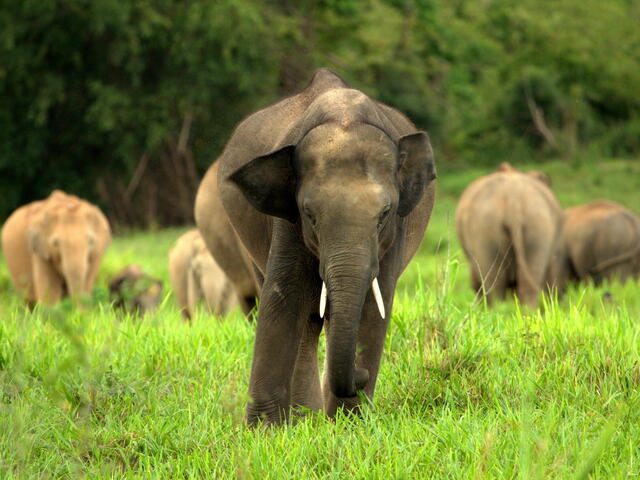
The Asian elephant, also known as Elephas maximus, is one of the three species of elephants that exist in the world. This species is a mammal belonging to the family Elephantidae and can be found in eight countries of the Asian region, including India, Thailand, and Vietnam.
Introduction
Asian elephants have been domesticated by humans for thousands of years for tasks such as carrying heavy loads, transporting people, and even fighting in wars. These animals are known for their intelligence, exceptional memory, and ability to learn. Despite their cultural and historical significance, the Asian elephant population is under severe threat from habitat loss, poaching, and illegal ivory trade.
Content
1. Distribution and Habitat
1.1 Geographic Areas
Asian elephants are scattered across the landmass and in some of its island regions. The distribution of each subspecies of the Asian elephant follows environmental and geographical factors. The Indian elephant (Elephas maximus indicus) is found in India, Nepal, Bangladesh, Bhutan, Myanmar, Thailand, the Malay Peninsula, Laos, China, Cambodia, and Vietnam.
The Sumatran elephant (Elephas maximus sumatranus) is only found on the island of Sumatra in Indonesia. The Sri Lankan elephant (Elephas maximus maximus) lives only in Sri Lanka.
1.2 Habitat Types
Asian elephants inhabit a wide variety of habitats, including grasslands, deciduous forests, dry deciduous forests, evergreen forests, and semi-evergreen forests. The Indian elephant adapts to a wide range of habitats, from rainforests to bamboo forests and grasslands. The Sumatran elephant lives in the tropical rainforests, bamboo forests, and coastal wetlands. The Sri Lankan elephant inhabits deciduous dry forests, rainforests, and coastal wetlands.
2. Physical Characteristics
2.1 Size
Asian elephants are generally smaller than African elephants. Males can reach a shoulder height of 2.7-3 meters and a length of 5.5-6.4 meters, while females are slightly smaller. Their weight varies from 3900 to 4700 kg.
2.2 Skin and Color
The skin of Asian elephants is darker than that of African elephants and has fewer hairs. The elephant’s skin is also thickened and wrinkled, providing protection against heat and insects. Asian elephants have smaller ears compared to their African cousins.
3. Behavior
Asian elephants are highly intelligent and social animals with complex behavior. In this section, we will discuss the social structures and communication methods of Asian elephants.
3.1 Social Structure
Asian elephants live in matriarchal family groups consisting of a dominant female and her daughters and grandchildren. Male elephants, on the other hand, tend to live solo or in non-related male groups. This social structure is crucial for Asian elephants, as it allows them to protect themselves from predators and find food and water.
3.2 Communication
Asian elephants communicate through a wide range of sounds and gestures. For instance, females emit a “contact rumble,” which helps maintain contact with other members of their group. Elephants also use their proboscis to make sounds, sniff, and touch each other.
In addition, Asian elephants use body language to convey emotions and intentions. When threatened or angry, they may wave their ears or swish their tails. Conversely, when relaxed or happy, they may swing their trunks or emit soothing noises.
4. Conservation
4.1 Conservation Status
The Asian elephant is currently listed as “Endangered” on the International Union for Conservation of Nature (IUCN) Red List. The population has drastically declined over the past few decades due to habitat loss, poaching, and ivory trade. There are approximately 40,000 individuals remaining in the wild.
4.2 Threats and Protection
The primary threat to Asian elephants is habitat loss. Deforestation, urbanization, and agriculture have significantly reduced their natural habitats, forcing them to search for food and water in increasingly limited areas. Poaching and illegal ivory trade also pose a significant threat.
To protect the Asian elephant population, various conservation measures have been implemented. In many countries, national parks and wildlife sanctuaries have been established to preserve elephant habitats and prevent poaching. Organizations like the World Wildlife Fund (WWF) are working tirelessly to raise awareness about the importance of protecting elephants and promoting sustainable practices.
5. Interaction with Humans
Asian elephants interact with humans in various ways, including tourism and agriculture.
5.1 Tourism and Observation
Tourism is a significant source of income for many Asian countries, and Asian elephants are often used as tourist attractions through elephant trekking or shows. However, this can cause problems for the elephants, who may be forced to work without adequate rest. Furthermore, elephants may be mistreated during training processes.
Observing elephants in their natural habitat is a popular activity among tourists, but it can disturb them due to noise and human presence. There are also concerns that feeding elephants by tourists could lead to health issues over time.
5.2 Human-Elephant Conflicts
Asian elephants may also engage in conflicts with humans due to habitat loss. The expansion of agricultural land and the construction of roads and settlements have reduced elephant habitats, leading them to search for food and water in human-settled areas. This can result in conflicts between humans and elephants, as elephants damage crops and humans retaliate by killing the elephants.
To mitigate these conflicts, conservation efforts focus on creating corridors for elephant movement and promoting sustainable agricultural practices.
5.3 Community-Based Conservation
Community-based conservation is a crucial aspect of protecting Asian elephants. Local communities can play a significant role in conserving elephants by adopting practices that minimize human-elephant conflicts. For example, planting elephant-friendly crops or using non-lethal deterrents to protect crops from elephants.
6. Research and Monitoring
Research and monitoring are essential for understanding the behavior, habitat needs, and population dynamics of Asian elephants. Scientists study elephant social structures, communication methods, and migration patterns to inform conservation efforts.
Monitoring programs track elephant populations, habitats, and human-elephant conflicts. This data is used to develop effective conservation strategies and assess the impact of conservation efforts.
7. Cultural Significance
Asian elephants hold significant cultural value in many Asian countries. They are revered as sacred animals and featured prominently in folklore and mythology.
However, the increasing pressure on elephant populations due to habitat loss and poaching has raised concerns about the long-term viability of these cultural traditions.
Conclusion
Conserving Asian elephants requires a global effort to protect this endangered species. Understanding their habitat needs, social behavior, and communication methods is crucial for effective conservation strategies. While there are still challenges ahead, continued awareness and cooperation among humans can help ensure the survival of these magnificent creatures.
Frequently Asked Questions
- Q: How many Asian elephants remain in the wild?
A: Approximately 40,000 individuals remain in the wild. - Q: What are the main threats to Asian elephant populations?
A: Habitat loss, poaching, and illegal ivory trade are significant threats. - Q: Why is conservation of Asian elephants crucial?
A: The survival of Asian elephants is vital for maintaining ecosystem balance and cultural significance. - Q: How can humans protect Asian elephants from human-elephant conflicts?
A: Creating corridors for elephant movement, promoting sustainable agriculture practices, and educating local communities about the importance of protecting elephants can help mitigate these conflicts. - Q: What organizations are working to protect Asian elephants?
A: Organizations like the World Wildlife Fund (WWF) and national conservation groups are actively involved in protecting Asian elephants through habitat preservation, education, and research initiatives.
Glossary
- Elephas maximus: The scientific name for the Asian elephant.
- IUCN Red List: The International Union for Conservation of Nature’s (IUCN) global list of threatened species.
- Matriarchal family groups: A social structure in which a dominant female leads a group of related females and their offspring.
- Proboscis: The long, flexible nose that Asian elephants use to breathe, sniff, and touch objects.
- Contact rumble: A low-frequency sound made by female elephants to maintain contact with other members of their group.
References
- IUCN Red List: https://www.iucnredlist.org/
- World Wildlife Fund (WWF): https://www.worldwildlife.org/
- National Geographic: https://www.nationalgeographic.com/
- Asian Elephant Conservation Project: https://aeconservationproject.org/


