
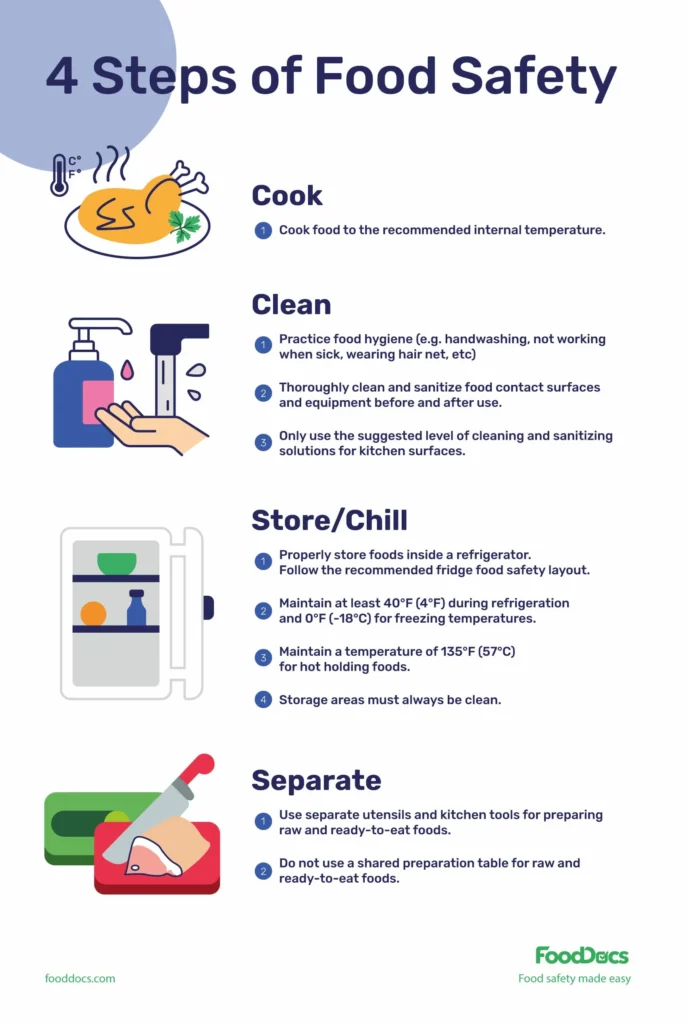
1. Introduction to Food Safety
Food safety is a concept that seems simple at first glance, but it’s actually quite complex. This term has become increasingly popular recently, and it’s time to take a step back and understand what it really means. There are also new regulatory rules to be aware of, and we need to consider how climate change affects these aspects.
Food safety is a critical aspect of public health, as it directly impacts the quality of food consumed by humans. Ensuring that food is safe for consumption involves a combination of practices, regulations, and monitoring systems. In this article, we will delve into the world of food safety, exploring its definition, importance, tools, and challenges, including the impact of climate change.
2. Defining Food Safety
When we talk about food safety, we’re talking about food in all its forms. The most immediate aspect is probably hygiene: a food item is considered safe if it’s “clean,” produced under optimal hygiene conditions, and even the packaging and storage facilities where it may have been kept are considered clean from a microbiological perspective. There are also other aspects that need to be taken into account for overall safety of the food we eat, whether it’s packaged or fresh.
Food safety is not limited to just physical cleanliness but also encompasses the chemical, biological, and physical properties of food. For instance, food should have the right pH level, texture, color, and aroma to ensure it is safe to consume. Food safety is a holistic concept that involves understanding the entire production process, from raw materials to final product.
3. Why Food Safety Matters
Some indications of what it takes to ensure food safety might seem absurd if you live in a developed country, but in certain areas where poverty runs deep, even the slightest standards of hygiene may not be met. In such places, eating something that’s not safe can be very dangerous – think of travelers or workers who travel to or work in developing countries.
Food safety is crucial because it directly impacts public health and well-being. Poorly handled food can lead to outbreaks of illnesses, which can have severe consequences for individuals and communities. According to the World Health Organization (WHO), approximately 1 billion people are affected by foodborne diseases every year, resulting in millions of deaths annually.
4. Tools for Ensuring Food Safety
From the producer’s perspective, we have tools that help ensure food safety is introduced onto the market. These are both mandatory and optional. The most well-known is probably HACCP (Hazard Analysis and Critical Control Points), which was introduced in 1997 and later replaced by a European version that expanded its scope.
Other important tools for ensuring food safety include Good Agricultural Practices (GAPs) and Good Handling Practices (GHPs). GAPs refer to the practices used in agricultural production, while GHPs focus on the handling and storage of food from farm to table. These tools are essential for preventing contamination and ensuring that food is safe for consumption.
5. New European Food Safety Regulations
In early 2019, the European Parliament passed new rules for food safety procedures within the EU, making them more rigorous. Today’s criteria are more reliable, transparent, and objective, with plans to create a common European database of commissioned studies so that fake or tailored-for-a-certain-product studies don’t go unnoticed.
These new regulations aim to improve the overall food safety landscape in Europe by establishing a framework for risk assessment, labeling, and monitoring. They also promote greater transparency and accountability among food producers, processors, and regulators.
6. The Role of EFSA in Food Safety
The European Food Safety Authority (EFSA) has the task of making all submitted studies public and allowing third parties to analyze them. This open-source approach is quite modern and ensures greater transparency in the food safety process.
EFSA plays a critical role in ensuring that food safety policies are evidence-based and informed by scientific research. By analyzing data from various sources, EFSA provides recommendations on how to improve food safety and protect public health.
7. Consultation Procedure for Food Safety Requests
With the same approval, we also have a new consultation procedure that provides applicants with detailed instructions on how to submit their requests for authorization.
This consultation procedure ensures that all stakeholders are involved in the decision-making process, which helps to identify potential risks and ensure that food safety standards are met. By engaging in open communication and collaboration, EFSA can make more informed decisions about food safety policies.
8. The Connection Between Climate Change and Food Safety
Many people are wondering what climate change has in common with food safety, but there is an interlinkage. It’s becoming increasingly apparent: climate-related disasters don’t have defined boundaries or sectors. There are many interconnected systems and often we only become aware of them after things get out of hand.
Climate change affects food safety by altering weather patterns, leading to changes in crop yields, quality, and distribution. This can result in shortages, price increases, and decreased access to nutritious food for vulnerable populations. Climate change also poses significant risks to the livestock industry, which can lead to losses in productivity and economic instability.
9. Research on Climate Change Impacting Food Safety
There are research studies that can demonstrate even the most skeptical people how climate change is affecting agriculture and, therefore, what we eat. The International Panel on Climate Change (IPCC) has also looked into this topic, showing that these changes in weather patterns are impacting crops like rice, soybeans, corn, and wheat, causing problems with yield and quality.
Studies have shown that climate-related disasters can lead to significant losses in agricultural productivity and economic instability for farmers. For example, heatwaves can damage crops, while droughts can reduce yields and impact water availability for irrigation.
10. How Climate Change Affects Crop Yield
Some “unusual” weather conditions can impact crop growth, such as rice, soybeans, corn, or wheat, resulting in reduced yields and lower quality. At this point, it’s challenging to quantify the damage, but there is no doubt that the risks are real, so food safety alerts should be kept high.
Climate change affects crop yield by altering temperature and precipitation patterns. This can lead to increased frequency of extreme weather events, which can result in reduced yields and lower quality crops. For instance, heatwaves can damage soybean pods, while droughts can impact corn growth.
11. Impact of Climate Change on Crop Growth
Temperature has a greater impact on crop growth than unusual precipitation. When extreme heat waves or cold snaps occur outside of their normal seasons in areas where most agricultural crops are grown, food safety becomes a concern. For example, soybean production in North America, wheat production in Europe, and rice production in parts of Asia face the most significant challenges.
Climate change also affects crop growth by altering soil moisture levels and nutrient availability. This can lead to reduced yields and lower quality crops, as well as increased susceptibility to pests and diseases.
12. The Importance of Adapting Agricultural Production to Climate Change
In addition to combating climate change, it’s crucial to study how agricultural production can be adapted so that it meets the changing climate and ensures food safety across all regions of the world.
Adaptation strategies can include using climate-resilient crop varieties, implementing conservation agriculture practices, and investing in irrigation infrastructure. These strategies can help farmers adapt to changing weather patterns and reduce their vulnerability to climate-related disasters.
13. The Impact of Climate Change on Food Safety and Production
If you liked this article, keep following me as well on Twitter, Facebook, and Instagram
By understanding the impact of climate change on food safety and production, we can take steps to mitigate these effects and ensure a more sustainable future for global food systems.
14. Conclusion
Climate change has a significant impact on our food supply chain, making it essential to understand its effects on agriculture and food safety. By studying how climate change affects crops like rice, soybeans, corn, and wheat, we can identify areas where the production of these foods is being impacted by extreme weather conditions.
15. Frequently Asked Questions (FAQs)
Q: What are the main factors that contribute to ensuring food safety?
A: Food safety involves several factors, including hygiene, optimal storage conditions, packaging, and handling procedures.
Q: How does climate change affect crop yields and quality?
A: Climate-related disasters can cause crop yield reductions and lower quality crops due to unusual weather patterns.
Q: What is the role of EFSA in ensuring food safety?
A: EFSA makes all submitted studies public and allows third parties to analyze them, providing greater transparency in the food safety process.
Q: How can agricultural production be adapted to combat climate change?
A: By studying how different crops respond to changing weather patterns and identifying areas where adaptation is needed, we can ensure that agriculture continues to produce safe and nutritious food for future generations.


