
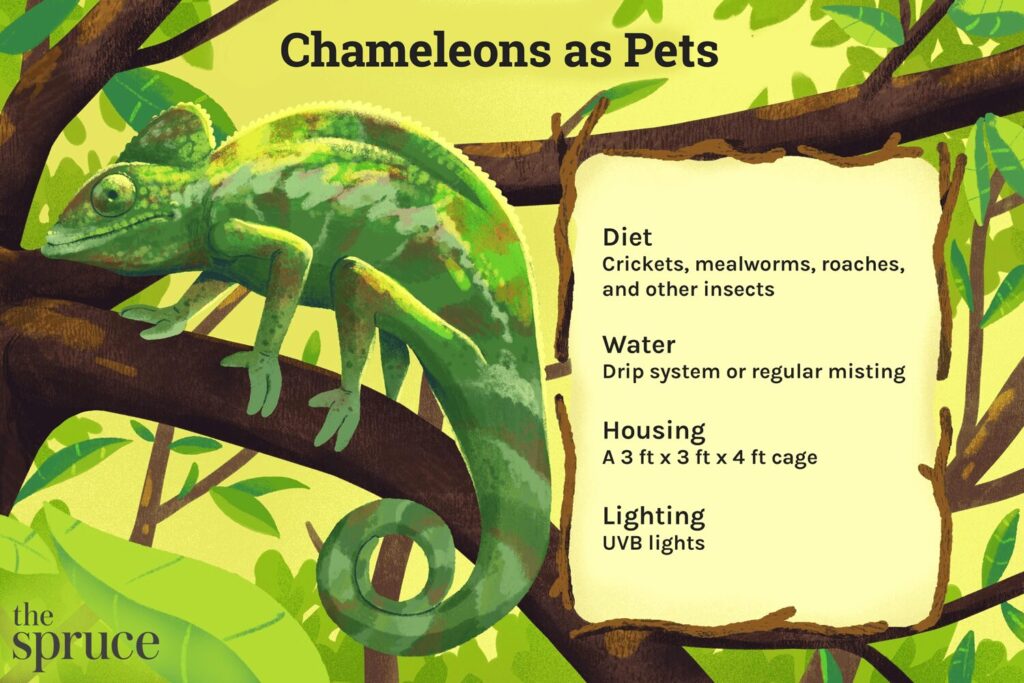
Caring for a chameleon at home is not an easy task, but it’s not impossible either. It’s clear that having a pet like this requires specialized care and equipment. Caring for a chameleon is not as simple as caring for a cat or dog, nor can it be done with just any ordinary terrarium.
First things first, let’s address the elephant in the room: why would you want to bring a chameleon into your home? If you’re considering bringing one of these amazing creatures into your life, then you must be aware that caring for them is no cakewalk.
Choosing the Right Equipment
To start, it’s essential to choose the right terrarium for your pet. The size of the terrarium will depend on the age and size of the chameleon. As a general rule, the bigger the better, but keep in mind that young chameleons can grow rapidly, so don’t get caught up in thinking you’ve got all the time in the world.
One thing to consider when choosing your terrarium is its ability to mimic the chameleon’s natural habitat. This means providing a terrarium with the right temperature and humidity levels. It’s also essential to include some plants and decorations that will allow your pet to climb and bask. Make sure you choose plants that are safe for your chameleon to eat, as well as objects that can provide your pet with a place to hang out.
The type of lighting you use in the terrarium is also crucial. You’ll need to get a lamp or light source that can produce UVB rays, which are essential for calcium metabolism and preventing metabolic bone disease (MBD). However, make sure not to overdo it on the heat; chameleons have a sensitive nose and can be easily stressed by high temperatures.
Heating and Lighting: A Delicate Balance
So, how do you balance heating and lighting in your terrarium? You’ll need to use a combination of different light sources, including UVB lamps, incandescent bulbs, and heat lamps. Be careful not to overheat the terrarium; chameleons can’t tolerate high temperatures.
Here are some general guidelines for heating and lighting:
- A temperature range of 75-85 degrees Fahrenheit is ideal for most chameleon species.
- UVB lighting should be provided for at least 10 hours a day, but can be reduced to 6 hours on weekends or during the winter months.
- Heat lamps should be used in moderation, as excessive heat can lead to stress and illness.
Hydration: The Key to a Happy Chameleon
Water is essential for your pet’s survival, but it’s also crucial to ensure that they don’t drown in their own water. To achieve this balance, you’ll need to provide a shallow dish of water that your chameleon can access easily. You’ll also need to mist the terrarium regularly to maintain humidity levels.
Here are some tips for keeping your chameleon hydrated:
- Provide a shallow dish of water that is at least 1 inch deep.
- Change the water daily to prevent bacterial growth and keep it fresh.
- Mist the terrarium with a spray bottle every day, using distilled water or rainwater if possible.
Humidity: The Unseen Enemy
Chameleons thrive in humid environments, but they can quickly succumb to dehydration if their environment is too dry. To prevent this, you’ll need to use a hygrometer to monitor humidity levels and adjust as necessary.
Here are some tips for maintaining the right humidity levels:
- Use a hygrometer to check the humidity level of your terrarium.
- Increase the humidity by misting the terrarium with distilled water or rainwater if it’s too low.
- Decrease the humidity by using a dehumidifier if it’s too high.
Feeding Your Chameleon: A Complex Task
Feeding your chameleon is a complex task that requires some thought and planning. In the wild, chameleons feed on insects and other small animals. You can replicate this diet in captivity by offering live insects such as crickets, mealworms, or waxworms.
Here are some tips for feeding your chameleon:
- Offer a variety of foods to ensure that your pet is getting all the nutrients they need.
- Provide fresh water daily and mist the terrarium with distilled water or rainwater every day.
- Feed your chameleon in moderation, as overfeeding can lead to obesity and other health problems.
Handling Your Chameleon: A Delicate Art
Chameleons are not cuddly creatures, but they do need some handling to stay healthy. However, handling them requires a delicate touch and understanding of their behavior. Always handle your chameleon gently and briefly, making sure not to grab them by the tail or ears.
Here are some tips for handling your chameleon:
- Handle your chameleon only when necessary, such as during feeding or cleaning.
- Wash your hands before and after handling your chameleon to prevent bacterial transfer.
- Support your chameleon’s body when picking them up, making sure not to crush their bones.
What Not to Do: Common Mistakes to Avoid
There are several common mistakes that can lead to stress and illness in chameleons. Some of these include:
- Overheating the terrarium
- Underestimating humidity levels
- Using too many lights at once
- Neglecting to provide a shallow water dish
- Handling your chameleon too much or for too long
Conclusion
Caring for a chameleon is no easy task, but with the right equipment and knowledge, you can create a thriving environment for your pet. Remember to research thoroughly, plan carefully, and be patient – it’s worth it!
Frequently Asked Questions (FAQs)
Q: How often should I clean my chameleon’s terrarium?
A: You should clean your chameleon’s terrarium every week, removing any feces or uneaten food.
Q: What kind of lighting do I need for my chameleon?
A: Your chameleon will require a combination of UVB lamps and heat lamps to maintain the right temperature and humidity levels.
Q: How often should I feed my chameleon?
A: You should feed your chameleon every 7-10 days, offering live insects or fruit as treats.
Q: Can I handle my chameleon frequently?
A: It’s best to limit handling to once a week, ensuring that you’re not stressing out your pet.
Q: What are some common health issues in chameleons?
A: Common health issues include metabolic bone disease (MBD), respiratory infections, and skin problems.


