
Introduction
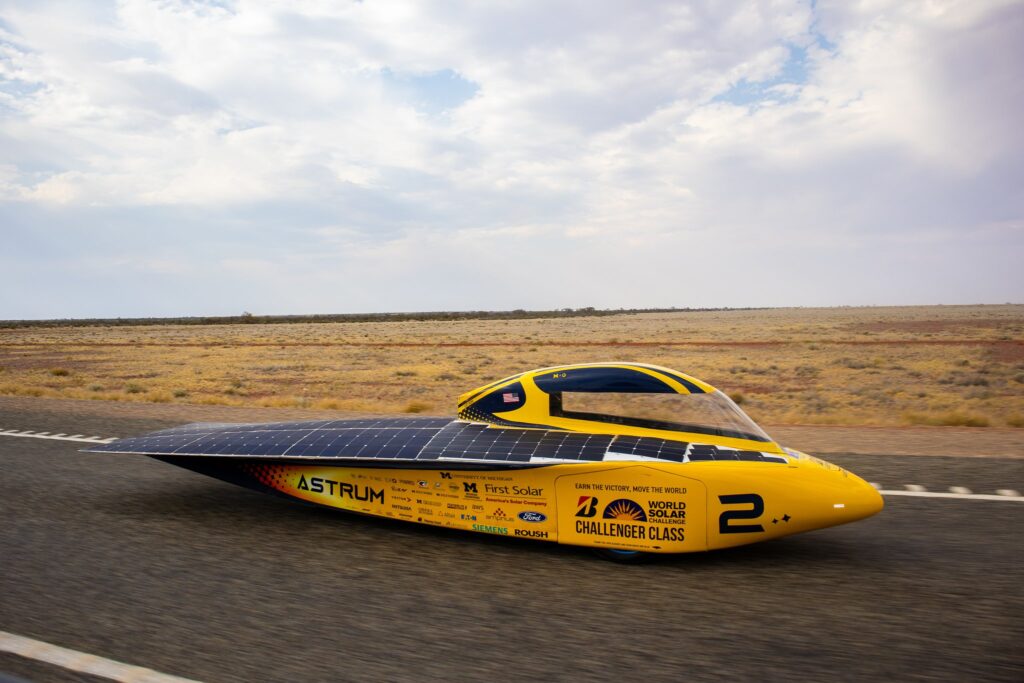
The way we conceive mobility has changed dramatically. The advent of renewables is evident in every field, and the transportation sector seems to be very enthusiastic about it. Recently, a new project that combines solar energy with sustainable mobility has emerged. A prototype built by students at the University of Michigan has resulted in a surprising solar car.
As technology continues to evolve, we can expect to see more innovative solutions to our environmental challenges. The rise of electric vehicles and hybrid cars is already transforming the transportation industry, but what about solar-powered cars? Can they be a viable alternative for personal transportation?
The Challenge: Solar Car Challenge (ASCC)
The ASCC is a well-known event that brings together 18 schools competing to create innovative solar-powered vehicles. The Michigan team continues to dominate with its creations, and their latest project is no exception. Meet the Quantum, a lightweight and aerodynamic car that has impressed everyone.
The ASCC is not just about winning; it’s also about pushing the boundaries of what’s possible with renewable energy. By challenging teams to create innovative solar-powered vehicles, the competition encourages creativity, innovation, and collaboration.
Design and Performance
The Quantum’s design features a monoposto vehicle that can reach speeds of up to 105 MPH (47 meters per second). But what makes it truly remarkable is its performance under rain. The team has managed to create a vehicle that not only looks sleek but also performs well in various conditions.
The Quantum’s lightweight construction and advanced aerodynamics allow it to cut through the air with ease, reducing drag and increasing efficiency. Its solar panels are strategically placed to maximize energy absorption, ensuring that the car can generate enough power to propel itself forward.
How Does It Work?
The Quantum’s design stores energy from high-quality solar panels in a lithium-ion battery, which powers the electric motor. This innovative approach demonstrates how renewable energy can be harnessed for transportation.
The team has also implemented advanced regenerative braking, which captures kinetic energy and converts it back into electrical energy to recharge the battery. This technology allows the Quantum to recover energy that would otherwise be lost as heat.
From Competition to Reality
While the ASCC is an exciting competition, it’s essential to recognize that solar-powered vehicles are not limited to university-level competitions. The Michigan team has shown that renewables can directly apply to the transportation sector.
Just like the catamaran solar boat that made headlines by completing a round-the-world journey using only solar energy. This project demonstrates how solar power can be used for long-distance travel and potentially even commercial applications.
Benefits of Solar-Powered Vehicles
Solar-powered vehicles offer several benefits over traditional fossil-fuel-powered cars, including:
- Zero Emissions: Solar-powered vehicles produce no emissions, reducing air pollution and greenhouse gas emissions.
- Lower Operating Costs: Solar panels can generate energy for free, reducing fuel costs and increasing vehicle efficiency.
- Improved Performance: Solar-powered vehicles can be designed to optimize performance, resulting in faster acceleration and better handling.
Challenges and Limitations
While solar-powered vehicles offer many benefits, there are still several challenges and limitations to consider:
- Energy Density: Solar panels require a significant amount of surface area to generate enough energy for transportation.
- Efficiency: Solar panels have an efficiency rate of around 15-20%, which means they can only convert a small percentage of sunlight into usable electricity.
- Cost: High-quality solar panels and advanced batteries can be expensive, making solar-powered vehicles more costly than traditional cars.
Conclusion
The future of mobility is looking brighter, thanks to innovations like the Quantum solar car. As we move forward, it’s essential to explore ways to integrate renewable energy into our daily lives. The possibilities are endless, and with projects like the ASCC, we’re one step closer to a more sustainable transportation system.
Frequently Asked Questions (FAQs)
Q: What is the Solar Car Challenge (ASCC)?
A: The ASCC is an annual competition where 18 schools compete to create innovative solar-powered vehicles.
Q: How does the Quantum car work?
A: The Quantum uses high-quality solar panels to store energy in a lithium-ion battery, which powers the electric motor.
Q: Can cars powered by solar energy reach high speeds?
A: Yes, the Quantum can reach speeds of up to 105 MPH (47 meters per second).
Q: Is this technology limited to university-level competitions?
A: No, innovations like the ASCC demonstrate how renewable energy can directly apply to the transportation sector.
Q: What other projects are working on similar technologies?
A: There are several projects and companies exploring ways to integrate solar energy into vehicles, including electric cars and buses.
Q: How does this technology compare to traditional fossil-fuel-powered vehicles?
A: Solar-powered vehicles offer a cleaner, more sustainable alternative to traditional fossil-fuel-powered vehicles.
Q: What’s the potential impact of this technology on the environment?
A: By reducing our reliance on fossil fuels, solar-powered vehicles can help mitigate climate change and reduce air pollution.
Q: Can you imagine a future where cars are completely powered by solar energy?
A: While we’re not yet at that point, innovations like the Quantum car demonstrate how far we’ve come in integrating renewable energy into transportation.


