
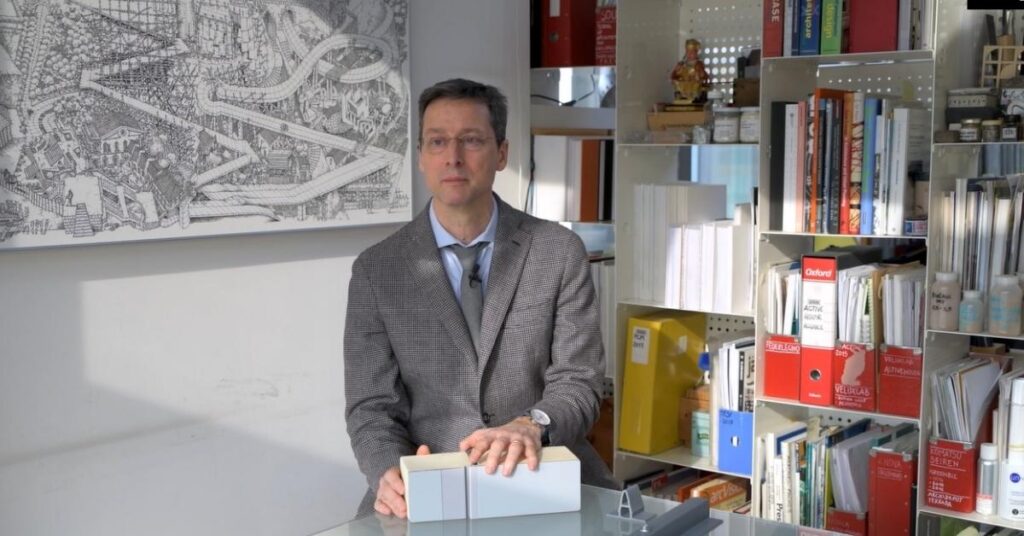
Unlocking the Future of Sustainable Buildings: An Interview with Marco Imperadori
As we navigate the complexities of climate change, it’s clear that our built environment plays a critical role in reducing greenhouse gas emissions. One innovative approach to achieving this goal is through the design and construction of nearly zero energy buildings (NZEBs). In this article, we’ll delve into the world of VeluxLab, a pioneering project that showcases the potential for sustainable building practices.
What is VeluxLab?
VeluxLab is an active building that serves as a living laboratory for researchers to test and develop new technologies and strategies for energy efficiency. Located within the Campus Bovisa of the Politecnico di Milano, this unique facility is designed to be a model for sustainable architecture and innovation.
The concept of VeluxLab was inspired by the Atika House, a concept design created by Aparicio Ronda and Javier Aja Cantalejo. The team’s goal was to create an adaptive building that could minimize energy consumption while maximizing natural ventilation and solar heating.
Time and Cost: Building VeluxLab
The construction of VeluxLab required careful planning and execution. The project involved transporting and installing the modular components, which took place over a single day in August. Following this, four months were spent on fine-tuning the building’s systems and ensuring that all necessary infrastructure was in place.
While the cost of constructing VeluxLab is significant, at around €200,000 for a 100 sqm space, the team believes it to be well worth the investment. The innovative design and cutting-edge technology used in the building ensure that it will provide years of energy-efficient performance.
Is VeluxLab Replicable?
While there are technical challenges associated with replicating VeluxLab, Marco Imperadori emphasizes the importance of adopting a holistic approach to sustainable building practices. By prioritizing energy efficiency, natural ventilation, and solar heating, architects can create buildings that not only reduce their carbon footprint but also enhance occupant well-being.
Imperadori suggests that the next generation of buildings should incorporate multiple levels, providing more efficient use of space while minimizing environmental impact. As technology advances, he hopes to see VeluxLab’s principles incorporated into future projects, contributing to a more sustainable built environment.
The Active Building: VeluxLab’s Design
VeluxLab is designed to adapt to changing environmental conditions. During extreme weather events, the building becomes hermetically sealed, ensuring minimal energy loss. In contrast, during milder seasons, natural ventilation is employed, allowing the building to “breathe” and reduce its energy consumption.
The building’s unique shape captures solar energy in winter, while a south-facing west pinnacle provides shade from intense summer sun. This adaptive design reflects Imperadori’s emphasis on integrating architectural elements with environmental considerations.
Methodologies for Evaluating VeluxLab
To assess the performance of VeluxLab, researchers employed traditional modeling techniques combined with advanced software capable of simulating dynamic behavior during hot summer months. By analyzing the building’s performance under various conditions, the team aims to refine their designs and identify areas for improvement.
VeluxLab serves as a living laboratory, where experiments and prototyping are conducted in real-time. This approach enables researchers to gain valuable insights into energy efficiency and sustainable design.
Reducing Environmental Impact: VeluxLab’s Embodied Energy
One of VeluxLab’s greatest strengths is its reduced embodied energy, which reflects the careful selection of materials and innovative design strategies employed during construction. The building’s structure features recycled glass panels, insulated panels made from poliurethane, and a wooden deck with a thermal mass effect.
These eco-friendly choices not only minimize waste but also contribute to a more sustainable built environment. By adopting these principles, architects can create buildings that are both environmentally conscious and aesthetically pleasing.
Research Activities at VeluxLab
VeluxLab’s primary focus is on technology and design innovation, with an emphasis on integrating research and practice. Researchers within the facility will explore topics such as:
- Building Information Modeling (BIM): Developing new tools for building information modeling to improve energy efficiency.
- Natural Ventilation: Investigating the use of natural ventilation strategies in buildings to minimize energy consumption.
- Energy Harvesting: Exploring innovative ways to capture and utilize renewable energy sources.
Conclusion
VeluxLab represents a pioneering effort in sustainable architecture, showcasing the potential for buildings to reduce their environmental impact while enhancing occupant well-being. As we look toward a more sustainable future, it’s clear that innovative design strategies like those employed at VeluxLab will play an increasingly important role in shaping our built environment.
Frequently Asked Questions
- What inspired the creation of VeluxLab?
- How did you measure the building’s energy efficiency?
- Can you describe your experience with natural ventilation and solar heating?
- How do you envision VeluxLab being replicated in other buildings?
- What role does embodied energy play in sustainable design?
- Can you discuss your vision for the future of sustainable architecture?
- How will VeluxLab contribute to reducing greenhouse gas emissions?
- What advice would you give to architects and builders looking to incorporate sustainable principles into their projects?


