
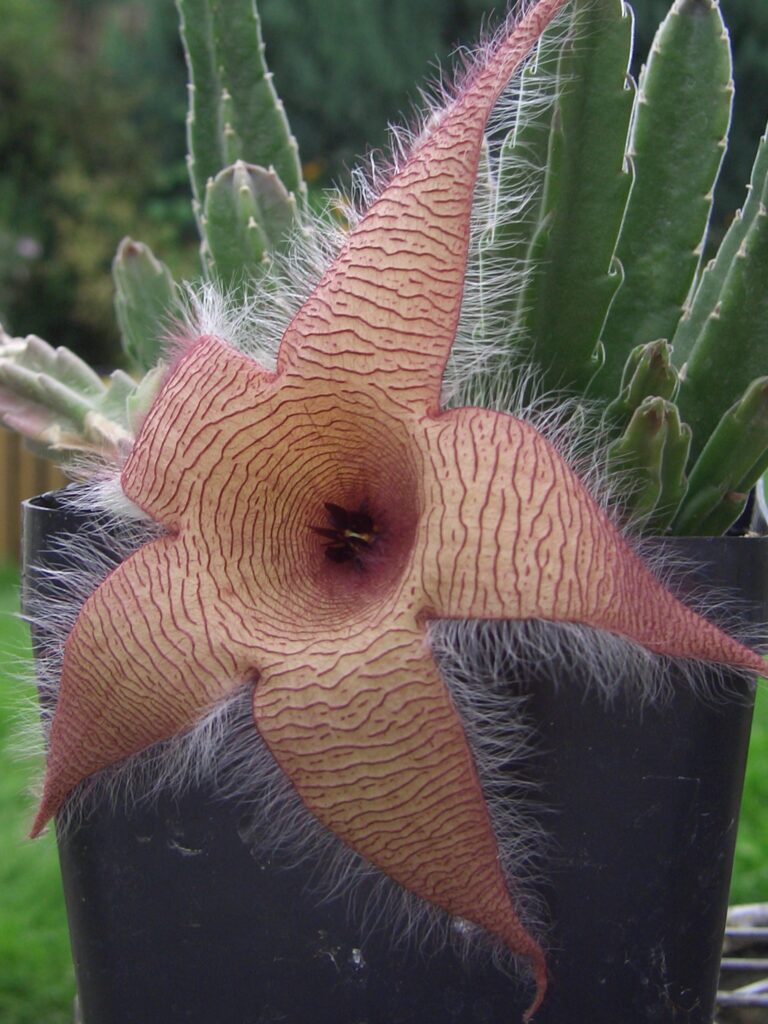
As we explore the world of succulents, there’s one plant that often catches our attention due to its unique appearance and characteristics. The Stapelia is a fascinating species, but it’s not for everyone, especially when it comes to its pungent smell. In this article, we’ll delve into the description, cultivation, and care of Stapelia, as well as some interesting facts about this succulent.
What is Stapelia?
Stapelia is a genus of succulents belonging to the family Asclepiadaceae. Native to tropical regions in southern Africa, it’s commonly cultivated as an ornamental plant in pots, but also thrives in outdoor gardens with proper care. While it may not be a household name, Stapelia has gained popularity among enthusiasts of succulent plants.
Description and Appearance
Stapelia is not a towering plant; its height rarely exceeds 40 cm (16 inches). The stems are thick and branching, often developing bright green leaves that dominate the plant’s silhouette. Some species may display striking color variations, including shades of pink, gray, or even purple.
The most impressive feature of Stapelia, however, is its showy flowers, which can reach up to 40 cm (16 inches) in diameter. These star-shaped blooms are a bright green and appear during the summer months. The plant’s unique growth habit allows it to thrive in well-draining soil with plenty of sunlight.
Cultivation and Care
Stapelia prefers dry conditions, making it an ideal choice for succulent enthusiasts. However, its sensitivity to cold temperatures means it shouldn’t be planted outside in areas with frost. In winter, avoid watering too frequently, as this can lead to root rot.
To ensure the plant’s optimal growth, maintain a well-draining potting mix and provide regular watering during the growing season. Fertilize sparingly during the spring and summer months using a liquid fertilizer specifically designed for succulents.
Propagation
Propagating Stapelia is relatively straightforward. Choose from three common methods: sowing seeds, taking cuttings, or dividing existing plants. Springtime is the best time for propagation, as this allows the new growth to establish itself before the onset of summer.
Sowing seeds requires a sterile potting mix and temperatures between 15°C (59°F) and 25°C (77°F). Keep the soil moist but not waterlogged until the seedlings emerge. After germination, reduce watering to once every two weeks as the seedling grows.
Taking cuttings involves selecting healthy stems with at least two nodes and cutting them from the mother plant using a sharp knife or pruning shears. Dip the cut end in rooting hormone powder before planting it in a well-draining potting mix. Water carefully until roots develop, usually within 2-3 months.
Dividing existing plants is also an effective way to propagate Stapelia. Look for offsets or small plants growing from the base of the mother plant and gently separate them using a sharp knife or pruning shears. Replant each section in a well-draining potting mix and water carefully until new growth appears.
Potential Issues and Diseases
Stapelia can be prone to pests like the mealybug and spider mites. Regularly inspect your plant for signs of infestation and treat promptly if necessary. Use neem oil or insecticidal soap to control these pests, making sure to follow the product’s instructions carefully.
Another common issue is root rot caused by overwatering, which can lead to a loss of vitality in the plant’s stem. Check the soil moisture regularly by sticking your finger into the soil up to the first knuckle. If the soil feels dry, it’s time to water your Stapelia.
Varieties of Stapelia
If you’re looking to add this fascinating succulent to your collection, you’ll discover several varieties. The Flavopurpurea boasts bright green leaves and produces vibrant purple flowers with an aromatic scent. The Acuminata features striking red-brown stems with bright yellow-green flowers and fine hairs.
The Grandiflora displays small but intense viola-colored flowers on long, hairy stalks, while the Clavicorona showcases grayish stems with distinctive teeth-like margins and a range of flower colors depending on exposure.
Interesting Facts
- Stapelia has been used for centuries in traditional medicine: In Africa, Stapelia was traditionally used to treat various health issues, including fever, rheumatism, and even snake bites.
- The plant’s strong scent is an adaptation: The pungent smell of Stapelia serves as a defense mechanism against herbivores and insects that might damage the plant’s flowers or leaves.
- Stapelia has unique relationships with pollinators: Some species of Stapelia have symbiotic relationships with specific beetles, which help to pollinate the plant in exchange for food and shelter.
Conclusion
In conclusion, Stapelia is a unique succulent that requires careful cultivation to thrive. While its strong scent may deter some enthusiasts, it’s undeniable that this fascinating plant offers stunning flowers and striking appearance. With the right care and attention, you can enjoy the beauty of Stapelia in your own garden or home.
Frequently Asked Questions
- Is Stapelia toxic?
Stapelia contains toxic compounds that can harm animals, including dogs and cats. Handle with caution to avoid exposure. - Can I grow Stapelia outdoors?
Only in areas with frost-free winters. Protect the plant during the winter months or choose a container that can be moved indoors if necessary. - How often should I water my Stapelia?
Water sparingly, allowing the soil to dry slightly between waterings. Avoid overwatering, as this can lead to root rot. - Can I propagate Stapelia using cuttings?
Yes, take 4-6 inch stem sections during spring and plant them in a well-draining potting mix. Water carefully until roots develop. - What is the best fertilizer for my Stapelia?
Use a liquid succulent fertilizer rich in macro and micro elements to promote healthy growth. - How often should I repot my Stapelia?
Repot every 2-3 years to provide fresh soil and a larger pot if necessary. - Can Stapelia be propagated using division?
Yes, gently separate the plant’s offsets during springtime when new growth appears.
Feel free to ask me any questions about this fascinating succulent!


