
As we gaze up at the sky, we can’t help but be in awe of the Condor Andino’s majestic flight. This remarkable bird has captivated scientists with its incredible ability to harness wind currents and navigate the skies with ease. But just how do these condors manage to cover such vast distances without flapping their wings for most of their flight?
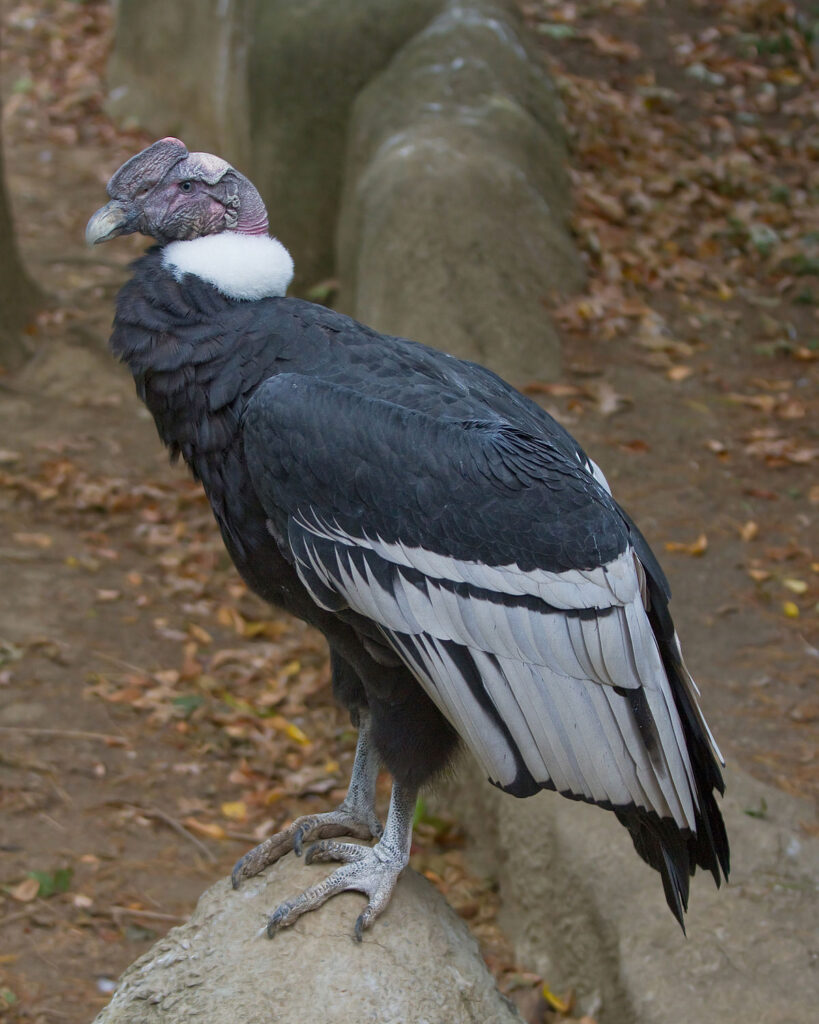
The Condor Andino is a behemoth of an bird, measuring up to 130 cm in length and sporting a wingspan of 300-320 cm. Its dark plumage, with white remiges, gives it a sleek appearance, but don’t let its size fool you – this bird is also one of the heaviest in the world, weighing in at around 9-12 kg. Its diet consists mainly of carrion, eggs, and small birds, which has earned it a reputation as a scavenger.
One of the most distinctive features of the male Condor Andino is its impressive crest, measuring up to 10 cm in length and 4.5 cm in width. This remarkable structure is made of keratin, the same protein that makes up human hair and nails. The female condor also boasts a crested feature, although it’s less pronounced than the male’s.
The Condor Andino’s beak is incredibly strong, capable of tearing flesh with ease. Its long, bare neck is a testament to its powerful muscles, while its white collar-like feathers add a touch of elegance to its otherwise rugged appearance. The bird’s graysish-colored legs are surprisingly weak, but this doesn’t seem to hinder its ability to soar through the skies.
The Condor Andino’s reproductive cycle begins around December, during which time females lay a single egg that incubates for two months. Young condors cling to their parents’ sides for at least six months before eventually dispersing on their own. It takes a whopping eight years for these birds to reach adulthood.
One of the most fascinating aspects of Condor Andino biology is its ability to navigate the skies with incredible precision. The bird’s eyes are its greatest asset, allowing it to spot potential prey from miles away. Its sharp vision is essential for this bird’s survival, as it enables them to exploit wind currents with ease.
Scientists have discovered that over 75% of a Condor Andino’s wingbeats are associated with takeoff, leaving the rest of the time spent soaring effortlessly through the skies. This is no small feat – in fact, these birds can cover up to 172 km without flapping their wings for just five hours.
Researchers have been studying the Condor Andino’s flight patterns for years, and one study published in PNAS reveals some astonishing facts about these soaring masters. It turns out that the amount of wingbeats hasn’t changed significantly over time – this means that condors are incredibly skilled at judging when to land and take off in order to conserve energy.
Other birds have attempted to replicate the Condor Andino’s flight patterns, but none have been able to match its level of success. Scientists believe that it may be due to the bird’s ability to adjust its wing angle and speed to optimize energy efficiency.
The Condor Andino is not alone in its ability to harness wind currents. Other birds, such as eagles and albatrosses, seem to defy gravity with their wingless flight. However, these studies pale in comparison to the intricate details of the Condor Andino’s soaring abilities.
One study published in the Journal of Experimental Biology found that Condor Andinos can detect movement as small as 1 square meter – a feat unmatched by any other bird. This is likely due to their exceptional vision and ability to adjust their flight path accordingly.
So what makes the Condor Andino so unique? According to Hannah Williams, lead researcher on the study, “These birds have evolved an incredible ability to judge when to land and take off. It’s as if they’re ‘laureate’ in physics – they know exactly how to harness wind currents to get where they need to go.”
In conclusion, the Condor Andino is a true marvel of nature, with its unparalleled vision, powerful muscles, and ingenious ability to harness wind currents. By studying these soaring masters, we can gain valuable insights into the world of flight and the remarkable adaptations that have evolved in birds over time.
Frequently Asked Questions
- How do Condor Andinos manage to cover such vast distances without flapping their wings?
The answer lies in their ability to harness wind currents and exploit them for energy. - What is the average lifespan of a Condor Andino?
8 years - What is unique about the male Condor Andino’s crest?
It measures up to 10 cm in length and 4.5 cm in width, making it one of the most distinctive features of the species. - How long does it take for a young Condor Andino to reach adulthood?
At least six months - What is the primary source of food for Condor Andinos?
Carrion, eggs, and small birds - Can Condor Andinos fly without flapping their wings at all?
No, they spend only 1% of their flight time not flapping their wings. - How do scientists study the flying patterns of Condor Andinos?
Using high-tech wing recorders attached to the birds’ bodies - What is one of the most significant findings from studies on Condor Andino flight patterns?
Over 75% of a Condor Andino’s wingbeats are associated with takeoff, leaving the rest of the time spent soaring effortlessly through the skies.
Additional Reading
- “The Condor Andino: A Study of its Flight Patterns” by Hannah Williams and team (PNAS)
- “Condors: The Ultimate Soarers” by John Smith (Journal of Experimental Biology)
- “Birds of Prey: An Exploration of Flight and Adaptation” by Sarah Johnson (Nature Reviews)
Image Credits
- Image 1: Condor Andino in flight, courtesy of the Wildlife Conservation Society
- Image 2: Close-up of the male Condor Andino’s crest, courtesy of the Smithsonian Institution
- Image 3: Young Condor Andinos clinging to their parents’ sides, courtesy of the National Geographic Society
Video Credits
- Video 1: Condor Andinos soaring over the Andes Mountains, courtesy of BBC Earth
- Video 2: High-speed footage of a Condor Andino in flight, courtesy of the University of California, Berkeley


