
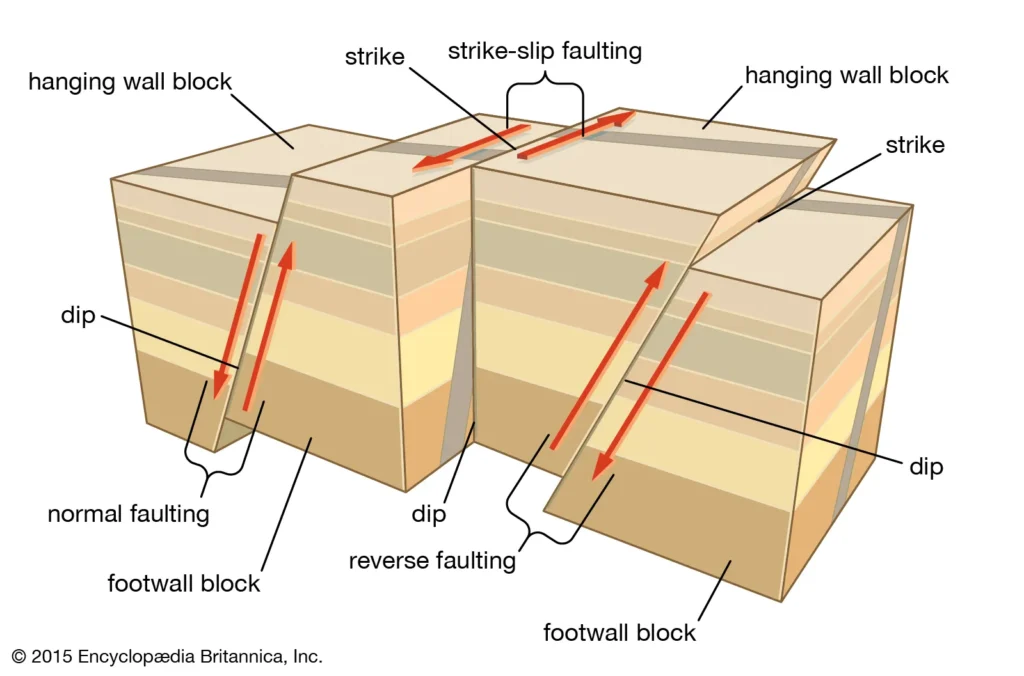
As we delve into the fascinating world of geology, it becomes apparent that understanding the complexities of the Earth’s crust is crucial in grasping the fundamental principles of plate tectonics. Among the various types of faults that comprise this intricate system, faglie trascorrenti and trasformi stand out as pivotal elements in shaping our planet’s surface. In this article, we will embark on an exploration of these enigmatic features, examining their characteristics, behaviors, and significance in the context of Earth’s dynamics.
What are Faglie Trascorrenti?
Faglie trascorrenti, also known as transcurrent faults or wrench faults, are a type of fault that exhibits horizontal movement. This movement can occur from either side, with one side moving to the right (destra) and the other to the left (sinistra). To comprehend this phenomenon, imagine being on top of two parts of the fault in relative motion, observing how they interact. If the observed side is moving to the right, you are dealing with a transcurrent fault on the right; otherwise, it’s a leftward-moving fault.
It’s worth noting that not all faglie trascorrenti exhibit vertical or oblique movement; rather, their primary characteristic is horizontal displacement. This distinction sets them apart from other types of faults, such as direct and inverse faults, which involve vertical movements due to forces of stretching and compression.
Faglie Trascorrenti and Transformi: A Shared Feature
While faglie trascorrenti and trasformi share a common trait – horizontal movement – they differ in terms of geodynamics and mechanical/geological aspects. One notable difference is that trasformi can be widened by the intrusion of basaltic or ultrabasic magmas.
Let’s take a closer look at how a trasforme is formed. This type of fault involves horizontal motion between margins of soil, typically found transversely along mid-ocean ridges. These regions are characterized by intense seismic activity, and numerous examples can be found along the Mid-Atlantic Ridge, stretching for thousands of kilometers.
Faglie Trascorrenti: Characteristics and Behaviors
Transcurrent faults exhibit distinct characteristics that distinguish them from other types of faults. Some of these features include:
- Horizontal movement: The primary characteristic of transcurrent faults is their horizontal motion, which can occur from either side.
- No vertical or oblique displacement: Unlike direct and inverse faults, transcurrent faults do not involve vertical or oblique movements due to forces of stretching and compression.
- Formation along margins of soil: Transcurrent faults typically form along boundaries between different types of rocks or soil, often in areas of high tectonic activity.
Faglie Trascorrenti: Importance and Impact
Transcurrent faults play a crucial role in shaping our planet’s surface. They can create zones of intense seismic activity, as observed along mid-ocean ridges. Understanding these faults is essential for grasping the complexities of plate tectonics and predicting earthquakes.
Faglie Trascorrenti: Case Studies and Examples
Several notable examples of transcurrent faults have been identified around the world. Some of the most significant include:
- The San Andreas Fault: This famous fault in California, USA, exhibits horizontal motion to the west, with one side moving northward and the other southward.
- The North Anatolian Fault Zone: Located along the boundary between Europe and Asia, this transcurrent fault is responsible for numerous earthquakes in Turkey.
- The East African Rift System: This vast rift system stretches from the Red Sea to Mozambique and is characterized by intense seismic activity due to its transcurrent nature.
Faglie Trascorrenti: Terminology
In English, transcurrent faults are referred to as “transcurrent fault,” but they can also be described using alternative idioms like “wrench fault,” “tear fault,” or “décrouchement” and “blattverschiebung.”
The Role of Faglie Trascorrenti in Earth’s Dynamics
Transcurrent faults play a significant role in shaping our planet’s surface. They can create zones of intense seismic activity, making them an essential aspect of earthquake prediction.
Conclusion: Exploring Faglie Trascorrenti and Transformi
As we conclude this exploration of faglie trascorrenti and trasformi, it becomes clear that these enigmatic features are integral components of our planet’s dynamic system. By grasping their characteristics and behaviors, we can better understand the intricate dance between Earth’s crust and its surface.
Frequently Asked Questions:
- What is a faglia trascorrente?
A transcurrent fault is a type of fault that exhibits horizontal movement, with one side moving to the right (destra) or left (sinistra). - How are faglie trascorrenti formed?
Faglie trascorrenti are typically formed along margins of soil, where horizontal motion occurs between these boundaries. - What is the relationship between faglie trascorrenti and earthquakes?
While not all transcurrent faults pose the same level of threat, they all involve horizontal movement – a characteristic shared with other fault types. - Can faglie trascorrenti be widened by magma intrusion?
Yes, trasformi can be widened by the intrusion of basaltic or ultrabasic magmas. - What is the significance of mid-ocean ridges in understanding faglie trascorrenti?
Mid-ocean ridges are characterized by intense seismic activity and provide a unique opportunity to study transcurrent faults. - How do faglie trascorrenti contribute to earthquakes?
Faglie trascorrenti can create zones of intense seismic activity, making them an essential aspect of earthquake prediction. - What is the role of transcurrent faults in shaping our planet’s surface?
Transcurrent faults play a significant role in shaping our planet’s surface by creating zones of intense seismic activity and contributing to plate tectonics.
Future Research Directions:
As research continues to advance, it is essential to explore new avenues for understanding faglie trascorrenti and trasformi. Some potential areas of investigation include:
- High-resolution imaging techniques: Developing high-resolution imaging techniques can provide a more detailed view of transcurrent faults, allowing researchers to better understand their behavior and impact.
- Seismic hazard assessment: Investigating seismic hazard assessments can help identify areas prone to earthquakes and inform strategies for mitigating the effects of seismic activity.
- Tectonic modeling: Developing tectonic models that incorporate transcurrent faulting can provide valuable insights into the dynamics of our planet’s surface.
By continuing to explore and understand faglie trascorrenti and trasformi, we can gain a deeper appreciation for the complexities of Earth’s dynamic system and develop more effective strategies for managing seismic hazards.


