
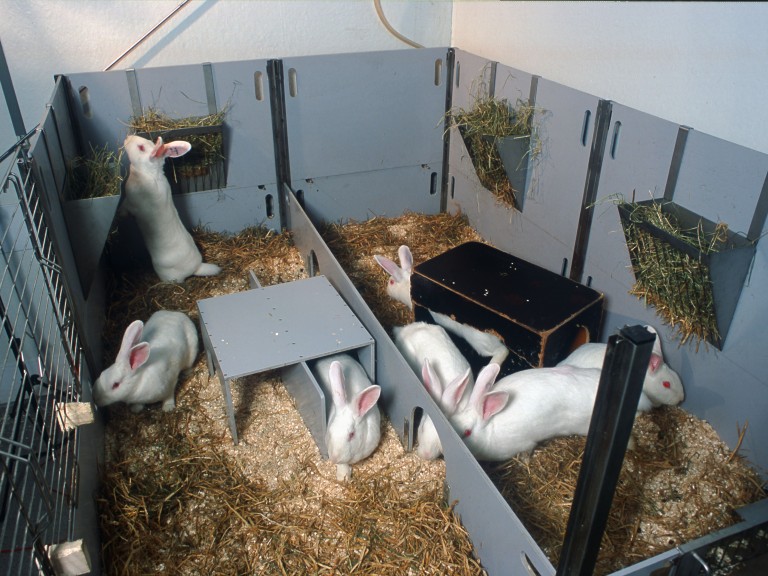
The Raising of Rabbits and Possible Enclosures
We’ve discussed rabbit breeding many times, but we haven’t yet explored the cycle of raising rabbits and enclosures. Ideal enclosures for rabbit cages should be divided into two separate areas. The first area houses cage cells for reproduction, while the second area holds cage cells for growing young rabbits.
Why this distinction? Why do reproduction cell cages have dividers and external nests, while male cell cages only have dividers but no nests? To achieve maximum breeding cycle efficiency, enclosures must also be carefully set up.
The enclosure described in the introduction is for a rabbit cage-raising operation within an enclosed environment. However, this is not the only solution. There are various types of enclosures with different techniques of raising rabbits. A summary list:
- Cage-Raising Within an Enclosed Environment
- The enclosure is made up of an old building or warehouse divided into at least two areas: one for housing rabbit cells with dividers, some with external nests (cells intended for reproduction) and the other for rabbit cells without dividers, designed to grow young rabbits.
- Mobile Cage-Raising Outside
- The cages are located outside and are single-cellular with an internal nest. For males, the cage is a double-cellular fixed structure housed in a covered area. In this case, the mobile cages consist of “Arches.” With these mobile cages, rabbits have access to new grazing areas because the Arca needs to be moved every 2 days by the length of the Arca, following a straight line.
- Natural Raising
- The Arch is the ideal compromise between enclosed and outdoor raising. For those who prefer to raise rabbits in a natural way with sufficient space available, can set up small grazing areas structured into various zones. Of course, the area must be properly fenced.
Note: The date of publication for this text was August 17, 2013.
Creating an Optimal Environment for Rabbit Raising
When it comes to raising rabbits in enclosures, creating an optimal environment is crucial for their health and well-being. Here are some key considerations:
- Temperature: Rabbits require a comfortable temperature range of between 18-24°C (64-75°F) to stay healthy.
- Humidity: Keeping the enclosure’s humidity level moderate helps prevent respiratory problems.
- Lighting: Providing adequate lighting, especially in the morning and evening, is essential for rabbits’ circadian rhythms.
Understanding Rabbit Behavior
Rabbits are intelligent and social animals that require attention and care. Understanding their behavior can help you provide them with a more suitable environment:
- Social Structure: Rabbits are naturally social creatures and thrive in pairs or groups.
- Habitat: Provide rabbits with access to suitable habitats, such as grasslands, forests, and burrows.
- Communication: Recognize and respond to rabbit body language to build trust and ensure their well-being.
Designing an Enclosure for Success
When designing an enclosure for raising rabbits, consider the following factors:
- Space: Ensure that each rabbit has sufficient space to move around comfortably, with a minimum of 1 square meter (10.76 square feet) per rabbit.
- Ventilation: Provide adequate ventilation to prevent ammonia buildup and maintain air quality.
- Safety: Implement safety features, such as secure fencing and protective barriers, to prevent injuries.
Enclosure Types: A Guide
Here’s a summary of the different types of enclosures available for raising rabbits:
- Cage-Raising Within an Enclosed Environment
- Suitable for small-scale rabbit breeding operations
- Easy to manage and maintain
- Mobile Cage-Raising Outside
- Ideal for large-scale operations or those with limited space
- Requires regular relocation of cages
- Natural Raising
- Suitable for experienced breeders who can provide suitable habitats
- Demands a significant amount of space and resources
Benefits of Rabbit Enclosures
Rabbit enclosures offer several benefits, including:
- Improved Health: Enclosures provide a safe and healthy environment for rabbits to thrive.
- Increased Productivity: Enclosures allow breeders to manage their rabbit populations more effectively, resulting in increased productivity.
- Reduced Stress: Rabbits are less stressed when housed in enclosures with proper ventilation and natural light.
Challenges of Rabbit Enclosures
However, there are also challenges associated with raising rabbits in enclosures, including:
- Space Limitations: Enclosures can be limited by space, which may affect the size of the rabbit population.
- High Maintenance Costs: Enclosures require regular maintenance and cleaning to prevent health problems.
- Regulatory Compliance: Breeders must comply with local regulations and standards when raising rabbits in enclosures.
Best Practices for Rabbit Enclosure Design
To ensure that your rabbit enclosure is safe, healthy, and productive, follow these best practices:
- Choose the Right Location: Select a location that provides adequate sunlight and ventilation.
- Design for Space Efficiency: Use space-efficient designs to maximize the number of rabbits per enclosure.
- Implement Safety Features: Incorporate safety features, such as secure fencing and protective barriers.
Conclusion
Raising rabbits in enclosures requires careful planning, attention to detail, and a commitment to providing the best possible care. By understanding rabbit behavior, designing an optimal environment, and selecting the right enclosure type, you can create a thriving rabbit-raising operation.
Frequently Asked Questions (FAQs)
- What is the ideal temperature range for rabbits?
- Rabbits require a comfortable temperature range of between 18-24°C (64-75°F) to stay healthy.
- How much space do rabbits need per enclosure?
- Each rabbit should have at least 1 square meter (10.76 square feet) of space to move around comfortably.
- What are the most important factors to consider when designing a rabbit enclosure?
- Space, ventilation, and safety features are crucial for maintaining air quality and preventing injuries.
By following these guidelines and considering the specific needs of rabbits, you can create an optimal environment for raising healthy and happy animals.
Best regards,
Anna De Simone


