
Introduction
Your bed is where you spend around eight hours a day, every day. Yet, how often do we think about cleaning the mattress? The dust mite, a tiny arachnid, has made its home in our beds, feeding on human skin cells, sweat, and other organic matter. In this article, we’ll delve into the world of dust mites, explore the risks they pose, and discuss effective methods for eliminating them from your bed.
The Allergy-Inducing Menace
Did you know that a single mattress contains around 2 million dust mites? According to the World Allergy Organization, this is not just an unsettling statistic but also a significant health concern. Dust mites are not biting insects; however, their waste products can trigger allergic reactions, exacerbate respiratory issues like asthma, and even cause skin irritation.
Why Can’t We Simply Get Rid of Them?
Dust mites thrive in warm, humid environments with plenty of organic matter to feed on. They’re experts at hiding from detection, making it challenging to eliminate them without proper guidance. Unlike other pests, dust mites don’t leave behind obvious signs or scat.
The Biology of Dust Mites
Dust mites are tiny arachnids that belong to the family Pyroglyphidae. There are over 300 species of dust mites, but only a few species are commonly found in homes. The most common species is Dermatophagoides farinae, also known as the house dust mite or American dust mite.
Dust mites have eight legs, a rounded body, and a distinctive oval-shaped cephalothorax. They range in size from 0.3 to 1.5 millimeters in length and are usually brown or gray in color. Dust mites feed on organic matter such as human skin cells, sweat, hair, and dander.
Why Are Dust Mites So Hard to Get Rid Of?
Dust mites are hard to get rid of for several reasons:
- They thrive in warm, humid environments with plenty of organic matter to feed on.
- They’re experts at hiding from detection, making it challenging to eliminate them without proper guidance.
- They don’t leave behind obvious signs or scat, making it difficult to detect their presence.
Keeping Your Home Clean
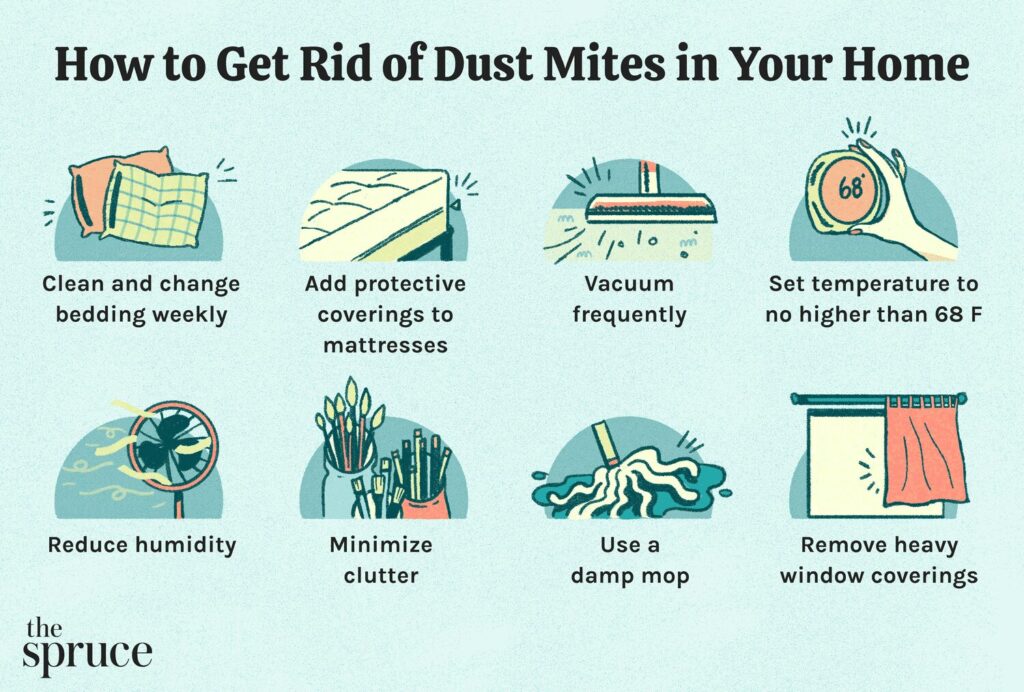
Before we dive into the methods for eliminating dust mites, it’s essential to understand that cleanliness plays a significant role in reducing their population. Regularly vacuuming, washing bedding, and using allergen-proof mattress covers can help minimize the risk of infestation.
The Best Way to Kill Dust Mites: Heat Treatment
One effective method for eliminating dust mites is through heat treatment. By using an upright vacuum cleaner with a hose attachment, you can thoroughly clean your bed, including under the mattress, box spring, and pillows. This process, often referred to as “steam cleaning,” involves using hot water vapor to kill dust mites on contact.
The Power of Ultraviolet Light
Ultraviolet (UV) light is another potent tool in the fight against dust mites. Specialized devices like the Ultra Voltex Hover can emit UV-C rays that are lethal to these tiny creatures, ensuring a deep clean without leaving any visible signs or scat behind.
Natural Remedies for Dust Mites
While chemical treatments may be effective, some people prefer natural methods for eliminating dust mites. Two popular options include:
- Neem oil: This plant-based oil is toxic to dust mites and can be used as a homemade remedy by mixing 15 drops of neem oil with 1 liter of water and spraying it directly onto the affected areas.
- Baking soda: Sprinkling baking soda liberally over your mattress, box spring, or pillows can help absorb moisture and reduce humidity levels, making it less hospitable to dust mites.
What Are Dust Mites’ Prey?
Dust mites feed on a wide variety of organic materials, including:
- Human skin cells
- Sweat
- Hair
- Dander (dead skin cells)
- Pollen
- Pet dander
Other Types of Dust Mites
While the term “dust mite” often refers to the common household arachnid, there are other types that can affect you:
- Dermatophagoides farinae: Also known as the house dust mite or American dust mite, this species is responsible for most allergy-related issues.
- Dermatophagoides pteronyssinus: This European dust mite is often found in homes with pets and can exacerbate allergies.
Conclusion
Dust mites are an omnipresent threat to our health and well-being. By understanding their habits, taking preventive measures, and implementing effective methods for elimination, we can reclaim our beds as a safe haven from these tiny, allergy-inducing menaces.
FAQs
- How often should I clean my mattress?
Cleaning your mattress regularly is essential to prevent dust mite infestations. - Can I use chemical treatments on my mattress?
Chemical treatments can be effective but may not be suitable for everyone, especially those with allergies or sensitivities. - How do I get rid of dust mites from my bed?
Use a combination of heat treatment and UV light to kill dust mites or opt for natural remedies like neem oil or baking soda. -
What are the most effective ways to prevent dust mite infestations?
Regularly vacuum, wash bedding, use allergen-proof mattress covers, and maintain a clean environment with low humidity levels. -
Can I vacuum my mattress?
Vacuuming your mattress can help remove dust mites and their waste products but may not be effective in killing the creatures themselves. - What are some common signs of dust mite infestation?
Look out for itchy skin, sneezing, congestion, or redness around the eyes, nose, and mouth. -
Can I use a steam cleaner to kill dust mites on my mattress?
Steam cleaning can be an effective method for killing dust mites but may not cover all areas of your mattress. -
How do I choose the best UV light device for eliminating dust mites?
Look for devices specifically designed for killing dust mites, such as those with UV-C rays and adjustable heat settings. -
Can I use a dehumidifier to get rid of dust mites?
Dehumidifiers can help reduce humidity levels in your home but may not be effective in eliminating dust mites on their own. -
How long does it take to eliminate dust mites from my mattress?
The time it takes to eliminate dust mites from your mattress depends on the severity of the infestation and the effectiveness of the treatment method. -
Can I use a combination of heat treatment and UV light to get rid of dust mites?
Yes, using a combination of heat treatment and UV light can be an effective method for eliminating dust mites. -
What are some common mistakes people make when trying to eliminate dust mites?
Common mistakes include not thoroughly cleaning the mattress, not reducing humidity levels, and not following proper treatment protocols. -
Can I use a natural remedy like baking soda to get rid of dust mites?
Yes, using baking soda as a natural remedy can help absorb moisture and reduce humidity levels, making it less hospitable to dust mites. -
How often should I wash my bedding?
Washing your bedding regularly is essential to prevent dust mite infestations. -
Can I use a mattress cover with a built-in allergen-proof barrier to get rid of dust mites?
Yes, using a mattress cover with an allergen-proof barrier can help keep dust mites away from your bed.


