
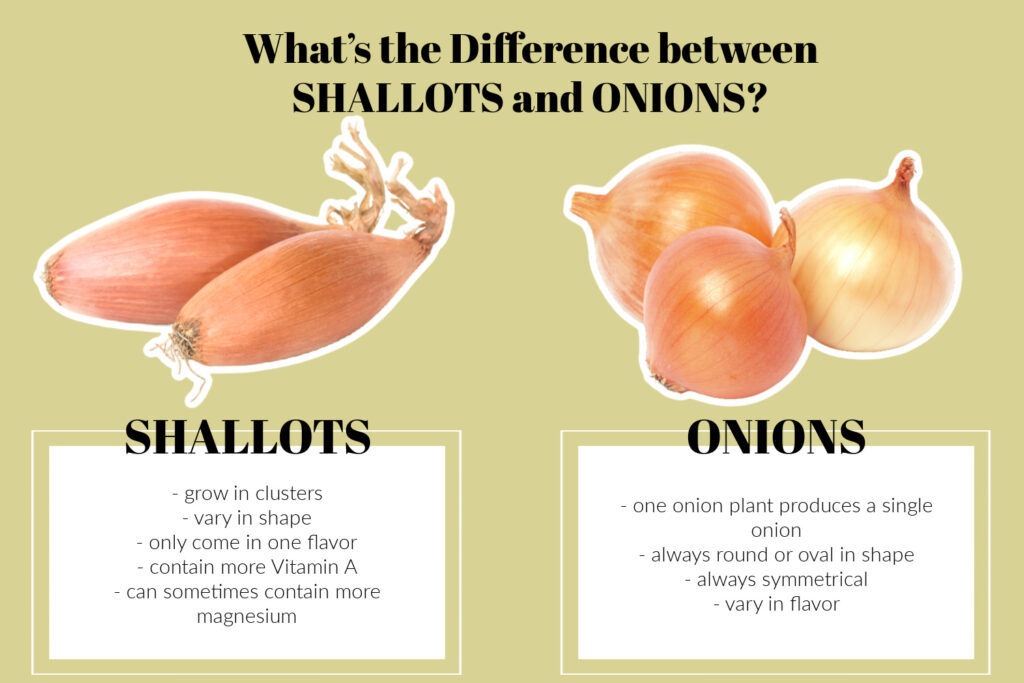
Shallots, also known as scallions or shallogs, are a type of plant that belongs to the same family as onions and garlic. In this article, we’ll explore the differences between shallots and onions.
What is a Shallot?
A shallot is a type of bulbous plant that belongs to the Allium cepa species. The name “shallot” refers to both the plant’s origin and its bulb. Shallots are native to the Mediterranean region, specifically to the port city of Ascalona in present-day Israel.
Distinguishing Between Shallots and Onions
To differentiate between shallots and onions, look at their bulbs. Shallots have a composite bulb made up of multiple smaller bulbs, while onions have a single large bulb. Shallot bulbs are typically 5 cm (2 inches) in diameter after being peeled. There are several varieties of shallots, each with different colors:
- Green violaceo
- Red
- Roasted-bronze
- Italian (Romagna IGP)
- Jersey (with a spherically shaped bulb and sweet flavor)
- Yellow
- Gray
- White
Shallot bulbs can also vary in shape, ranging from spherical to elongated. The flavor of shallots is generally sweeter and milder than onions, which makes them suitable for various recipes.
What’s the Difference Between Shallots and Onions?
While both shallots and onions belong to the Allium family, they have distinct differences:
- Flavor: Shallots are generally sweeter and more aromatic than onions.
- Usage: Shallots are often used in cooking because of their delicate flavor, while onions are commonly used for their stronger, pungent taste.
Choosing Between Shallots and Onions
When deciding between shallots and onions for your recipe, consider the desired level of flavor intensity. If you want a sweeter, more delicate flavor, choose shallots. For a bolder, more pronounced taste, opt for onions. Even among onions, there are various varieties to explore.
Growing Shallots
Shallots can be grown using similar methods to growing onions:
- Plant the seeds 6 mm deep and 25 cm apart.
- Allow the soil to dry out after germination (10-14 days at 20-24°C).
- Use well-draining soil in a sunny spot.
Tips for Growing Shallots
- Keep the soil moist but not waterlogged.
- Don’t overcrowd the plants.
- Harvest shallots when they’re fully ripe, usually between July and August.
FAQs
Q: What’s the difference between shallots and onions?
A: Shallots have a sweeter and more delicate flavor than onions. They also have a composite bulb and can be distinguished from onions by their shape and color.
Q: How do I choose between shallots and onions for a recipe?
A: Consider the desired level of flavor intensity. If you want sweetness, use shallots; if you prefer a stronger taste, opt for onions.
Q: Can I grow my own shallots at home?
A: Yes, follow the steps outlined above to plant and care for your shallots.
Q: How do I store shallots?
A: Shallots should be stored in a dry place with good air circulation to prevent mold and decay.
Q: What are some popular uses for shallots?
A: Shallots can be used in various recipes, including salads, soups, and sauces. They add a sweet and aromatic flavor to dishes.
Q: Can I use scallions (green onions) instead of shallots?
A: While scallions have a similar flavor profile, they’re not the same as shallots. Scallions are typically used in salads, sandwiches, and other fresh applications.
Q: How do I peel and prepare shallot bulbs for cooking?
A: Peel the bulb by removing the papery skin, then chop or slice it according to your recipe’s needs.
Q: What are some common varieties of shallots?
A: There are several types of shallots, including zebrune, romagna Italian, jersey, yellow, and white.
Q: Can I dry or freeze shallot bulbs for later use?
A: Yes, you can preserve shallot bulbs by drying or freezing them. Simply chop the bulb into small pieces, pat them dry with paper towels, and store them in an airtight container.


