
Introduction
Imagine a majestic creature, with iridescent scales and regal demeanor, ruling over the coral reef. Welcome to the world of angel fish, particularly the emperor species, Pomacanthus imperator. These stunning fish have captivated the hearts of aquarium enthusiasts for decades, and in this article, we’ll delve into their fascinating world, exploring their behavior, habitat, diet, and care requirements.
What is an Angel Fish?
The angel fish genus comprises 88 species, spread across eight genera. One common trait among all angel fish is their unique reproductive strategy: they are hermaphrodites, meaning they mature as females and then differentiate into males. In general, these fish prefer shallow waters (2-20 meters) but some species can be found in depths of over 50 meters.
Behavioral Insights
Angel fish exhibit social behavior, with some species forming “harems” consisting of a single male and up to four females. Others are solitary or form small groups. Interestingly, many angel fish species undergo significant morphological changes between their juvenile and adult stages, making them a fascinating subject for study.
One notable example is the threadfin butterflyfish (Chaetodon auripes), where young individuals have long, thin fins that disappear as they mature. This unique adaptation is thought to be an evolutionary response to predators.
Another intriguing species is the regal tang (Acanthurus leucosternon). These fish are known for their distinctive yellow and black stripes, but what’s less well-known is their remarkable ability to recognize individual members of their own species. This social behavior is rare among marine fish.
Meet the Emperor Angel Fish
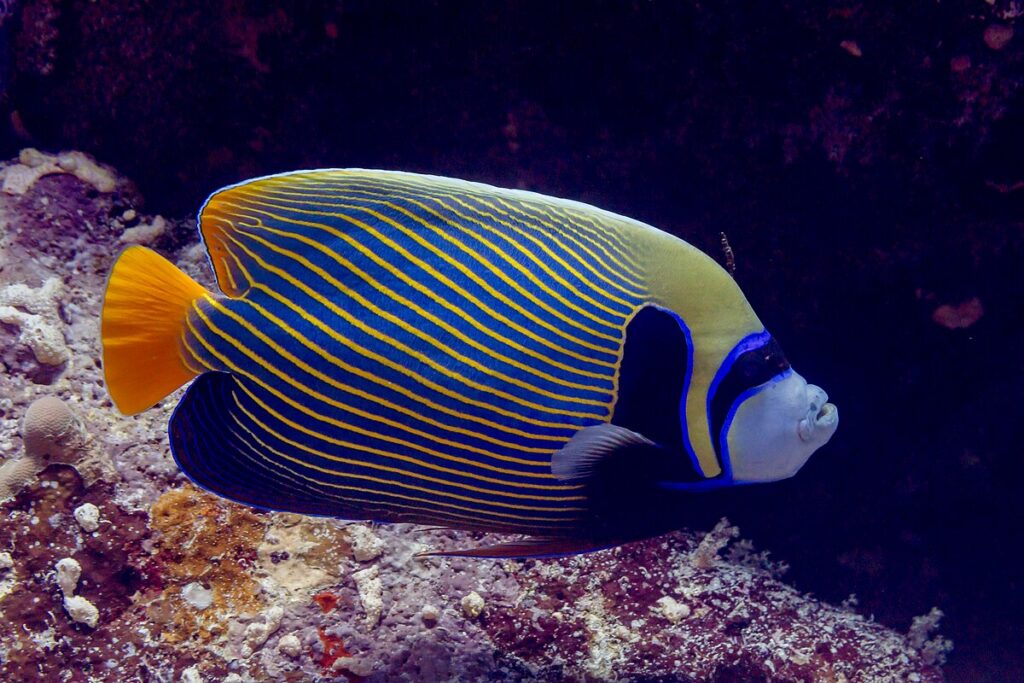
One popular species is the Pomacanthus imperator, also known as the emperor angel fish. This magnificent creature boasts striking colors in both its juvenile and adult forms. The young emperor has a dark blue body with semi-circular blue and white lines radiating forward, eventually becoming vertical on its head. As it matures, its coloration becomes even more vibrant, featuring horizontal yellow stripes alternating with blue.
Species Profile: Pomacanthus Imperator
Origin: Native to the Pacific Indian Ocean, specifically in Central Africa, the Red Sea, eastern Philippines, Japan, and the Great Barrier Reef in Australia.
Dimensions: Reaches a maximum length of 38 cm (15 inches).
Habitat: Adults inhabit cave-like structures and protruding rocks at great depths. Young fish live in more protected areas, such as coastal waters, lagoons, or canals.
In addition to their striking appearance, emperor angel fish are also known for their unique courtship behavior. During mating, males will perform a complex dance involving rapid fin movements and changes in coloration. This display helps attract potential mates and establish dominance within the group.
Diet and Nutrition
In an aquarium setting, providing a varied diet is essential for the emperor angel fish. A mix of frozen and live foods, including brine shrimp, mysis, and algae-based dishes, should be offered multiple times a day. Young fish may require more frequent feeding, especially when introduced to their new environment.
Feeding regimens can vary depending on the individual fish’s age, size, and activity level. Generally, it’s recommended to offer smaller meals throughout the day rather than large portions at once. This helps prevent digestive issues and promotes overall health.
Introducing the Emperor Angel Fish
When introducing an emperor angel fish to your aquarium, it’s crucial to provide a secure hiding place or cave for the young fish to retreat into. As they grow and become more confident, they will begin to establish their territory. When choosing tankmates, select species that are well-established in the aquarium, as the emperor can be territorial.
In particular, smaller fish such as damselfish and chromis are often recommended as tankmates for emperor angel fish. These species tend to be less aggressive and won’t compete with the emperor for food or resources.
Tank Requirements
- Volume: A minimum of 300 liters (79 gallons) is recommended for this species.
- Water parameters: pH: 8-8.5, salinity: 1.020-1.025, temperature: 22-28°C.
- Experience level: Intermediate to advanced aquarists are advised.
Frequently Asked Questions
Here are some key questions about the emperor angel fish:
- Do emperor angels eat corals?
- Yes, adult emperor fish can bite and damage coral mantles or bivalves.
- Younger fish tend to cause less disturbance to corals.
- What is the ideal tank size for an emperor angel fish?
- A minimum of 300 liters (79 gallons) is recommended.
- How long does it take for a young emperor fish to mature?
- The transformation from juvenile to adult can take several months, if not years, in captivity.
In conclusion, the emperor angel fish is a majestic and fascinating species that requires careful consideration when introducing it to your aquarium. By understanding their behavior, habitat, diet, and care requirements, you can provide the optimal environment for these magnificent creatures to thrive.


