
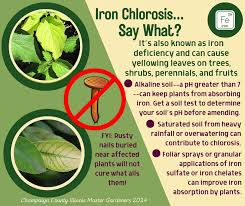
Iron chlorosis, also known as iron deficiency disease, is a common plant disorder that affects the health and appearance of many plants. It occurs when the soil lacks sufficient amounts of iron, a crucial nutrient for plant growth and development.
Understanding the Causes of Iron Chlorosis
Iron chlorosis is caused by a lack of available iron in the soil. This can occur due to various factors such as:
- Soil pH imbalance: Soil with a high or low pH level can lead to iron deficiency, as some soils have an increased concentration of iron-binding compounds that make it unavailable to plants.
- Soil type: Clay soils tend to retain less iron than sandy soils, while peat-based soils may contain more iron due to their high organic matter content.
- Nutrient cycling: Iron can be leached from the soil by heavy rainfall or irrigation water, leading to a decrease in its availability for plants.
Recognizing the Symptoms of Iron Chlorosis
One of the most distinctive symptoms of iron chlorosis is the yellowing or pale green coloration of leaves. The extent of the discoloration can vary depending on the severity of the deficiency, but it often starts with small, isolated patches that gradually spread to larger areas. If left untreated, iron chlorosis can lead to the loss of entire leaves and even the death of the plant.
The Role of Chlorophyll in Photosynthesis
Chlorophyll is the green pigment responsible for photosynthesis, which is essential for plant growth. Iron plays a critical role in the production of chlorophyll, making it an integral part of this process. Without sufficient iron, plants are unable to produce enough chlorophyll, leading to the characteristic yellowing or pale green coloration.
Factors That Contribute to Iron Chlorosis
Several factors can contribute to iron chlorosis, including:
- Soil pH: An imbalance in soil pH can affect the availability of nutrients like iron. Plants that prefer acidic soils may be more susceptible to iron chlorosis.
- Calcium and Magnesium Levels: High levels of calcium and magnesium in the soil can interfere with iron uptake by plants.
- Irrigation Water Quality: Using water from a well or municipal supply that is high in calcium carbonate can lead to iron chlorosis.
Preventing Iron Chlorosis
To prevent iron chlorosis, it’s essential to monitor soil pH levels and adjust as necessary. Additionally:
- Soil Testing: Regularly testing the soil for nutrient deficiencies, including iron, can help identify potential problems early on.
- Fertilization: Applying fertilizers that contain iron can help replenish the soil with this essential nutrient.
Common Plants Affected by Iron Chlorosis
Iron chlorosis can affect a wide range of plants, including:
- Acid-loving plants like azaleas and camellias
- Fruiting trees like citrus and apples
- Vegetable crops like tomatoes and cucumbers


