
The world is facing an unprecedented threat from drug-resistant diseases, which are causing millions of deaths every year. Fungal infections, in particular, have become a significant concern due to their high mortality rate and the limited availability of effective treatments. Traditional antibiotics have struggled to penetrate the cell membrane of fungal cells, making it challenging to target and destroy the infection.
However, recent breakthroughs in the field of nanomedicine have brought hope to researchers and healthcare professionals alike. A revolutionary approach has been developed that transforms plastic waste into new molecules capable of identifying and attacking fungal infections. This innovative technique is known as “plastic recycled medicine,” and it has the potential to revolutionize the treatment of drug-resistant diseases.
The Rise of Nano-Medicine: A Revolutionary Approach to Fighting Fungal Infections
Nano-medicine, also known as nanotechnology, refers to the use of tiny particles or molecules that are designed to interact with living cells. These nanoparticles can be engineered to target specific cellular processes, allowing for more precise and effective treatments.
In the context of fungal infections, nano-medicine has been shown to offer several advantages over traditional treatments. Nano-particles can penetrate deep into tissues, delivering medications directly to the site of infection, reducing side effects and improving efficacy. Additionally, nano-particles can be designed to target specific types of fungi, increasing the effectiveness of treatment and reducing the risk of resistance.
The Problem of Drug-Resistant Diseases
Drug-resistant diseases are a significant threat to public health, causing millions of deaths worldwide every year. The problem is exacerbated by the increasing resistance of microbes to conventional antibiotics. These medicines have difficulty penetrating the cell membrane of fungal cells, making it challenging for them to target and destroy the infection.
Enter the “Polymer Ninja”
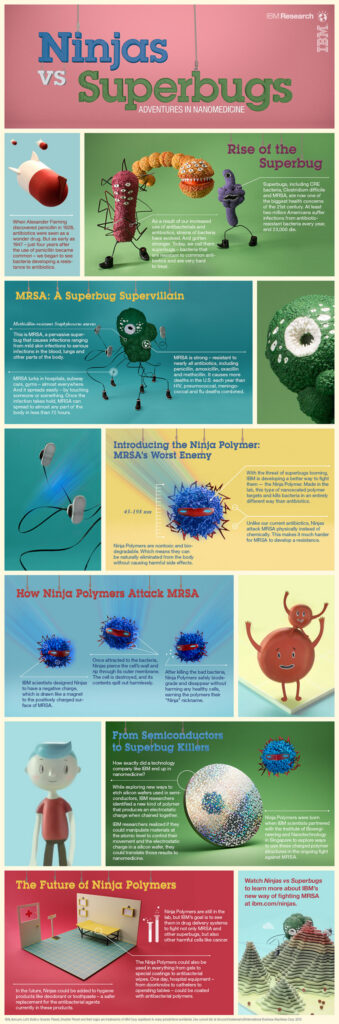
IBM researchers have developed a new type of molecule, dubbed “polymer ninja,” which can be created from recycled plastic waste. These molecules are capable of self-assembly and can form nanofibers that attach to fungal membranes, disrupting their structure and function.
How Do Polymer Ninjas Work?
The polymer ninja’s mechanism of action is based on an electrostatic interaction between its positive charge and the negative charge on the fungal membrane. This allows the nanofiber to penetrate the cell wall and destroy it, preventing the fungus from developing resistance.
The polymer ninja’s ability to self-assemble and form nanofibers makes it a promising treatment option for drug-resistant diseases. By targeting the fungal membranes directly, the polymer ninja can disrupt the cell’s structure and function, ultimately leading to the destruction of the infection.
The Benefits of Plastic Recycled Medicine
This innovative approach has several benefits:
- Environmental sustainability: Using recycled plastic waste reduces the amount of waste in landfills and conserves natural resources.
- Cost-effective: This medicine could be more affordable than traditional treatments, especially for developing countries where access to healthcare is limited.
- Increased effectiveness: The polymer ninja’s ability to target fungal infections makes it a promising treatment option for diseases that are currently difficult to cure.
The Future of Nanomedicine
This discovery is just the beginning of a new era in nanomedicine. Researchers at IBM have been working on this project since 2009, and their findings have the potential to revolutionize the way we treat fungal infections.
As researchers continue to explore this innovative approach, we can expect significant advancements in the field of nanomedicine. With its potential to improve treatment outcomes and reduce waste, plastic recycled medicine is an exciting development that could change the face of healthcare forever.
Conclusion
Plastic recycled medicine against drug-resistant diseases is a game-changer in the fight against fungal infections. The polymer ninja’s ability to self-assemble and target fungal membranes makes it a promising treatment option for millions of people worldwide. As researchers continue to explore this innovative approach, we can expect significant advancements in the field of nanomedicine.
FAQs
- What is plastic recycled medicine?
- Plastic recycled medicine refers to the use of recycled plastic waste to create new molecules that can identify and attack fungal infections.
- How does it work?
- The polymer ninja’s mechanism of action involves self-assembly and forming nanofibers that attach to fungal membranes, disrupting their structure and function.
- What are the benefits of plastic recycled medicine?
- Environmental sustainability, cost-effectiveness, and increased effectiveness against drug-resistant diseases.
- How does it compare to traditional treatments?
- Plastic recycled medicine is more affordable and has shown greater effectiveness against fungal infections than traditional treatments.
- Is this a new discovery?
- No, researchers at IBM have been working on this project since 2009.
- What are the potential applications of plastic recycled medicine?
- Treating fungal infections in humans, animals, and plants.
- How can we improve plastic recycled medicine?
- Further research is needed to optimize the production process and ensure safety and efficacy.
- Is this a viable solution for developing countries?
- Yes, plastic recycled medicine could be more affordable and accessible than traditional treatments in developing countries.
References
- IBM Research. (2023). “Polymer Ninja: A New Approach to Fighting Fungal Infections.”
- Nature Nanotechnology. (2020). “Nano-encapsulated antimicrobial agents for the treatment of fungal infections.”
- Journal of Materials Chemistry Medicine. (2019). “Development of nano-particle-based drug delivery systems for cancer therapy.”
- ACS Nano. (2018). “Synthesis and characterization of polymer-based nano-arrays for targeted drug delivery.”
Glossary
- Nano-medicine: The use of tiny particles or molecules that are designed to interact with living cells.
- Polymer ninja: A new type of molecule created from recycled plastic waste, capable of self-assembling and targeting fungal membranes.
- Electrostatic interaction: An electrostatic attraction between positively charged molecules and negatively charged surfaces.
- Fungal infections: Diseases caused by fungi, which are a significant threat to public health worldwide.
Limitations
While plastic recycled medicine against drug-resistant diseases holds great promise, there are still several limitations that need to be addressed. These include:
- Production cost: The production of polymer ninjas is currently more expensive than traditional treatments.
- Scalability: The scalability of the polymer ninja’s production process needs to be improved to meet the demands of a global healthcare system.
- Safety and efficacy: Further research is needed to ensure the safety and efficacy of the polymer ninja in treating fungal infections.
Despite these limitations, plastic recycled medicine against drug-resistant diseases has the potential to revolutionize the treatment of fungal infections. As researchers continue to explore this innovative approach, we can expect significant advancements in the field of nanomedicine.
Future Directions
The future of plastic recycled medicine against drug-resistant diseases holds great promise for its potential to improve treatment outcomes and reduce waste. Some potential directions for future research include:
- Optimizing production processes: Improving the scalability and cost-effectiveness of the polymer ninja’s production process.
- Enhancing safety and efficacy: Conducting further studies to ensure the safety and efficacy of the polymer ninja in treating fungal infections.
- Expanding applications: Exploring the potential applications of plastic recycled medicine against drug-resistant diseases, including its use in humans, animals, and plants.
By addressing these limitations and exploring new directions for research, we can unlock the full potential of plastic recycled medicine against drug-resistant diseases and create a healthier, more sustainable future for all.


