
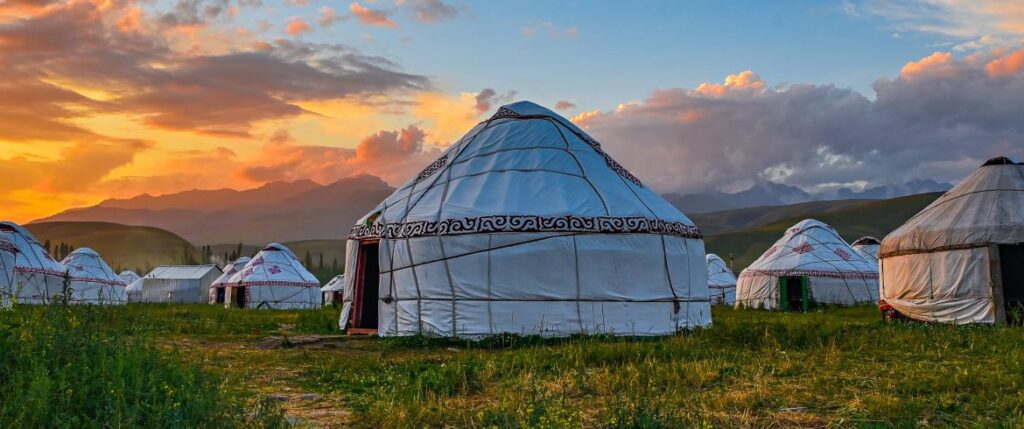
If you’re used to living in cities and skyscrapers, the concept of yurta might seem unusual. However, for nomadic communities in Asia, such as Mongolians, Kazakhs, and Uzbekis, this type of dwelling is a common and traditional way of life.
Origins of Yurta
Yurta, also known as iurta or jurta, is a type of single-family home that has been around for centuries. In Mongolia, despite urbanization, yurtas still exist in many areas, keeping the traditional lifestyle alive and inspiring innovation among other cultures, including ours.
The origins of yurta date back to the 11th century when nomadic tribes in Central Asia began using animal hides, wool, and fabric to construct mobile dwellings. The design was influenced by Mongolian architecture, with a focus on mobility, flexibility, and sustainability. Over time, yurta evolved into various forms, incorporating regional materials and designs.
The Traditional Yurta
A traditional yurt is built on a wooden frame and covered with felted wool from sheep. The dimensions can vary depending on needs, and the design can be tailored to individual preferences. What’s essential is that the yurt can be easily disassembled, transported, and reassembled in a relatively short period, making it ideal for nomadic lifestyles.
Inside, there should be space for beds, as well as necessary furniture like chairs, storage units, and a dining table. Traditional yurts often have a central heating system, using firewood or charcoal to maintain warmth during the cold winter months.
Yurta Architecture
One of the defining features of yurta architecture is its unique opening, always facing south. The layout typically follows a specific schema: the main living area is located to the north, with the head of the household nearby; children’s areas are on the east side; and the kitchen is at the entrance.
To allow smoke to escape, the yurt has an opening that can be opened when unexpected guests arrive. This design also helps to regulate temperature and humidity inside the yurt, ensuring a comfortable living space for its inhabitants.
Yurta in Italy
While building a traditional yurt in Italy might not be entirely feasible due to material differences, urban yurta designs do exist. These structures require special foundations, such as elevated bases, and may incorporate Western-style flooring, covered with sheepskin or rugs to create an authentic atmosphere.
However, the main obstacle for yurt enthusiasts is the lack of official regulations regarding these types of constructions. There are existing building codes from 2008 and 2011 that mention “self-built works” but do not specifically address whole, self-built homes like yurta.
Yurta Regulations
In Italy, there is still a void in legislation when it comes to temporary or semi-permanent structures like yurta. The only regulations are related to “temporary constructions,” which have specific requirements for materials and anchoring systems, but they do not fully address the needs of permanent or self-built homes.
The Italian government has taken steps to clarify regulations regarding alternative dwellings, such as eco-friendly houses and temporary structures, in an effort to encourage sustainable living. However, more work is needed to create a comprehensive framework for yurta construction and use.
Building a Yurta
There are various technological solutions available for constructing yurta. It’s crucial to consider local conditions when choosing designs and materials.
The process begins with creating a tensioned frame, followed by the installation of curved compression members that provide rigidity. The assemblage involves tying together an intelaiatura made up of interlocking wooden segments in a “X” pattern, then inserting central poles and additional support poles to secure them.
Yurta Prices
The cost of yurta construction can vary depending on the size, with a 20-meter square space costing around €3,000. However, prices can rise to €20,000 or more for larger spaces.
In addition to the initial construction costs, yurt owners must also consider ongoing expenses, such as maintenance, fuel for heating, and replacement of materials. However, many yurt enthusiasts argue that the long-term benefits of living in a yurta, including reduced environmental impact and increased energy efficiency, make it a worthwhile investment.
The Yurta Culture Association in the Forest
This is not your traditional Mongolian yurt, but an eco-friendly community project based in Arona (NO). They promote social and cultural activities focused on preserving natural heritage.
On their official website (www.layurtanelbosco.it), visitors can find information on upcoming events, workshops, performances, and family-friendly summer camps. The association aims to educate people about the importance of listening to nature and developing a deeper appreciation for it through direct experience.
Conclusion
In conclusion, yurta is not just a traditional nomadic dwelling but also an eco-friendly alternative for modern living. From its origins to its construction, this unique abode offers insights into Asian cultural heritage while providing inspiration for sustainable lifestyles in the West.
Yurta’s adaptability and flexibility make it an attractive option for people seeking a more environmentally friendly way of life. As technology advances and regulations evolve, yurta is poised to become a popular choice for those looking to break free from traditional housing norms.
Frequently Asked Questions (FAQs)
- What is a Yurta?
A yurt is a traditional nomadic dwelling originating from Mongolia and other parts of Asia.
- How are yurts made?
Yurts are built on a wooden frame covered with felted wool, which can be easily disassembled and reassembled.
- What makes a yurt unique?
One defining feature of yurta architecture is its opening that always faces south, allowing for better temperature regulation and smoke escape.
- Can I build a yurt in Italy?
While building a traditional yurt might not be feasible due to material differences, urban yurt designs do exist with specific requirements for foundations and flooring.
- What are the regulations surrounding yurts in Italy?
There is currently a void in Italian legislation regarding temporary or semi-permanent structures like yurta.
- How much does it cost to build a yurt?
The cost can vary depending on size, but a 20-meter square space typically costs around €3,000.
- What is the Yurta Culture Association in Italy?
It’s an eco-friendly community project promoting cultural activities focused on preserving natural heritage.
- Is yurta suitable for modern living?
Yurta can be both sustainable and adaptable to modern lifestyles while providing a unique and inspiring alternative to traditional housing.
- How long does it take to build a yurt?
The construction process typically takes several weeks, depending on the size of the yurt and the complexity of the design.
- Can I customize my yurt?
Yes, yurt enthusiasts can customize their yurta with various designs, materials, and features, making each one unique to its owner’s preferences.
- How do I maintain a yurt?
Regular maintenance is essential to ensure the longevity of a yurt. This includes cleaning the interior and exterior, checking for damage, and performing repairs as needed.
- Can I use yurta as a permanent residence?
While traditional yurts were meant to be temporary dwellings, modern yurta designs can be adapted for permanent residency with proper modifications and zoning approvals.
- Are yurta suitable for families?
Yurta can be a great option for families, providing a unique and sustainable living space that promotes bonding and environmental awareness.
- Can I build a yurt on a hillside?
While building a yurt on a hillside is possible, it requires careful planning and engineering to ensure stability and safety.
- Are yurta suitable for people with disabilities?
Yurta can be adapted to accommodate people with disabilities, providing a unique opportunity for accessible and sustainable living.


