
As humans, we’re creatures of habit. Our days are filled with regular routines that often become second nature. However, deviating from these habits can be challenging, and it’s essential to learn how to build healthy ones to improve our overall well-being.
Understanding the Power of Habits
Habits are automatic responses to specific situations or triggers. They can be beneficial or detrimental, depending on their content. The good news is that we have the power to create new habits that promote health and happiness.
In this article, we’ll explore the process of building healthy habits from scratch and discuss strategies for making lasting changes.
Building Healthy Habits: A Method
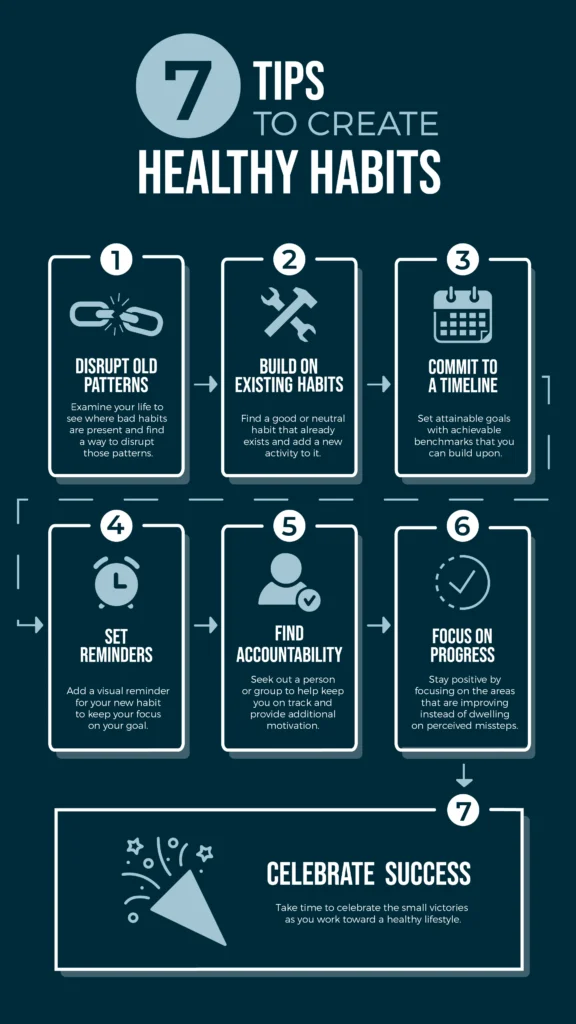
One effective approach is to associate new habits with existing ones in your life. This technique leverages the brain’s tendency to replicate successful patterns. For example:
- If you want to start a meditation practice, do it immediately after waking up or right before bed.
- If you’re trying to eat healthier, prepare a nutritious breakfast and lunch to make the transition smoother.
The Power of Small Steps
The theory of small steps suggests that making gradual changes can lead to significant improvements over time. This approach involves breaking down larger goals into smaller, manageable tasks. For instance:
- Instead of quitting smoking cold turkey, start by reducing your daily cigarette intake by one per day.
- If you want to start exercising more, begin with short walks during your lunch break and gradually increase the duration.
The Importance of Consistency
Regular repetition is key to turning new habits into automatic responses. The brain’s neural pathways are created through consistent practice, making it easier to stick to a routine over time. Consider:
- Scheduling exercise or meditation into your daily planner.
- Preparing healthy meals in advance to avoid unhealthy snacking.
The Role of Environment
Our surroundings and the objects within them can either support or hinder our habits. By strategically placing items that promote healthy behavior, we can increase the likelihood of success.
For example:
- Place fruits and vegetables in visible locations to encourage healthier eating.
- Keep a yoga mat and meditation cushion in a convenient spot to facilitate regular practice.
Finding Motivation
It’s essential to focus on the benefits that new habits can bring, rather than immediate gratification. By celebrating small victories along the way, we can stay motivated and encouraged throughout the process.
Some ways to find motivation include:
- Rewarding yourself with non-food items, such as a new book or a relaxing bath.
- Sharing progress with friends and family for added accountability.
- Using a habit-tracking journal to monitor progress and identify areas for improvement.
Overcoming Obstacles
Building healthy habits isn’t always easy. Expect setbacks and learn how to overcome them.
Common obstacles include:
- Lack of time or energy
- Unhealthy temptations (e.g., junk food)
- Difficulty staying motivated
To overcome these challenges, consider:
- Breaking down large tasks into smaller, more manageable chunks.
- Finding healthy alternatives to satisfy cravings.
- Identifying and challenging negative thought patterns that may be hindering progress.
Creating a Supportive Community
Having a supportive community can make all the difference when building healthy habits. Surround yourself with people who share your goals and values, and consider joining a health-focused group or seeking guidance from a healthcare professional.
Additionally, leverage technology to your advantage by using apps, websites, or online forums that provide resources, motivation, and accountability.
Conclusion
Building healthy habits takes time, effort, and patience. By understanding the power of habits, using effective strategies, and leveraging our environment, we can create lasting changes that improve our overall well-being.
Remember, it’s essential to focus on progress rather than perfection. Celebrate small victories along the way, and don’t be too hard on yourself when faced with setbacks. With persistence and dedication, you can develop healthy habits that bring joy, energy, and fulfillment to your life.
FAQs:
- How long does it take to form a new habit?
- The exact time frame varies from person to person, but research suggests that it takes around 66 days for a new habit to become automatic.
- What’s the most effective way to build healthy habits?
- A combination of associating new habits with existing ones, using small steps, and focusing on consistency works best.
- Can I undo a bad habit?
- Yes, it’s possible to break a bad habit by replacing it with a healthier alternative and repeating the process consistently.
- How do I stay motivated when building healthy habits?
- Celebrating small victories, finding accountability through friends or family, and using habit-tracking tools can help maintain motivation.
- What’s the best way to measure progress when building healthy habits?
- Tracking progress through a habit journal, mobile app, or spreadsheet can provide valuable insights into areas for improvement.
Additional Resources
For those seeking additional guidance and support, consider the following resources:
- National Health Service (NHS) – www.nhs.uk
- American Heart Association (AHA) – www.heart.org
- Academy of Nutrition and Dietetics – www.andjrnl.org
By embracing the power of habits, using effective strategies, and staying motivated, you can develop healthy habits that improve your overall well-being and set you on a path to long-term success.


