
Understanding Weather vs. Climate: A Guide to the Differences
As humans, we’re constantly interacting with our surroundings and trying to make sense of the world around us. One aspect that’s often misunderstood is the difference between weather and climate. In this article, we’ll delve into the nuances of these two concepts and explore what makes them unique.
What is Weather?
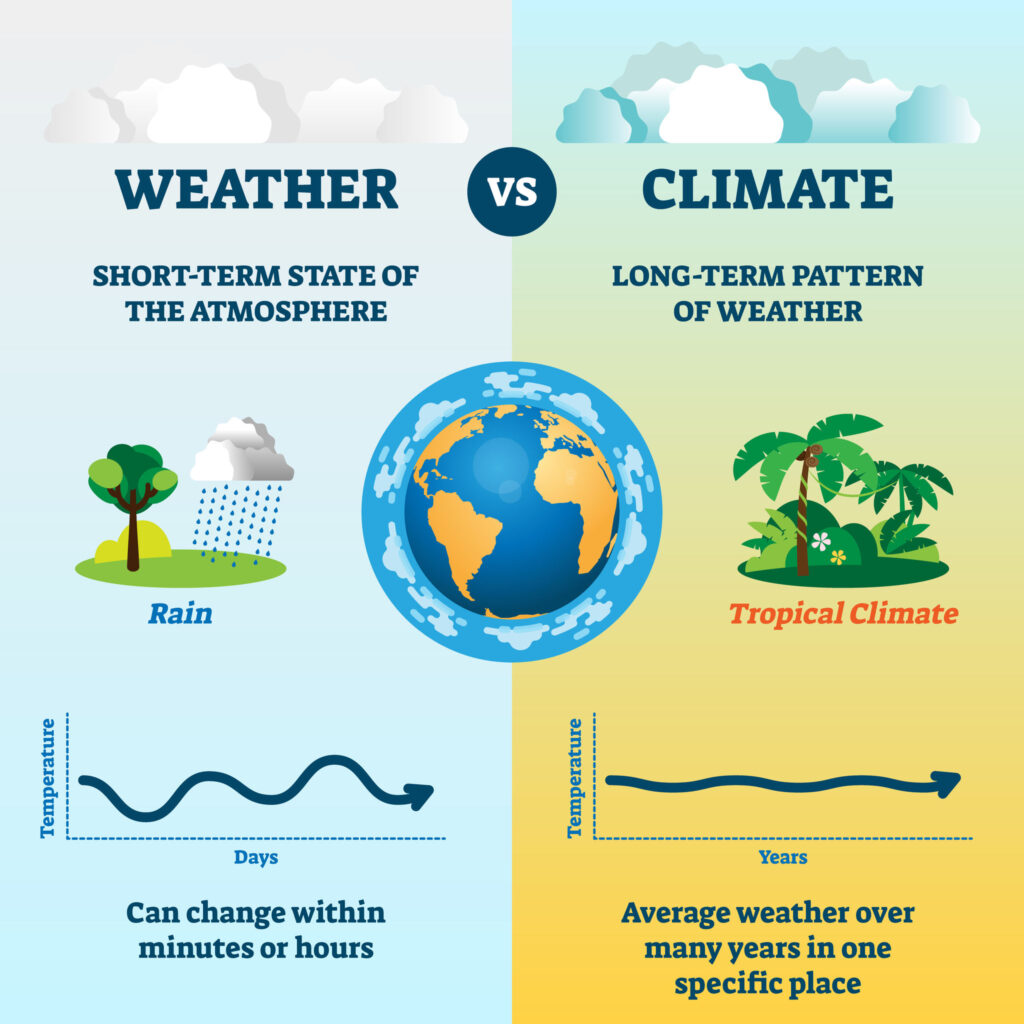
Weather refers to the short-term conditions in the atmosphere at a specific time and place. It encompasses various factors such as temperature, humidity, air pressure, wind speed, and precipitation. When we talk about weather, we’re typically discussing a day or a few days’ worth of meteorological data.
The Role of Meteorologists
Meteorologists are the scientists who study weather patterns. They analyze data from various sources, including weather stations, radar systems, and satellites, to forecast the weather. The field of meteorology is crucial for predicting and understanding weather phenomena.
Weather in English: A Look at Common Expressions
In English, we often use the phrase “what’s the weather like?” to ask about the current conditions. Some common expressions include:
- Sunny
- Cloudy
- Windy
- Foggy
- Stormy
When the weather is poor, people might say, “What a terrible day!” and when it improves, they’ll say, “It’s clearing up” or “The sun’s come out.”
Weather vs. Climate: The Key Differences
While weather and climate are related, they’re not interchangeable terms. Weather refers to short-term conditions, whereas climate describes the long-term patterns of atmospheric conditions in a particular region.
- Climate: This term encompasses the average temperature, precipitation, and other meteorological factors over an extended period (at least 30 years). Climate is often used to describe regional characteristics, such as tropical, desert, or temperate climates.
- Climatology: This field of study focuses on understanding climate patterns and their effects on the environment. Climates are typically classified into categories like tropical, subtropical, and temperate.
To illustrate the difference between weather and climate, consider a scenario where it rains in a desert for a day. The rain might be intense, but it’s unlikely to change the long-term climate of the region. Instead, it would be an isolated weather event.
Weather and Organisms: A Key Indicator
One way to distinguish between weather and climate is by examining how organisms respond to changing conditions. If you observe that plants are withering or animals are behaving strangely in a particular area, it may indicate a shift in the local climate.
On the other hand, if an organism adapts quickly to changing weather patterns, it’s likely responding to short-term conditions rather than long-term climate changes.
Using Rhymes and Folk Sayings to Understand Weather
Children often learn about weather through rhymes and folk sayings. One example is the “Signor Metèo” song, which teaches kids about different types of weather and their characteristics.
Another way to grasp weather concepts is by using everyday expressions like “Arcobaleno porta il sereno,” which means “A rainbow brings good luck.” These phrases often rely on wordplay or metaphors to convey complex ideas in a simple manner.
Understanding Climate Change
Climate change refers to the long-term warming of the planet due to an increase in greenhouse gases in the atmosphere. This phenomenon has significant implications for the environment, human health, and the economy.
There are several factors that contribute to climate change, including:
- Greenhouse gases: These include carbon dioxide, methane, and nitrous oxide, which trap heat in the atmosphere and lead to global warming.
- Deforestation: The clearing of forests for agriculture and urban development releases carbon dioxide into the atmosphere and reduces the ability of forests to act as carbon sinks.
- Agriculture: The production of meat, especially beef, contributes to greenhouse gas emissions through the release of methane and nitrous oxide.
To mitigate climate change, it’s essential to understand its causes and effects. By recognizing the signs of climate change, we can take action to reduce our carbon footprint and promote sustainability.
Conclusion
Weather and climate may seem like two sides of the same coin, but they’re distinct concepts with different meanings. By understanding these differences, we can better appreciate the complexities of our atmosphere and make more informed decisions about our daily lives.
Frequently Asked Questions (FAQs)
- What is the difference between weather and climate?
- Weather refers to short-term conditions in the atmosphere, while climate describes long-term patterns of atmospheric conditions.
- How do meteorologists study weather?
- Meteorologists analyze data from various sources, including weather stations, radar systems, and satellites, to forecast the weather.
- What is climatology?
- Climatology is the field of study that focuses on understanding climate patterns and their effects on the environment.
- How do organisms respond to changing weather conditions?
- Organisms may adapt quickly to short-term weather changes, indicating a response to weather rather than long-term climate shifts.
- What are some common expressions used to describe weather?
- Examples include “sunny,” “cloudy,” “windy,” “foggy,” and “stormy.”
- How can we distinguish between weather and climate using everyday language?
- Using rhymes, folk sayings, and metaphors can help convey complex ideas about weather in a simple manner.
- What is the role of meteorologists in understanding weather patterns?
- Meteorologists play a crucial role in predicting and understanding weather phenomena by analyzing data from various sources.
- How can we better understand our atmosphere and make informed decisions using this knowledge?
By embracing a deeper understanding of weather and climate, we can develop more effective strategies for mitigating the impacts of climate change and promoting sustainability.


