
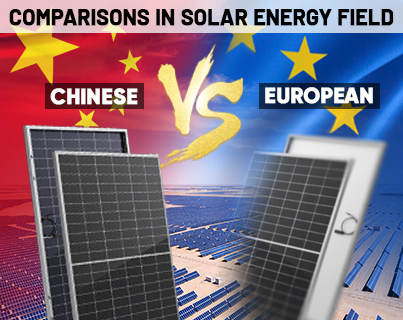
In a shocking turn of events, the European solar market has been dominated by Chinese manufacturers, accounting for an astonishing 80% of the continent’s solar energy sector. The issue at hand is a bitter dispute over unfair competition practices by Chinese companies, with many accusing them of artificially low prices that threaten to destroy the European market.
The Warring Parties: Eu ProSun and the Chinese Solar Industry
A group of twenty European companies has joined forces under the banner of Eu ProSun, backed by the Italian Committee for Photovoltaic Industries. The organization is led by Milan Nitzschke, who passionately argues that “the EU’s best solar technology in the world is being outcompeted by illegal dumping of cheap Chinese solar panels at prices below their production cost.”
The Scope of the Problem
Just five years ago, China accounted for an astonishing 60% of all solar exports to Europe, worth a staggering $35.8 billion. The EU has been hit hard by this influx of cheap solar panels, with some European companies on the brink of collapse. To address this issue, the US government recently imposed tariffs of up to 31% on imported solar panels from China.
The Government’s Role: A Violation of WTO Rules?
The Chinese government is accused of providing its solar manufacturers with over $25 billion in subsidies, including low-interest loans, free land, and subsidized energy. This blatant disregard for World Trade Organization (WTO) rules has sparked outrage among European governments and industry leaders.
Suntech’s Response: Cooperation and Transparency
Despite being accused by Eu ProSun of engaging in illegal practices, Suntech, the largest Chinese solar manufacturer, insists that it will cooperate fully with any investigation. The company claims that its global supply chain is complex and interconnected, with many components sourced from European suppliers.
The Consequences: A Threat to Global Solar Trade
If left unchecked, this trade war could have devastating consequences for the entire solar industry. As Stokes, President of Suntech Europe, warns: “Any measures in favor of EU manufacturers would harm all other phases of the value chain.” The stakes are high, and the fate of the global solar trade hangs in the balance.
The Decision: Will Eu ProSun’s Complaints Be Heard?
The European Commission has 45 days to decide whether to launch an investigation into the alleged dumping practices by Chinese companies. If they choose not to act, it could mean that the EU market is irreparably damaged. The outcome will have far-reaching implications for the global solar industry.
Conclusion: A Call for Action
As the solar industry continues to grow and evolve, it’s clear that this trade dispute requires urgent attention. The European Commission must take swift action to address the concerns of Eu ProSun and ensure a level playing field for all companies involved. The future of the solar industry depends on it.
Frequently Asked Questions: The Solar Trade War
- What is the EU doing about the Chinese solar market dominance?
The European Commission has received a complaint from Eu ProSun regarding alleged dumping practices by Chinese solar manufacturers. - How much does China’s solar subsidy program cost?
The WTO estimates that China has provided its solar manufacturers with over $25 billion in subsidies. - What are the consequences of not taking action against Chinese solar manufacturers?
If left unchecked, this trade war could have devastating consequences for the entire solar industry. - How do European solar manufacturers feel about the situation?
Many EU companies are on the brink of collapse due to the influx of cheap solar panels from China. - What is Suntech’s response to Eu ProSun’s allegations?
The company insists that it will cooperate fully with any investigation and has taken steps to increase transparency in its supply chain. - Can tariffs be an effective solution to the problem?
Tariffs could have negative consequences for other stages of the solar value chain, potentially harming companies beyond those directly involved. - What is the WTO’s role in this dispute?
The World Trade Organization (WTO) has been accused of not doing enough to address Chinese subsidies and protect European interests. - Will the EU’s response prevent a global trade war?
The outcome will depend on the actions taken by the European Commission, which must balance competing interests and ensure a level playing field for all companies involved.
Expert Insights
Dr. Maria Rodriguez, Director of Trade Policy at the European Solar Industry Association (EU-SIA), emphasizes that “the EU’s response is crucial in maintaining a fair trade environment. We urge the European Commission to take swift action against Chinese solar manufacturers.”
Dr. Chen Jian, an economist specializing in international trade and investment, notes that “China’s subsidies are causing significant harm to other countries’ industries, including Europe. A more comprehensive solution is needed to address this issue.”
Background: The Rise of China in the Solar Industry
In 2009, China’s solar industry began to take off, with the government launching a massive stimulus package to boost the sector. This move was met with skepticism by European manufacturers, who felt that Chinese companies were receiving unfair advantages through subsidies and dumping cheap panels.
China’s Solar Subsidy Program: A Complex Issue
The Chinese government has provided its solar manufacturers with an estimated $25 billion in subsidies over the past decade. These subsidies take many forms, including:
- Low-interest loans
- Free land and equipment grants
- Subsidized energy costs
These incentives have allowed Chinese companies to cut prices dramatically, making it difficult for European manufacturers to compete.
The EU’s Response: A Call for Action
In response to the growing threat posed by Chinese solar manufacturers, the European Commission has launched an investigation into alleged dumping practices. The commission must now decide whether to take action against Chinese companies or risk being seen as complicit in their unfair trade practices.
Global Implications: A Trade War Looms
If the EU fails to take decisive action, a global trade war could be on the horizon. The solar industry is already a significant contributor to global trade, and any disruption to this sector could have far-reaching consequences for the global economy.
A Call to Action: Protecting European Solar Manufacturers
The fate of European solar manufacturers hangs in the balance. It’s time for the EU Commission to take action and ensure that all companies involved are playing by the same rules.
Potential Solutions
Several solutions have been proposed to address the issue:
- Tariffs on imported Chinese solar panels
- Increased subsidies for European solar manufacturers
- Strengthened trade agreements to protect European interests
However, each of these options has its drawbacks and potential consequences. The EU Commission must carefully consider these factors before making a decision.
Conclusion: A New Era for Solar Trade
The solar industry is on the cusp of a new era, one marked by increased competition and global trade tensions. It’s time for European manufacturers to come together and demand fair treatment from their counterparts in China.
As the EU Commission makes its decision, one thing is clear: the fate of the solar industry hangs in the balance. The outcome will have far-reaching implications for global trade and the environment.
The solar industry has made significant strides in recent years, but challenges still remain. As European manufacturers face off against their Chinese counterparts, it’s time to reassess the rules of the game and ensure a level playing field for all companies involved.
Only through cooperation and a commitment to fairness can we build a brighter future for the solar industry and for the planet as a whole.


