
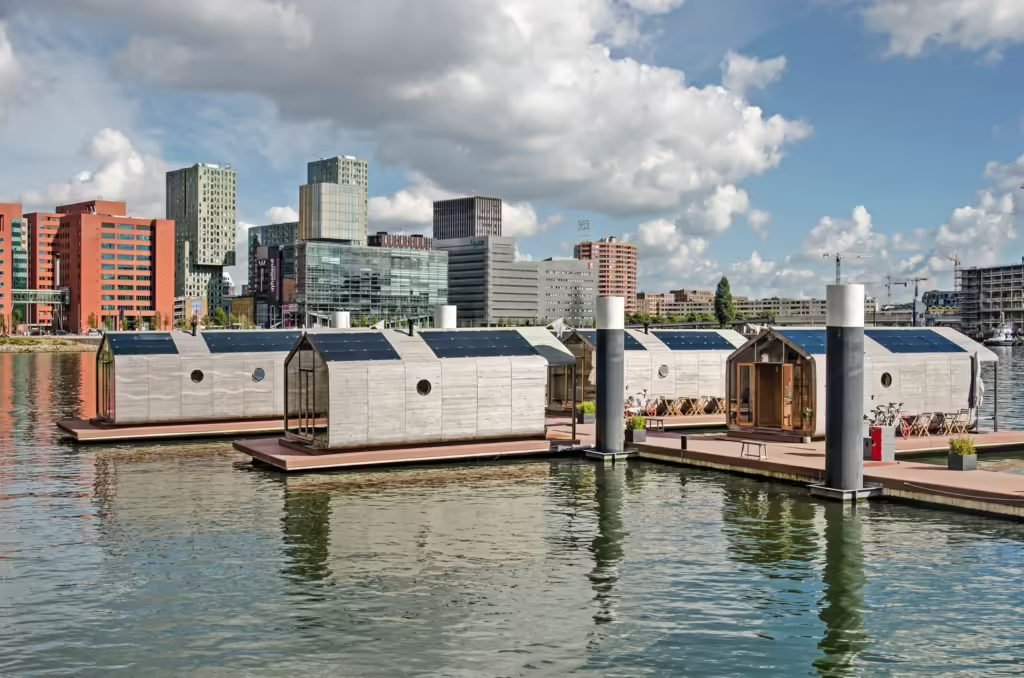
As the sea levels continue to rise, it’s becoming increasingly clear that we need to rethink our relationship with the land. Cities built on water are becoming a necessity, and Rotterdam is at the forefront of this innovation. In this article, we’ll explore the concept of floating cities, their benefits, and how they can help mitigate the effects of climate change.
The Problem: Rising Sea Levels
With the Arctic ice cap melting at an alarming rate, sea levels are expected to rise by up to 1 meter by 2050. This means that many coastal cities will become inundated, displacing millions of people. Rotterdam, being a major port city in the Netherlands, is particularly vulnerable to this threat.
Rotterdam’s location on the North Sea makes it one of the most susceptible cities to sea level rise. The city’s elevation is only around 2 meters above sea level, and its coastline is already experiencing frequent flooding due to storm surges and high tides. This not only poses a significant threat to human settlements but also damages infrastructure, disrupts economic activity, and compromises the environment.
The Solution: Floating Cities
Rotterdam has been experimenting with floating structures that can provide a solution to this problem. These structures, also known as “quartieri galleggianti,” are designed to float on the water and can be used for various purposes such as housing, commercial spaces, and recreational areas.
Floating cities have gained significant attention in recent years due to their potential to address climate change and provide sustainable solutions for urban planning. By building on water, floating cities can reduce the impact of sea level rise, provide more space for green infrastructure, and create new opportunities for economic development.
A New Breed of Architecture
The first project in Rotterdam is a pilot scheme that consists of three interconnected hemispheres. The design is inspired by the idea of “big bubbles” with an exagonal shape, anchored to the old port of Rotterdam. This innovative architecture is designed to be sustainable and adaptable to changing climates.
The design takes into account the need for flexibility and resilience in floating structures. The use of ETFE (ethylene tetrafluorethylene) as the primary material provides a lightweight yet strong framework that can withstand various environmental conditions.
A Successful Pilot Project
The prototype has been successfully tested and is now used as a venue for events and exhibitions. It’s almost self-sufficient, with a flexible design that can be used for various functions. The first prototype was built by Dura Vermeer, occupying an area equivalent to four tennis courts and standing at 40 feet high.
This pilot project has provided valuable insights into the feasibility of floating cities and their potential applications in urban planning. The results have been encouraging, with reports suggesting that the structure can withstand winds of up to 50 knots (93 km/h) and flooding due to storm surges.
The Magic of ETFE
The bubbles are made from ETFE (ethylene tetrafluorethylene), a lightweight and corrosion-resistant material that’s perfect for floating structures. This innovative material has opened up new possibilities for sustainable design and construction.
ETFE is used extensively in various industries, including aerospace, automotive, and medical equipment. Its unique properties make it an ideal choice for building large-scale structures like floating cities.
A Whole New Approach to Urban Planning
Rotterdam plans to build entire districts on water, including commercial spaces, recreational areas, and housing units. By 2040, the city aims to construct 13,000 homes, of which 1,200 will be built on water. This approach is not only innovative but also realistic in addressing climate change.
The development of floating cities can provide new opportunities for urban planning and development. Cities can expand their boundaries to accommodate more green spaces, recreational areas, and housing units, all while reducing the impact of sea level rise.
The Future of Urban Living
As we move forward, it’s clear that floating cities are not just a novelty but a necessary solution for our planet. With the rise of sea levels, these structures can provide a safe haven for millions of people. The concept of floating cities is not only sustainable but also offers new possibilities for urban living.
Floating cities can be designed to integrate with existing infrastructure, providing connections between land and water-based transportation systems. This integration will enable residents to move freely between the city’s different districts, reducing congestion and pollution.
Benefits and Challenges
While floating cities offer numerous benefits in terms of sustainability and resilience, they also pose several challenges. Some of these challenges include:
- High upfront costs: Building a floating city is an expensive endeavor, requiring significant investment in materials and infrastructure.
- Regulatory frameworks: Existing building codes and regulations may not be adapted to accommodate floating structures, posing challenges for developers and policymakers.
- Environmental concerns: The construction process can have environmental impacts, including habitat disruption and noise pollution.
- Social acceptance: Floating cities can raise social and cultural questions, particularly regarding the integration of residents from different backgrounds.
Conclusion
The future of our planet depends on our ability to adapt and innovate. Floating cities are just one example of how we can rethink our relationship with the land and create a more sustainable future. As we move forward, it’s essential that we continue to explore new ideas and technologies that can help mitigate the effects of climate change.
Frequently Asked Questions
- Q: What inspired Rotterdam to build floating cities?
A: The city is facing the threat of rising sea levels due to climate change, and building on water is one way to address this issue. - Q: How do floating cities work?
A: Floating cities are structures that float on the water, providing a solution for housing, commercial spaces, and recreational areas. - Q: What material is used to build these structures?
A: The bubbles are made from ETFE (ethylene tetrafluorethylene), a lightweight and corrosion-resistant material. - Q: How many homes will be built on water by 2040?
A: Rotterdam plans to construct 1,200 homes on water out of a total of 13,000 homes by 2040. - Q: Can floating cities replace traditional land-based cities?
A: No, floating cities are not meant to replace traditional cities but rather provide an additional solution for addressing climate change and rising sea levels. - Q: What benefits do floating cities offer in terms of sustainability?
A: Floating cities can be self-sufficient, using innovative materials and designs that reduce environmental impact. - Q: How will the construction of floating cities affect local ecosystems?
A: The construction of floating cities must be carefully planned to minimize the impact on local ecosystems and marine life. - Q: What is the future of floating cities in terms of scalability?
A: As technology advances, floating cities can become a more viable solution for addressing climate change, with potential applications for other coastal cities around the world.
Case Study: The Future of Floating Cities
The city of Rotterdam has been at the forefront of innovation in floating cities. Their pilot project has provided valuable insights into the feasibility and benefits of building on water. As we move forward, it’s essential that we learn from this example and apply it to other cities around the world.
Rotterdam’s experience highlights the importance of collaboration between policymakers, developers, and residents in addressing climate change. The success of floating cities depends on a holistic approach that considers environmental sustainability, social acceptance, and economic viability.
As we continue to explore new ideas and technologies for sustainable urban planning, it’s essential that we prioritize climate resilience and adaptability. Floating cities offer a promising solution for this challenge, providing a model for future generations to follow.
Conclusion
The concept of floating cities has opened up new possibilities for sustainable design and construction. By building on water, cities can reduce the impact of sea level rise, provide more space for green infrastructure, and create new opportunities for economic development. As we move forward, it’s essential that we continue to explore this innovative approach to urban planning.
Final Thoughts
The future of our planet depends on our ability to adapt and innovate. Floating cities are just one example of how we can rethink our relationship with the land and create a more sustainable future. As we move forward, let us prioritize climate resilience, sustainability, and adaptability in our urban planning efforts.
Together, we can build a better future for generations to come – a future where cities thrive on water, reducing the impact of sea level rise and providing new opportunities for growth and development.


