
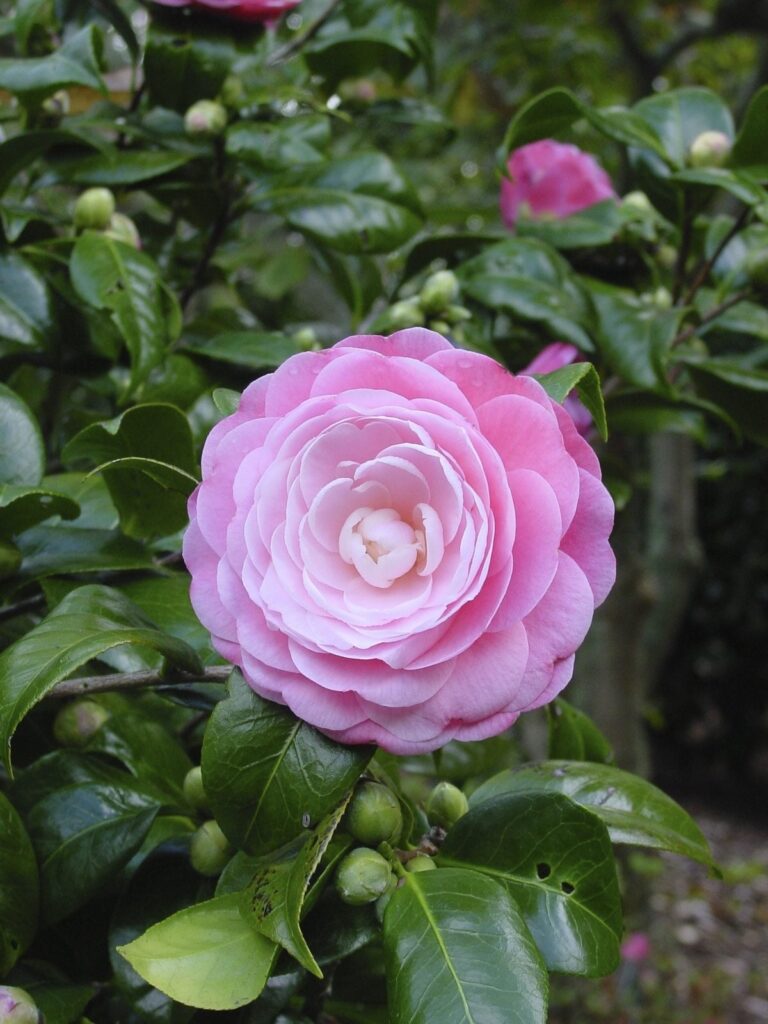
Growing and caring for camellias can be a rewarding experience, but it requires attention to their specific needs. In this article, we will delve into the world of camellia cultivation, covering topics such as soil preparation, watering, fertilization, pruning, and propagation.
Camellia Characteristics and Requirements
Camellias are versatile plants that can thrive in both full sun and partial shade. While they don’t require direct sunlight, they do appreciate a spot with dappled light. This makes them an excellent choice for areas with limited natural light. Additionally, camellias are frost-tolerant, making them suitable for zones with moderate winters.
Camellias are evergreen shrubs that come in a wide range of varieties, including hybrid teas, floribundas, and sasanquas. They can grow up to 10 feet tall and 8 feet wide, depending on the variety. Camellias have showy flowers that bloom in shades of pink, white, red, and purple, attracting bees, butterflies, and hummingbirds.
Soil Preparation
One of the most crucial aspects of camellia care is soil preparation. Camellias prefer well-draining, acidic soils with a pH between 5.5 and 6.5. If you’re growing camellias in pots, use a specialized potting mix that’s specifically designed for acid-loving plants.
To prepare your soil, test its pH level using a soil testing kit. Based on the results, add organic matter such as peat moss, compost, or well-rotted manure to adjust the pH. Mix the amendments thoroughly into the top 6 inches of soil.
If you’re growing camellias in poor soil, consider amending it with sulfur or aluminum sulfate to lower the pH. Avoid using lime, which can raise the pH and cause nutrient deficiencies.
Camellia Care in Pots
Growing camellias in pots requires extra attention to watering, fertilization, and pruning. Use a high-quality potting mix specifically formulated for acid-loving plants. Water your camellias more frequently than those growing in the ground, making sure not to overwater, which can lead to root rot.
Watering frequency depends on climate, humidity levels, and pot size. As a general rule, water your camellias when the top inch of soil feels dry to the touch. Reduce watering during the winter months, when the plant is dormant.
Fertilize your camellias in early spring using a slow-release fertilizer specifically formulated for acid-loving plants. Follow the manufacturer’s instructions for application rates and timing.
Watering and Humidity
Camellias are sensitive to calcareous water, so avoid using tap water with high mineral content. Instead, opt for rainwater or use a water filter to remove minerals.
Regularly mist your camellias with distilled water to maintain optimal humidity levels. During the winter months, reduce watering frequency as the plant is dormant.
Fertilization
When fertilizing your camellias, choose a slow-release fertilizer specifically formulated for acid-loving plants. Apply the fertilizer in early spring, following the manufacturer’s instructions. Avoid overfertilizing, as this can damage your plants.
Pruning and Propagation
To keep your camellias healthy and thriving, regular pruning is essential. Remove dead or damaged leaves, branches, and flowers to prevent disease and encourage new growth.
Propagating your camellias through stem cuttings, layering, or division can be a rewarding experience. Take 4-6 inch stem cuttings in the spring or fall, removing lower leaves and rooting them in water or a propagation medium.
Additional Tips and Considerations
- Avoid using mulch on top of the soil, as this can retain too much moisture and cause root rot.
- Keep an eye out for pests like spider mites, mealybugs, and scale, which can infest your camellias.
- If you live in a hot climate, provide shade for your camellias during the hottest part of the day to prevent scorching.
Common Pests and Diseases
Camellias are susceptible to various pests and diseases, including:
- Spider mites: These tiny insects can cause yellowing leaves and fine webbing on the undersides of leaves.
- Mealybugs: These small, white insects secrete a sticky substance called honeydew, which can attract ants and promote fungal growth.
- Scale: These armored insects feed on plant sap, causing stunted growth and reduced flowering.
- Root rot: This fungal disease causes roots to decay, leading to yellowing leaves and premature drop.
Common Problems
Camellias are prone to various problems, including:
- Leaf scorch: This can be caused by intense sunlight, drought, or extreme temperatures.
- Petal drop: This occurs when the petals fall off the flower before it blooms.
- Wilting: This is often a sign of underwatering, but can also be caused by pests, diseases, or environmental stress.
Conclusion
Growing and caring for camellias requires attention to their specific needs. By following these tips and guidelines, you’ll be well on your way to creating a beautiful and thriving camellia garden. Remember to prune regularly, fertilize sparingly, and provide optimal care to keep your camellias happy and healthy.
Frequently Asked Questions
- How often should I water my camellias?
Water your camellias when the top inch of soil feels dry to the touch. Adjust watering frequency based on climate and humidity levels. - What is the best way to fertilize my camellias?
Use a slow-release fertilizer specifically formulated for acid-loving plants, applying it in early spring according to manufacturer’s instructions. - Can I grow camellias outdoors year-round?
While camellias can tolerate frost, they may not thrive outdoors during extreme temperatures or prolonged droughts. Consider providing protection or moving your camellias indoors during harsh weather conditions. - How do I propagate my camellias?
You can propagate your camellias through stem cuttings, layering, or division. Choose a healthy stem section and follow proper propagation techniques to increase success rates. - What are the most common pests affecting camellias?
Common pests include spider mites, mealybugs, scale, and aphids. Regularly inspect your plants for signs of infestation and take action promptly to prevent damage. - Can I grow camellias in poor soil?
While camellias can tolerate a range of soils, they prefer well-draining, acidic conditions. If your soil is poorly draining or lacks necessary nutrients, consider amending it with organic matter or fertilizers specifically formulated for acid-loving plants. - How do I prune my camellias?
Prune your camellias during the dormant season (winter) to minimize stress and promote new growth. Remove dead or damaged leaves, branches, and flowers, taking care not to over-prune. - Can I grow camellias in containers?
Yes! Camellias can thrive in pots, but require more frequent watering, fertilization, and pruning than those growing in the ground. Use a high-quality potting mix specifically formulated for acid-loving plants.


