
Understanding the Benefits and Properties of Almond Milk
As a popular dairy-free alternative, almond milk has gained significant attention in recent years. Made from almonds and water, this plant-based beverage is a great source of vitamins and minerals, making it an excellent choice for those with dietary restrictions or preferences. In this article, we will delve into the world of almond milk, exploring its benefits, properties, and methods of preparation.
History of Almond Milk
Almond milk has been consumed for centuries in various forms, particularly in Middle Eastern and Mediterranean cultures. However, it wasn’t until the 20th century that commercial production began to take off. Today, almond milk is enjoyed worldwide, with sales exceeding those of soy milk in many countries.
Nutritional Properties and Uses
Almond milk contains less vitamin D than cow’s milk, but it is rich in vitamins E and B12, as well as minerals like calcium and potassium. For individuals with dairy intolerance or preferences, almond milk provides an excellent alternative for cereal, smoothies, and cooking.
However, commercial almond milk often lacks essential nutrients, making it crucial to opt for fortified versions. The standard version may contain added sugars, while the enhanced variant may be enriched with vitamins and minerals.
Preparing Almond Milk at Home
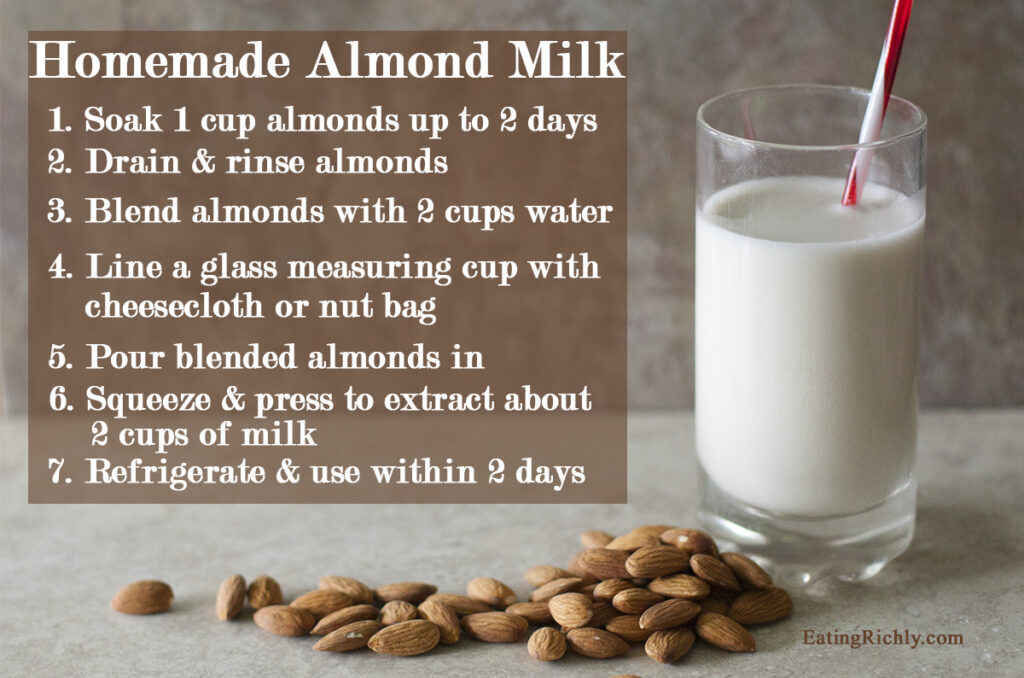
Fortunately, you can easily make almond milk at home using a simple recipe:
Ingredients:
– 1 cup of raw almonds
– 2 cups of water
Instructions:
1. Soak the almonds in water for 8 hours.
2. Drain and rinse the almonds.
3. Blend the almonds with 2 cups of fresh water until smooth.
4. Strain the mixture through a cheesecloth or nut milk bag.
Making Almond Milk Using an Extractor
For those who prefer a more concentrated version, you can use an extractor:
Ingredients:
– 1:3 ratio of almonds to water
Instructions:
1. Soak and drain the almonds.
2. Blend them with water in an extractor until smooth.
3. Filter the mixture through cheesecloth or a nut milk bag.
Tips for Making Almond Milk at Home
- Use raw almonds for better taste and nutritional content.
- Choose organic and unsalted almonds for maximum benefits.
- Experiment with different flavorings like vanilla, cinnamon, and dates to create unique variations.
Filtration: The Final Step
After preparing your almond milk, it’s essential to filter it to remove any remaining particles or sediment. A fine-mesh sieve or cheesecloth can be used for this purpose.
The Importance of Raw Almonds in Making Almond Milk
Raw almonds contain higher levels of nutrients and better digestive enzymes than roasted or blanched almonds. When you soak raw almonds, the phytic acid is broken down, making it easier to absorb the essential minerals and vitamins present in the almonds. This process also enhances the overall flavor and texture of your homemade almond milk.
Choosing the Right Almonds for Making Almond Milk
Not all almonds are created equal when it comes to making almond milk. Look for high-quality, organic almonds that are free from additives and preservatives. You can find these types of almonds at most health food stores or online.
Benefits of Homemade Almond Milk
Making your own almond milk at home offers several benefits over commercial brands. Here are just a few reasons why:
- Cost-Effective: Making your own almond milk at home is significantly cheaper than buying it from the store.
- Customization: You can adjust the flavor and nutritional content of your homemade almond milk to suit your preferences.
- Freshness: Homemade almond milk is always fresh, ensuring maximum taste and nutritional value.
Common Mistakes to Avoid When Making Almond Milk at Home
While making almond milk at home is relatively easy, there are some common mistakes to avoid. Here are a few tips:
- Over-Soaking: Don’t over-soak your almonds, as this can lead to a bitter flavor and uneven texture.
- Under-Blending: Make sure to blend your almonds thoroughly with water to ensure a smooth consistency.
- Insufficient Filtration: Strain your almond milk through a fine-mesh sieve or cheesecloth to remove any remaining particles or sediment.
Experimenting with Flavors and Additions
Once you’ve mastered the basic recipe for making almond milk at home, it’s time to experiment with different flavors and additions. Here are some ideas:
- Vanilla: Add a pinch of vanilla powder or a few drops of vanilla extract to give your almond milk a creamy, sweet flavor.
- Cinnamon: Sprinkle a pinch of cinnamon powder into your almond milk for a warm, spicy flavor.
- Dates: Blend in a few dates with your almond milk to create a sweet, indulgent treat.
Common Questions and Answers
- Q: Is almond milk suitable for infants?
A: While almond milk can be a nutritious option for children, it’s recommended to consult with a healthcare professional or registered dietitian before introducing it into an infant’s diet. - Q: Can I add flavorings to homemade almond milk?
A: Absolutely! Experiment with different flavor combinations like vanilla, cinnamon, and dates to create unique variations that suit your taste buds. - Q: What are the benefits of using raw almonds for making almond milk?
A: Raw almonds contain higher levels of nutrients and better digestive enzymes than roasted or blanched almonds. - Q: Can I use almond flour instead of almonds for making almond milk?
A: No, almond flour is not suitable for making almond milk as it lacks the necessary water content to create a smooth and creamy beverage. - Q: How long does homemade almond milk typically last in the fridge?
A: Homemade almond milk can be stored in the fridge for up to 4-5 days after preparation, ensuring maximum freshness and nutritional value.
Conclusion
Making almond milk at home is a simple yet rewarding process that allows you to create a delicious and nutritious beverage tailored to your taste preferences. By understanding the benefits, properties, and methods of preparing almond milk, you’ll be well-equipped to make healthy and tasty almond milk that suits your lifestyle.
Whether you’re looking for a dairy-free alternative or simply want to try something new, making almond milk at home is an excellent way to get started. With its rich history, nutritional properties, and preparation methods, this plant-based beverage has become a staple in many households.


