
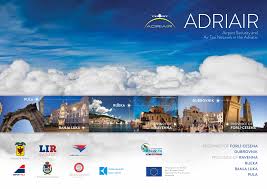
The Adriair project is a novel concept that aims to improve connectivity between the Mediterranean region and the Balkan area, reviving smaller Italian airports such as the Ridolfi airport in Forlì. By promoting a network of air taxi services, this initiative can efficiently handle high-frequency transport needs for small quantities of goods and passengers, all while fostering commercial relationships between local businesses and coastal areas.
The Need for Improved Connectivity
Currently, there are no direct flights between Italian Adriatic coastlines and the Balkan area, forcing cargo and passenger transportation to take longer routes via Vienna. This results in increased travel times for both goods and individuals, making it less feasible for regional businesses to engage in trade with their coastal counterparts.
Adriair’s Key Components
The project has a strong foundation, with key components including:
- Network creation: Establishing an interconnected web of air taxi services between Adriatic coastlines and major airports.
- Sustainability: Ensuring that the network operates using eco-friendly technologies to minimize its environmental impact.
- Standardized security systems: Harmonizing airport security protocols across participating airports in line with Schengen standards.
- Market analysis: Conducting a thorough market study to determine the viability of this innovative service.
Key Partners and Stakeholders
The Adriair project boasts an impressive list of partners, including:
- Forlì-Cesena Province: Providing administrative support and managing the budget for the project.
- Ravenna Province: Collaborating on market analysis and supporting the initiative.
- University of Bologna: Contributing expertise in analyzing market potential for regional airports.
- Dubrovnik, Fiume, and Pola Airports (Croatia): Partnering to enhance connectivity within the Adriatic region.
- L.I.R. (Bosnia Erzegovina): Supporting the development of air taxi services through their expertise in managing funds for regional projects.
- Tirana Chamber of Commerce (Albania): Collaborating on marketing and promoting trade opportunities between coastal regions.
Project Goals and Funding
The Adriair project’s ambitious goals include:
- Improving transportation efficiency
- Enhancing commercial relationships between local businesses and the Balkan region
The project received funding from the European Union’s IPA Adriatic program, with a total budget of €1.5 million and an additional €335,000 allocated to Forlì-Cesena Province for administrative purposes.
Sustainability and Environmental Impact
The Adriair project is committed to minimizing its environmental footprint through the use of eco-friendly technologies. This includes:
- Electric or hybrid aircraft
- Solar-powered ground equipment
- Energy-efficient lighting and HVAC systems
By adopting sustainable practices, the network aims to reduce greenhouse gas emissions and minimize waste.
Implementation Plan
The implementation plan for the Adriair project is designed to ensure a smooth transition to the new air taxi services. This includes:
- Network mapping and infrastructure development
- Staff training and recruitment
- Marketing and promotional activities
By following this plan, the network can be established efficiently and effectively, ensuring that passengers and cargo are transported safely and reliably.
Market Analysis
The market analysis for regional airports is a crucial component of the Adriair project. This includes:
- Identifying potential demand for air taxi services
- Analyzing competitors and market trends
- Developing strategies for promoting the service
By conducting a thorough market analysis, the network can identify opportunities and challenges, and develop effective strategies for success.
Standardized Security Systems
The Adriair project is committed to ensuring that all participating airports meet standardized security protocols. This includes:
- Harmonizing airport security protocols across participating airports
- Implementing biometric identification systems
- Conducting regular security audits
By establishing standardized security systems, the network can ensure a safe and secure experience for passengers.
Conclusion
The Adriair project is an innovative solution to revitalize regional airports and boost trade between Italy’s Adriatic coastlines and the Balkans. With its strong partnership network, focus on sustainability, and commitment to improving transportation efficiency, this initiative has the potential to significantly enhance connectivity within the region.
FAQs
- What is the primary goal of the Adriair project?
- The Adriair project aims to improve connectivity between Italy’s Adriatic coastlines and the Balkan area by creating an efficient network of air taxi services.
- Which airports are involved in this project?
- Participating airports include Ridolfi airport in Forlì, Dubrovnik, Fiume, and Pola airports in Croatia, as well as others.
- What is the primary source of funding for this project?
- The European Union’s IPA Adriatic program has provided significant funding for the project.
- How will the project ensure sustainability?
- By utilizing eco-friendly technologies to minimize its environmental impact.
- Which organizations are collaborating on market analysis for regional airports?
- Forlì-Cesena Province and University of Bologna are contributing expertise in this area.
-
What is the expected outcome of this project?
- Improved transportation efficiency, enhanced commercial relationships between local businesses and the Balkan region, and a boost to regional trade.
-
Will the air taxi services be available for both passengers and cargo?
- The project aims to handle high-frequency transport needs for small quantities of goods and passengers.
-
What is the potential impact on the environment?
- By operating using eco-friendly technologies, the network will minimize its environmental footprint.
-
Can you explain the concept of standardized security systems in the context of this project?
- Harmonizing airport security protocols across participating airports to ensure a safe and secure experience for travelers.
-
What are the expected benefits of adopting this innovative approach to air taxi services?
- Improved transportation efficiency, increased commercial opportunities, and enhanced regional connectivity.
-
Will there be any restrictions on passenger or cargo capacity in the network?
- The project aims to handle high-frequency transport needs for small quantities of goods and passengers.
-
Are there plans to expand the network beyond Italy’s Adriatic coastlines in the future?
- While not explicitly stated, the initiative has the potential for growth and expansion into other regions.
-
How will the project ensure that local businesses are able to take advantage of this new service?
- By providing market analysis and promoting trade opportunities between coastal regions.
-
Are there any potential challenges or obstacles that could hinder the project’s success?
- Potential risks include delays in implementation, funding constraints, and logistical challenges in establishing a reliable air taxi network.
-
What is the expected timeline for the completion of this project?
- The exact timeline has not been provided, but it is anticipated to be completed within a reasonable timeframe.


