
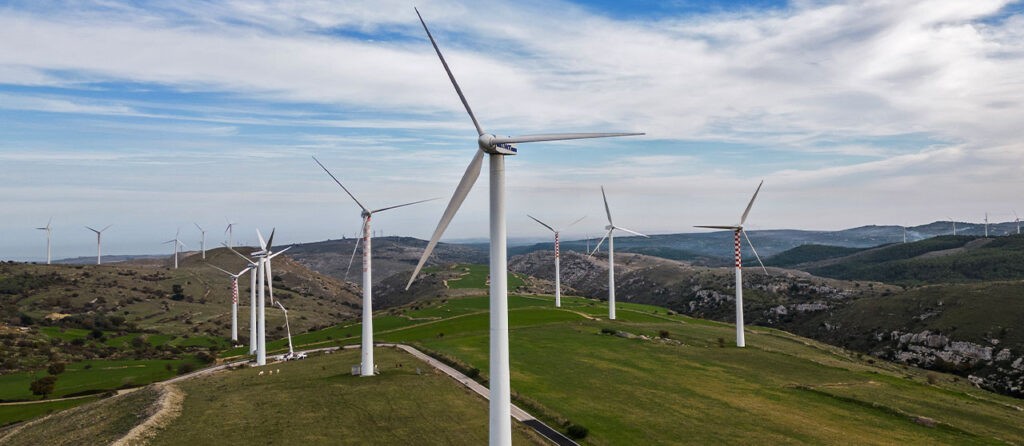
As the European wind industry experiences a significant increase in production by 2020, the Italian counterpart is facing challenges. The year 2012 saw a series of layoffs, and there are concerns about further job cuts in an industry that has experienced steady growth over the past decade.
The Current State of the Wind Industry in Italy
Currently, the wind energy sector in Italy provides around 30,000 jobs, but a study by Anev-Uil on the potential employment opportunities in the wind industry highlights the need for clear and stable legislation to ensure stability. Without this, there is a risk of further crisis.
In recent years, Italy has made significant strides in developing its wind energy sector. The country’s favorable geography, with its strong winds and long coastline, makes it an ideal location for wind farms. However, despite these advantages, the Italian wind industry still faces numerous challenges that need to be addressed.
The Potential of the Wind Industry in Italy
According to the Anev-Uil study, a positive development of the wind industry in Italy could lead to 67,000 jobs in total, including direct and indirect employment opportunities. This number far exceeds current estimates, highlighting the vast potential for growth in the sector.
The Italian government has set ambitious targets to increase the share of renewable energy in the country’s energy mix. By 2030, it aims to generate at least 60% of its electricity from non-fossil fuels. To achieve this goal, the wind industry will need to play a significant role.
Challenges Facing the Wind Industry in Italy
Despite the potential for growth, the Italian wind industry faces several challenges that need to be addressed. One of the main concerns is the lack of clear legislation and incentives for the sector. Without a stable framework, investors may be deterred from investing in wind energy projects, leading to stagnation and job losses.
Another challenge facing the Italian wind industry is high energy costs. The country’s dependence on foreign energy producers means that it has limited control over its energy prices. This can make it difficult for wind energy projects to compete with fossil fuels, even if they offer a lower carbon footprint.
The Impact of High Energy Costs
High energy costs pose a significant problem for the Italian economy. According to Angeletti, secretary general of Uil, “Every growth project is hindered by this factor, which could even render some industrial realities unprofitable. As long as we continue to rely on foreign production for electricity, it will be impossible to solve this issue.”
Investment and Job Creation
Investment in the wind industry is essential for creating jobs and stimulating economic growth. However, due to high energy costs and a lack of clear legislation, investors may be hesitant to invest in wind energy projects.
To overcome these challenges, the Italian government needs to take a more proactive approach to supporting the wind industry. This includes providing stable incentives for investors, investing in growth projects, and reducing dependence on foreign energy producers.
Conclusion
The Italian wind industry is facing significant challenges, including a lack of clear legislation and high energy costs. To overcome these challenges, it is essential to ensure stable and sufficient incentives for the sector, invest in growth projects, and reduce dependence on foreign energy producers.
By addressing these challenges and providing a supportive framework, the Italian government can help the wind industry reach its full potential. This will not only create jobs but also contribute positively to the country’s economy and environment.
Frequently Asked Questions
- What is the current state of the wind industry in Italy?
The Italian wind industry currently provides around 30,000 jobs, but there are concerns about further job cuts due to a lack of clear legislation. - How many jobs could be created in the wind industry in Italy with positive development?
According to the Anev-Uil study, up to 67,000 jobs could be created in total, including direct and indirect employment opportunities. - What is the main challenge facing the Italian wind industry?
The lack of clear legislation and high energy costs are major challenges for the sector. - How does high energy cost impact the Italian economy?
High energy costs hinder growth projects, making it difficult for industrial realities to remain profitable. - Why is investment crucial for the wind industry?
Investment is essential for any major project, and without it, the sector will stagnate with negative consequences. - What is the role of foreign energy producers in Italy’s energy mix?
Foreign energy producers are currently a significant part of Italy’s energy mix, which increases dependence on external sources. - How can the Italian wind industry overcome its challenges?
Ensuring stable and sufficient incentives, investing in growth projects, and reducing dependence on foreign energy producers are key to overcoming the sector’s challenges. - What is the future outlook for the Italian wind industry?
With clear legislation and a focus on sustainable energy sources, the Italian wind industry has the potential to create jobs and contribute positively to the economy.
The Role of International Cooperation
International cooperation can play an important role in supporting the development of the Italian wind industry. The European Union’s Renewable Energy Directive sets ambitious targets for renewable energy production across the continent. By working together with other EU member states, Italy can learn from best practices and share knowledge and expertise to support its own wind industry.
The Importance of Research and Development
Research and development are essential for driving innovation in the wind industry. The Italian government should invest in research initiatives that focus on improving turbine efficiency, reducing costs, and developing new technologies. This will not only help to reduce the environmental impact of wind energy but also make it more competitive with fossil fuels.
Conclusion
The Italian wind industry is facing significant challenges, including a lack of clear legislation and high energy costs. To overcome these challenges, it is essential to ensure stable and sufficient incentives for the sector, invest in growth projects, and reduce dependence on foreign energy producers. With international cooperation and investment in research and development, the Italian government can help its wind industry reach its full potential.
Recommendations
- Provide stable incentives: The Italian government should provide stable and sufficient incentives to support the wind industry. This could include tax breaks, subsidies, or other forms of financial assistance.
- Invest in growth projects: The Italian government should invest in growth projects that will help to drive innovation and reduce costs in the sector. This could include funding for research initiatives or investments in new technologies.
- Reduce dependence on foreign energy producers: The Italian government should work to reduce its dependence on foreign energy producers by promoting domestic wind energy production.
- Promote international cooperation: The Italian government should promote international cooperation with other EU member states to learn from best practices and share knowledge and expertise.
- Invest in research and development: The Italian government should invest in research initiatives that focus on improving turbine efficiency, reducing costs, and developing new technologies.
By following these recommendations, the Italian government can help its wind industry reach its full potential and contribute positively to the country’s economy and environment.


