
As we delve into the world of aromatherapy and essential oils, it’s essential to understand the techniques used for extraction and what defines an authentic “Essential Oil” according to regulatory standards. In this article, we’ll explore the three officially recognized methods of extraction, the differences between them, and what sets apart genuine Essential Oils from those that claim to be but aren’t.
Understanding Essential Oils: A Brief History
Just as conventional medicine utilizes active compounds found in pharmaceutical products, aromatherapy leverages the biologically active molecules present in essential oils. These are derived from plant materials known as “essencerie,” which adhere to the European Pharmacopeia (Eu.Ph. VII ed.) and International Standard Organization (ISO) guidelines. The ISO defines an Essential Oil as a product obtained from natural vegetable raw materials through steam distillation, mechanical pressing of citrus fruits’ epicarps, or dry distillation after separating any aqueous phase.
A Brief Overview of Aromatherapy
Aromatherapy is based on the therapeutic application of essential oils, utilizing their biologically active molecules to treat various health issues. These can be inhaled (as with inhalation), applied topically (with suitable vehicles), or taken orally (only under medical guidance). To achieve this, we must ensure that only genuine Essential Oils are used.
Methods of Extraction: A Detailed Explanation
The ISO standard allows for three extraction techniques to define an Essential Oil:
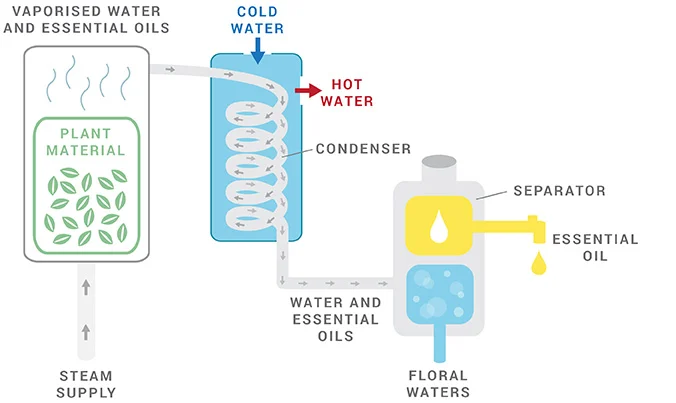
- Steam Distillation: The most widely used method, applied to almost all plants. The plant material can be fresh or dried and may be intact (e.g., whole leaves on shrubs) or minced (e.g., wood or bark). It consists of a heat generator (like a boiler), an alambic (the plant container), and a condenser with cooling cloth. The vapor produced by the heat is channeled into the alambic, which acts as a macerator, facilitating oil release from plants; it also heats up the material to around 100°C, allowing volatile molecules to escape and condense into liquid in the cooler section.
Steam distillation is characterized by its ability to effectively capture essential oils from plant materials with high water content. For example, steam distillation of peppermint (Mentha × piperita) can yield a concentrated oil that retains the characteristic aroma and therapeutic properties of the plant.
- Cold Pressing (Spremitura A Freddo): This technique specifically targets citrus fruits’ epicarps to extract essential oils. It involves removing the white layer from the citrus peel (albedo), followed by a pressing process that forces out oils along with water and juice.
Cold pressing is ideal for extracting the aromatic compounds present in the outer layer of citrus fruits, such as orange, lemon, or grapefruit peels. The extracted oil retains its natural flavor and aroma.
- Dry Distillation: Mainly used in industrial processes, like cracking for fuel production from wood or coal. It heats plant material at high temperatures (ranging 110°C to 900°C) without oxygen, risking chemical alterations of the extracted compounds, which could result in subpar quality oils or those that fail essential oil standards.
Dry distillation is not a recommended method for extracting Essential Oils due to potential damage to the delicate molecular structure and chemical alterations. However, it may be used in industrial settings where high temperatures are required.
The Significance of Authentic Extraction Methods
Given the widespread availability of products labeled as “Essential Oils” but claiming no official regulation from ISO or similar governing bodies, it’s crucial to distinguish genuine Essential Oils from adulterated ones. The only methods recognized by regulatory standards (ISO and EU) for defining an authentic Essential Oil are:
- Steam Distillation
- Cold Pressing of Citrus Fruits’ Epicarps
Misconceptions About Other Extraction Techniques
Products labeled as “Olio Assoluti” or those claiming to be extracted with methods like CO2 supercritical extraction, solvent extractions, or enfleurage cannot be categorized as Essential Oils according to ISO standards. These methods may involve different plant materials and do not align with the recognized techniques.
-
CO2 Supercritical Extraction: While this method involves high pressure and temperature conditions that facilitate oil release from plants, it’s not a recognized extraction technique by regulatory standards.
-
Solvent Extractions: This process involves using solvents like ethanol or hexane to extract essential oils. However, the resulting product may be adulterated with synthetic compounds, making it unsuitable for aromatherapy use.
-
Enfleurage: A traditional method involving the use of animal fat to absorb aromatic compounds from flowers, enfleurage is not recognized by ISO standards as a valid extraction technique for essential oils.
Conclusion: Understanding Authentic Extraction Methods
The art of extracting genuine essential oils is more than just a process; it’s about understanding the differences between various extraction methods, adhering to regulatory guidelines, and ensuring that only high-quality products meet the standards set by ISO. By choosing authentic Essential Oils derived from steam distillation or cold pressing, you can trust their quality and effectiveness for your health needs.
Frequently Asked Questions (FAQs)
- What is considered an “Essential Oil” according to ISO standards?
Only products obtained through officially recognized methods such as steam distillation or cold pressing of citrus fruits’ epicarps are considered Essential Oils.
- Why is it essential to know the extraction method for an Essential Oil?
Understanding how an Essential Oil was extracted directly correlates with its quality and purity, ensuring a safe and effective therapeutic use.
- Can I find genuine Essential Oils at regular supermarkets or should I look elsewhere?
While some supermarkets may carry products labeled as “Essential Oils,” they might not adhere to the recognized extraction methods. For authenticity and quality, consider purchasing from reputable sources that specialize in essential oils.
- What are some common misconceptions about Extraction Techniques?
Products extracted with CO2 supercritical extraction, solvent extractions, or enfleurage should not be labeled as Essential Oils according to ISO standards, even if marketed as such.
- How do I ensure the authenticity of my Essential Oil purchases?
Purchase from reputable suppliers who adhere to recognized extraction methods and supply transparent labels detailing the extraction technique used.
- What are the health benefits of using genuine Essential Oils?
By utilizing genuinely extracted essential oils, you can enjoy the therapeutic benefits while minimizing the risk of allergic reactions or adverse effects due to adulteration.
- Can I make my own Essential Oil at home?
While possible with simple equipment, producing high-quality Essential Oils requires specialized knowledge and equipment to guarantee purity and effectiveness.
- How do I select a reliable supplier for essential oils?
Look for companies that are transparent about their extraction methods, supply certified products from recognized organizations, and provide clear labels detailing the use of each oil.
- Can Essential Oils be used in skincare routines or health treatments without consulting a healthcare professional?
No, Essential Oils should only be used under medical guidance or with proper training on safe application and dosing. Always consult a qualified healthcare professional before using essential oils for therapeutic purposes.
-
How long do I need to store my Essential Oil collection safely?
Store Essential Oils in cool, dark places away from direct sunlight, as exposure can lead to degradation of the active compounds. Use a tightly sealed container with a dropper lid and keep it at room temperature (around 15-20°C or 59-68°F) for optimal preservation.
In conclusion, understanding the techniques behind essential oil extraction is crucial in ensuring that you’re utilizing high-quality products for therapeutic purposes. By recognizing authentic Essential Oils derived from recognized extraction methods, you can unlock their full potential and explore a world of natural healing possibilities.


