
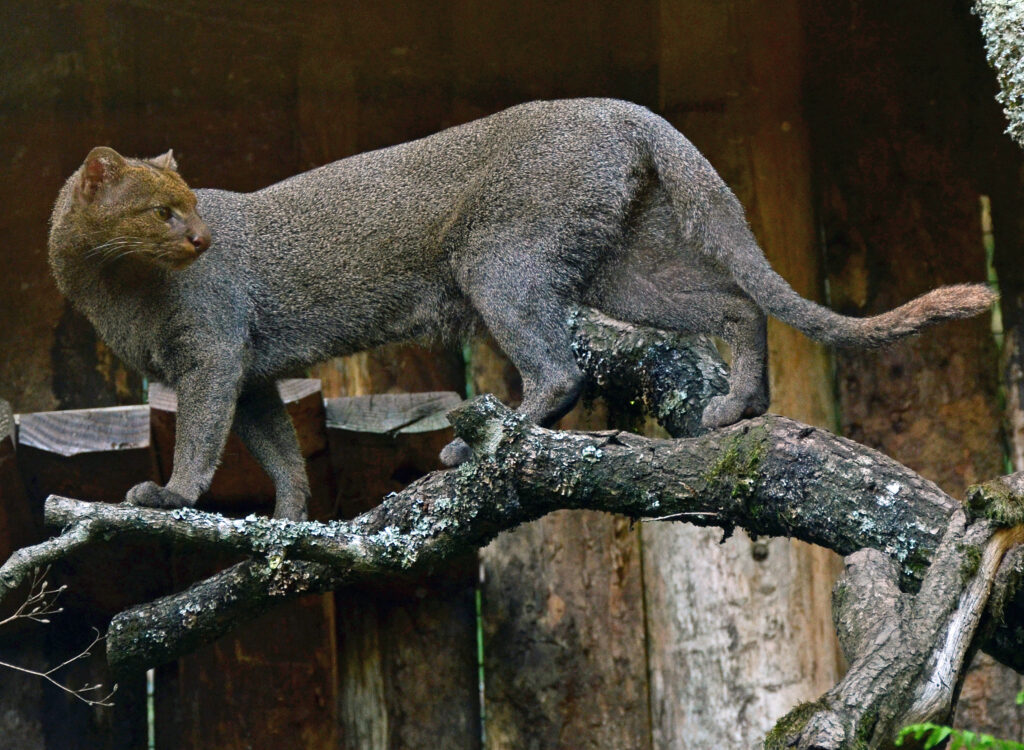
As we venture into the realm of exotic wildlife, few animals capture our imagination quite like the jaguarundi. With its sleek, long body and short legs, it’s often mistaken for a domestic cat, yet it belongs to the Felidae family. Let’s delve into the characteristics, habitats, and behaviors of this enigmatic creature, as well as those of its adorable cubs.
Physical Characteristics
The jaguarundi boasts medium-sized proportions, with adults reaching lengths of 30-50 cm (12-20 inches) and weighing between 3-10 kg (6.6-22 pounds). Its uniform brown, grey, or golden coat, adorned with reddish markings, sets it apart from other felines. In contrast to its robust size, the jaguarundi’s short legs and small head make it appear almost…cute.
One of the most striking features of the jaguarundi is its long, slender tail, which can reach up to 30 cm (12 inches) in length. This tail serves as a crucial balance aid when navigating tree branches or making sharp turns during hunting. Its eyes are also particularly noteworthy, with vertical pupils that seem almost cat-like.
Historical Background
In the past, the jaguarundi was considered a distinct species due to its coloration. The grey-coated jaguarundi was known as “yaguarondi,” while the reddish variant was called “eyra.” Over time, however, it’s become clear that these two forms are actually the same species. This unique characteristic has led to various nicknames and regional names for this elusive animal, including “little lion” in Spanish-speaking countries.
Habitat and Distribution
The jaguarundi inhabits a range of environments, from grasslands to forests, particularly near water sources. Its preferred habitat is the flat plains, but it can adapt to other landscapes, such as dry forests or humid, elevated regions. Although its native range spans Central and South America, recent sightings have been reported in the southern United States, particularly in Texas and Florida.
In their natural habitats, jaguarundis often live in areas with dense vegetation, which provides them with cover and shelter from predators. They are also known to inhabit areas with abundant food sources, such as hunting grounds near waterways or agricultural fields.
Behavior and Diet
Unlike its feline counterparts, the jaguarundi is not a day-active animal. Instead, it prefers to rest during the day and hunt at night. Its agility, inherited from its ancestors, allows it to navigate tree branches with ease, even if it doesn’t always hunt in this manner.
Their diet consists mainly of small mammals, birds, reptiles, and insects. They are also known to occasionally catch fish and consume plant matter, such as fruits or vegetation they encounter while foraging. This varied diet reflects their adaptability to different environments.
In addition to hunting, jaguarundis have been observed playing with their surroundings, often batting at objects or chasing after lizards and other small animals. These playful behaviors suggest a high level of intelligence and curiosity in these fascinating creatures.
Reproduction and Cubs
The jaguarundi’s reproductive cycle is relatively constant throughout the year, with a gestation period of approximately 70 days. Litters typically consist of two to four cubs, born in burrows or tree cavities.
As they mature, the cubs lose their distinctive markings and develop into adult jaguarundis. At around six weeks old, these young felines begin to eat on their own, gradually developing their hunting skills under the guidance of their mother. The average lifespan of a wild jaguarundi is about four to five years, although captive individuals have been known to live up to eight years.
Social Structure and Communication
Jaguarundis are generally solitary animals, only coming together during mating season or when sharing resources like food or shelter. They communicate with each other through a range of vocalizations, including chirps, whistles, and growls. These sounds can be used to signal aggression, courtship, or warning calls.
Interestingly, jaguarundis have also been observed engaging in playful interactions, such as chasing and pouncing on each other’s tails or ears. This social behavior suggests a level of complexity and intelligence in these animals, which is often overlooked due to their elusive nature.
Conservation Status
As with many wild species, the jaguarundi faces threats from habitat loss and fragmentation. The destruction of its natural habitats has reduced its population size and fragmented its ranges, making it increasingly difficult for the species to survive.
Additionally, jaguarundis are often caught in snares set by hunters or farmers, who view them as pests due to their predation on small animals that damage crops. In some areas, they are also hunted for their fur or meat.
Conclusion
In conclusion, the jaguarundi’s unique blend of physical characteristics and behaviors has captivated us with its enigmatic nature. Through an exploration of its habitat, diet, and reproduction patterns, we’ve gained a deeper understanding of this fascinating species. Whether in their natural habitats or as pets, these captivating creatures remind us of the importance of conservation efforts to protect our planet’s precious wildlife.
FAQs
- What is the average lifespan of a jaguarundi?
The average lifespan of a wild jaguarundi is approximately four to five years, while captive individuals can live up to eight years.
- How often do jaguarundis reproduce?
Jaguarundis have a relatively constant reproductive cycle throughout the year, with a gestation period of around 70 days.
- What is the typical diet of a jaguarundi?
Their diet consists mainly of small mammals, birds, reptiles, and insects, as well as occasionally caught fish and plant matter.
- Can jaguarundis be domesticated?
No, jaguarundis are not typically considered suitable for domestication due to their wild nature and specific habitat requirements.
- Where can I find jaguarundis in the wild?
Jaguarundis inhabit a range of environments, including grasslands, forests, and flat plains, primarily in Central and South America.
- Are jaguarundis endangered?
While they are not currently listed as an endangered species, habitat loss and fragmentation pose threats to their populations and habitats.
- Can I see jaguarundis in zoos or wildlife sanctuaries?
Yes, some zoos and wildlife sanctuaries offer exhibits featuring jaguarundis.
Glossary of Terms
- Yaguarondi: an older term used to refer to the grey-coated jaguarundi.
- Eyra: an older term used to refer to the reddish variant of the jaguarundi.
- Little lion: a nickname used in Spanish-speaking countries to describe the jaguarundi.
Fun Facts
- Jaguarundis have been known to live up to 15 years in captivity, making them one of the longer-lived felines in the Felidae family.
- Despite their small size, jaguarundis are capable of reaching speeds of up to 40 km/h (25 mph) when chasing prey or escaping predators.
- Jaguarundis have a unique way of communicating with each other through scent marking. They deposit pheromones on objects like trees or rocks to signal their presence and territory.
Additional Resources
For those interested in learning more about the jaguarundi, there are several online resources available, including:
- The International Union for Conservation of Nature (IUCN) Red List
- The Jaguarundi Conservation Project
- The National Geographic Society’s jaguarundi page


