
The Benefits of E-Learning for the Environment
The internet connection has never been as useful as it is today. The web is a vast resource if used correctly, and online learning is definitely one of its advantages.
In recent years, there has been a significant increase in the use of e-learning platforms, and it’s easy to see why. The modern lifestyle is often frenetic and stressful, and not everyone finds the time or willingness to leave home after work. There are actually many situations that can drain energy, and sometimes even require dealing with heavy traffic after a long day at work. Online learning simplifies everything, offering a different motivation to delve deeper into new subjects.
One of the most popular choices for online learning is acquiring a foreign language, such as English. At this point, you may have come across people who always had a dream of learning a foreign language, and with online courses, it has become possible. There are thousands of online English courses and even courses for other languages, but not only that, because e-learning covers a wide range of possibilities to learn any subject or create the foundations for a new job.
With a simple connection, you can create a network of people from all over the world with the same learning goals. This is especially beneficial for students who are looking to improve their language skills and connect with others who share similar interests.
In general, e-learning offers numerous benefits, and to clarify this point we have decided to summarize them below:
Reducing Pollution
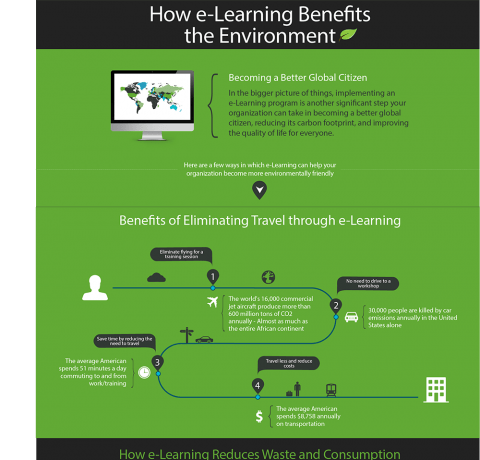
Online learning allows us to avoid traveling and perform any activity without taking a car or plane. Before e-learning was widely available, the possibility of studying from home was limited, and people traveled much more than today.
For example, imagine you’re going to attend a lecture on climate change at your local university. Instead of driving to campus, you could stay home and watch the lecture online. This simple action can significantly reduce greenhouse gas emissions from transportation. Additionally, many online courses are hosted on servers that use renewable energy sources, further reducing the carbon footprint.
However, not only for learning-related reasons but also for work-related reasons. Today, the number of companies that offer telework or hybrid solutions allows us to reduce pollution related to these types of journeys.
Energy Savings
Just as CO2 emissions, the high amount of energy required to heat and illuminate schools around the world has a strongly negative environmental impact. The same applies to the quantity of materials used for building new structures and learning centers.
According to a research conducted by the Open University Design Innovation Group in the UK, e-learning would allow for an energy savings of up to 90%. This is because online courses eliminate the need for physical buildings, reducing the demand on energy systems. Additionally, many online platforms are designed to be energy-efficient, using servers and data centers that are powered by renewable energy sources.
Reducing Paper Consumption
Online courses, such as English or any other subject, do not require thousands of printed sheets. Today, deforestation has a strong impact on the environment, and paper production is one of the main causes of this serious problem.
Learning online allows us to avoid using paper. A good method for avoiding this practice is to use local library books or create your own personal library when you want to consult them. An alternative is to use recycled paper or low-impact books.
For example, imagine you’re looking for a textbook on environmental science. Instead of buying a physical copy, you could access an e-book version online. This not only reduces the demand for paper products but also helps to conserve natural resources.
Socializing with the World
There are millions of people around the world who want to learn English or other subjects. You’ll be surprised by the number of online communities that form due to shared interests. Students often help each other, especially when it comes to adults.
To think that e-learning is a completely solitary work is not entirely correct, unless it’s what the student wants. Many online platforms offer forums and discussion groups where students can connect with others who share similar interests.
Networking is also important, especially online, because it allows us to socialize with people who share similar interests located all around the world. For example, imagine you’re looking for language exchange partners or study buddies. You could join online communities and connect with others who are interested in the same subjects.
In conclusion, learning online offers many benefits for the environment and can be an effective way to reduce our carbon footprint.
Frequently Asked Questions
Q: What are the main environmental benefits of e-learning?
A: E-learning reduces pollution, energy consumption, and paper usage, making it a more environmentally friendly option than traditional classroom-based learning.
Q: How does online learning help reduce pollution?
A: By avoiding travel, e-learning significantly reduces greenhouse gas emissions from transportation. Additionally, many online courses are hosted on servers that use renewable energy sources.
Q: Can e-learning really save up to 90% of energy consumption?
A: According to a study by the Open University Design Innovation Group in the UK, e-learning has the potential to reduce energy consumption by as much as 90%.
Q: How does online learning impact paper usage?
A: Online courses eliminate the need for printed materials, reducing deforestation and conserving natural resources.
Q: Can I still socialize with others while using online learning platforms?
A: Absolutely! Many e-learning platforms offer forums, discussion groups, and live chat functions that allow you to connect with classmates and instructors from around the world.
Q: What are some tips for using e-learning in a sustainable way?
A: To minimize your environmental impact when using e-learning, try to use public libraries or digital resources instead of buying physical books. You can also opt for eco-friendly paper options or recycled materials whenever possible.
Q: Can I still earn a degree through online learning if I don’t have access to reliable internet?
A: Many universities and colleges offer alternative formats for their courses, such as on-campus attendance or offline study programs. Be sure to check with your institution about their policies and options.
Q: How can I make the most of e-learning while minimizing my environmental impact?
A: To maximize the benefits of e-learning while reducing your environmental footprint, try to use energy-efficient devices, turn off screens when not in use, and reduce paper waste by using digital notes and resources.
Tips for Reducing Your Environmental Impact While Using E-Learning
Here are some additional tips that can help you minimize your environmental impact while using online learning platforms:
- Use public libraries: Instead of buying physical books or textbooks, try using public libraries to access e-books and other digital resources.
- Choose eco-friendly paper options: If you need to print out materials, choose eco-friendly paper options such as recycled paper or low-impact paper.
- Reduce energy consumption: Use energy-efficient devices, turn off screens when not in use, and reduce your overall energy consumption to minimize your environmental impact.
- Use digital notes: Instead of writing down notes by hand, try using digital tools such as note-taking apps or digital sticky notes to reduce paper waste.
- Participate in online communities: Join online forums and discussion groups to connect with other students and share knowledge and resources.
- Choose courses that align with your values: When selecting online courses, choose those that align with your environmental values and goals.
- Use sustainable transportation: If you need to travel for online learning purposes, try using sustainable transportation options such as public transportation or walking/biking.
By following these tips and being mindful of our environmental impact, we can make e-learning a more sustainable option and reduce our carbon footprint.


