
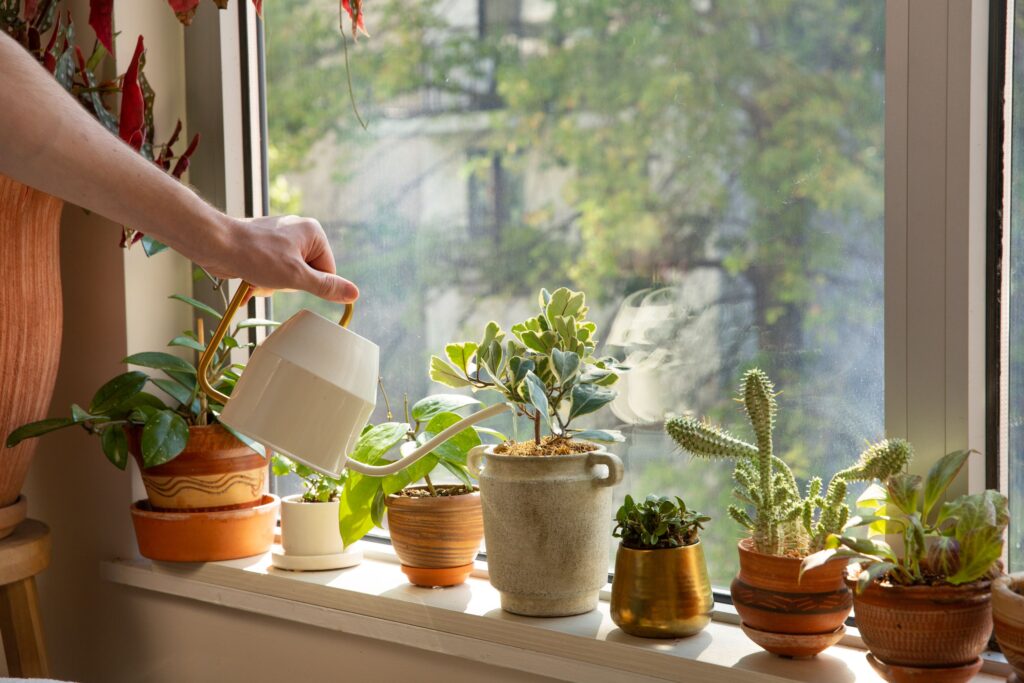
Watering your houseplants is an essential aspect of their care, and making the wrong moves can lead to their demise. Bad habits in irrigation are often the primary cause of death for indoor plants, not just incorrect dosages (too much or too little water) but also incorrect watering methods.
When deciding to cultivate indoor plants, it’s crucial to adopt good irrigation habits based on constancy, attention, and observation. By understanding your plant’s specific needs and adapting to their requirements, you can provide the right amount of water for optimal growth.
Factors to Consider When Watering Your Houseplants
Each plant has unique needs, and providing general guidelines can be challenging. The truth is that every plant requires precise care, and understanding its specific requirements is essential for successful growth.
There are plants that thrive with minimal watering, while others require consistent moisture levels. Some plants are resistant to dry conditions, while others need frequent watering to survive. Furthermore, the time of year and location of your plant also impact its watering needs: a plant exposed to full sun will need more water than one in a shaded area.
For example, succulents like cacti and aloe vera can tolerate low water levels, but they still require some moisture to survive. On the other hand, ferns and peace lilies prefer high humidity and consistent moisture, making them more demanding plants.
Understanding Plant Watering Schedules
Creating a watering schedule is essential for maintaining healthy plant growth. However, it’s crucial to consider the unique needs of each plant when setting up your schedule. Some plants may require daily watering, while others can go weeks without water.
For instance, the African Violet requires consistent moisture levels, making it an excellent candidate for a daily watering schedule. In contrast, the Spider Plant is more adaptable and can survive with infrequent watering.
To create an effective watering schedule, consider the following factors:
- Plant species: Different plant species have unique watering requirements.
- Environmental conditions: Weather, humidity, and temperature can impact your plants’ needs.
- Pot size and type: The size and material of your pot can affect water retention and drainage.
- Soil mix: The composition of your soil mix can influence watering needs.
Using Sensors to Monitor Your Plants’ Needs
There are various sensors available on the market that can be connected to your smartphone, allowing you to monitor your plants’ soil moisture levels and receive notifications when they need watering. These sensors can provide peace of mind and help you ensure your plants receive the right amount of water.
Beyond sensors, there are vases with built-in irrigation systems that automate this process, making it easier for you to care for your plants. These advanced watering systems often come equipped with sensors, timers, and adjustable settings, allowing you to tailor the watering schedule to your plant’s specific needs.
Tips for Effective Watering
To optimize your watering routine, follow these tips:
- Group similar plants together: Grouping similar plants in the same area can make maintenance more efficient.
- Be consistent: Consistency is key when it comes to watering; stick to a schedule and avoid adjusting it frequently.
- Observe your plant’s responses: Pay attention to your plant’s reactions to changes in moisture levels, and adjust your watering schedule accordingly.
- Avoid over- or under-watering: Be mindful of the amount of water you’re applying, as both too little and too much can be detrimental to your plant’s health.
- Use a long-handled watering can: A long-handled watering can allows you to deliver water directly to the soil without getting leaves wet.
Additional Tips for Successful Watering
After watering, make sure to empty any excess water from the saucer or tray to prevent bacterial growth. When providing water, be thorough: plants need water that penetrates the soil, not just a quick splash on the surface. This will help prevent damage to their root systems.
Water your plants in the morning when evaporation rates are lower, allowing you to deliver more water without losing it through evaporation. Avoid watering during peak sun hours to minimize the risk of fungal infections and root damage.
Selecting the Right Water for Your Plants
Not all plants tolerate the same types of water. Be mindful of your plant’s specific needs regarding water quality: some plants can’t handle chlorine or calcium-rich tap water, so it’s best to use filtered or rainwater instead.
In addition to selecting the right water, consider using a fertilizer specifically designed for indoor plants. This will provide essential nutrients and promote healthy growth.
Common Mistakes to Avoid
To avoid common mistakes when watering your houseplants, follow these tips:
- Don’t over-water: Too much water can lead to root rot, fungal diseases, and other problems.
- Avoid under-watering: On the other hand, plants that are consistently dry may develop stress, leading to decreased growth and health issues.
- Don’t use tap water with chlorine: Chlorine can be toxic to some plant species, so consider using filtered or rainwater instead.
- Be cautious when fertilizing: Over-fertilization can harm your plants; research the specific needs of each plant before adding any fertilizer.
Conclusion
Watering your houseplants requires attention and observation to ensure they receive the right amount of water for optimal growth. By understanding your plant’s specific needs, creating a watering schedule that caters to their requirements, and adapting your watering routine accordingly, you can provide the perfect balance of moisture and nutrients.
By following these guidelines and tips, you’ll be well on your way to becoming an expert in houseplant care, ensuring that your plants thrive and flourish in their environment.


