
As we strive to live a healthier lifestyle, many of us turn to natural and organic products to avoid harsh chemicals. But have you ever stopped to think about the so-called “non-stick” pans that are lurking in your kitchen?
What’s Really Going On with Non-Stick Pans?
The production of non-stick pans involves the use of a chemical called perfluorooctanoic acid (PFOA), which has been linked to cancer and other health problems. In 2006, the US Environmental Protection Agency (EPA) classified PFOA as a “probable human carcinogen,” and many countries have since banned its use.
But what about Italy? Researchers at the Institute of Chemistry and Technology of Polymers (Ictp) at the National Research Council (CNR) in Naples found that non-stick pans pose serious health risks due to their high levels of PFOA. The production of Teflon, a common material used in non-stick pans, involves the use of PFOA.
The Risks of Using Non-Stick Pans
So, what’s the big deal about non-stick pans? Well, they’re not as safe as we think. At high temperatures, the non-stick coating can break down and release toxic chemicals like PFOA into your food. And when you wash them, you may be exposing yourself to even more toxins.
The Temperature Trap
One of the biggest problems with non-stick pans is that they’re not designed for high heat. The Teflon coating is only stable at temperatures between -200°C and +260°C, which means it can break down and release chemicals when heated above 200°C. So, if you leave a non-stick pan on the stovetop for too long, you may be releasing PFOA into your food.
For example, cooking eggs in a non-stick pan at high temperatures can lead to the release of PFOA. Similarly, heating up oil or butter in a non-stick pan can cause the Teflon coating to break down and release toxic chemicals into the air.
The Washing Nightmare
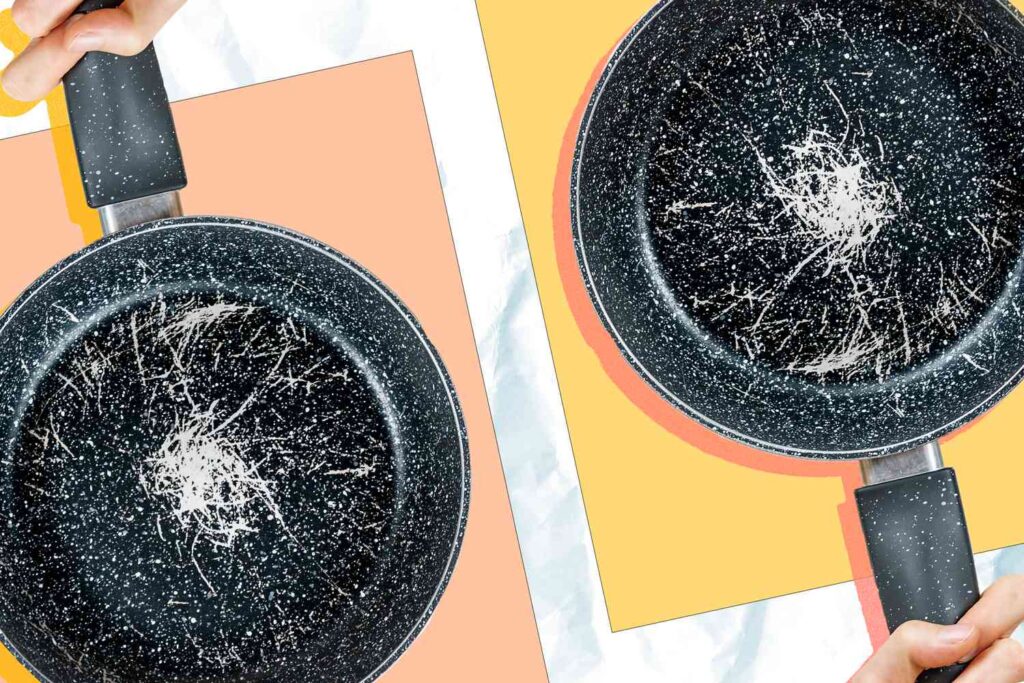
And don’t even get me started on washing non-stick pans. Abrasive sponges can damage the Teflon coating, making it more likely to release chemicals when heated. So, what’s a cook to do?
Some experts recommend using a soft cloth and mild soap to clean non-stick pans, but this may not be enough to remove all of the toxic chemicals that are left behind.
Alternatives to Non-Stick Pans
Fortunately, there are plenty of alternatives to non-stick pans that are safer and healthier for you. Here are some options:
- Cast iron pans: These are durable, non-toxic, and can be seasoned for a non-stick surface.
- Stainless steel pans: These are resistant to corrosion and can withstand high heat.
- Aluminum pans: These are lightweight and conduct heat well, making them perfect for stir-fries.
Benefits of Switching to Safe Pans
By switching to safer alternatives like cast iron, stainless steel, and aluminum pans, you can cook healthy meals without exposing yourself to toxins. Here are some benefits of using these types of pans:
- Improved health: By avoiding non-stick pans, you can reduce your exposure to toxic chemicals like PFOA.
- Increased durability: Cast iron, stainless steel, and aluminum pans are all more durable than non-stick pans, which means they can last longer with proper care.
- Eco-friendly: Many of these alternatives are made from natural materials that are biodegradable and environmentally friendly.
Avoid These Pans Too
In addition to non-stick pans, there’s another type of pan that you should avoid: copper pans with a tin coating. The tin can leach into your food at high temperatures, and the copper itself is toxic.
How to Choose Safe Cooking Pans
If you’re in the market for new cooking pans, here are some tips for choosing safe alternatives:
- Look for certifications: Look for certifications like non-toxic or eco-friendly when shopping for cooking pans.
- Read labels carefully: Check the ingredients list and look for words like “PFOA-free” or “non-stick coating made from natural materials.”
- Research brands: Research different brands to see which ones are known for producing safe and healthy cooking products.
Conclusion
So, what’s the bottom line? Non-stick pans may seem convenient, but they’re not worth the risks to your health and the environment. By switching to safer alternatives like cast iron, stainless steel, and aluminum pans, you can cook healthy meals without exposing yourself to toxins.
Frequently Asked Questions
- Q: Are all non-stick pans made with PFOA?
A: No, not all non-stick pans are made with PFOA. However, many brands do use this chemical in their products. - Q: Can I still cook healthy meals using non-stick pans?
A: While it’s possible to cook healthy meals using non-stick pans, the risks associated with PFOA and other chemicals make them a less-than-ideal choice. - Q: What are some safe alternatives to non-stick pans?
A: Cast iron, stainless steel, and aluminum pans are all great options for cooking healthy meals without exposing yourself to toxins. - Q: Can I avoid PFOA by using a ceramic non-stick pan?
A: While ceramic non-stick pans may be PFOA-free, they can still release chemicals when heated above 200°C. - Q: How do I clean and maintain my non-stick pans safely?
A: To clean your non-stick pans safely, avoid using abrasive sponges or harsh chemicals. Instead, use a soft cloth and mild soap. - Q: Can non-stick pans be recycled?
A: Unfortunately, many non-stick pans are not recyclable due to the presence of toxic chemicals like PFOA. - Q: Are there any new technologies that replace PFOA in non-stick pans?
A: Yes, some brands are now using alternative coatings that are free from PFOA and other toxins. However, more research is needed to determine their safety and effectiveness. - Q: Can I still use a non-stick pan if I have PFOA-related health concerns?
A: If you have concerns about PFOA or other chemicals in your food, it’s best to avoid using non-stick pans altogether.
By being informed and making conscious choices, we can create a healthier kitchen that prioritizes our well-being and the planet’s.


