
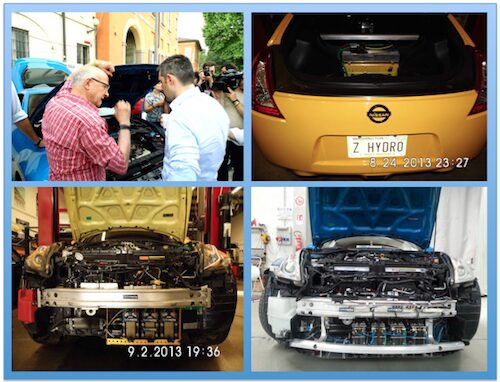
Imagine a world where cars are powered not by fossil fuels, but by water. Sounds like science fiction, right? Well, meet Lorenzo Errico, an Italian engineer who has made this vision a reality with his innovative system called Hydromoving. In this article, we’ll delve into the world of water-powered autos and explore how this technology is set to revolutionize mobility.
What is Hydromoving?
Hydromoving is a system that uses electricity generated from water to power cars. It’s like a breath of fresh air for the automotive industry, offering a cleaner, more sustainable alternative to traditional fossil fuel-based engines. The system consists of an electrolyzer that extracts hydrogen from water, which is then burned in a combustion chamber to produce energy.
How Does it Work?
The Hydromoving system works by using electricity generated from water to power a small amount of fossil fuel, which is used to generate the high voltage needed for the electrolysis process. The resulting hydrogen is then stored in a tank and fed into the combustion chamber, where it’s burned with oxygen to produce energy.
Key Benefits
The Hydromoving system offers several key benefits over traditional fossil fuel-based engines:
- Zero Emissions: Hydromoving produces no emissions, making it an attractive option for environmentally conscious drivers.
- Increased Efficiency: The system can achieve efficiencies of up to 50%, compared to the 20-30% efficiency of traditional fossil fuel-based engines.
- Reduced Dependence on Fossil Fuels: By using water as a source of energy, Hydromoving reduces our dependence on finite fossil fuels.
The Future of Mobility
As the world continues to grapple with climate change and air pollution, innovative technologies like Hydromoving are set to play a crucial role in shaping the future of mobility. With its potential to reduce emissions and increase efficiency, Hydromoving is an exciting development that could revolutionize the way we think about transportation.
A Brief History
The concept of water-powered autos dates back to 1981, when Italian engineer Lorenzo Errico conducted experiments on a Saab 900 Turbo Sport. However, it wasn’t until 2007 that Errico’s work gained international attention, with Marangoni SPA commissioning a study on the feasibility of Hydromoving.
Challenges and Limitations
While Hydromoving is an innovative technology, there are several challenges and limitations that need to be addressed before it can become a mainstream solution:
- Scalability: The current system requires significant amounts of water to generate electricity, which can lead to scalability issues.
- Cost: The cost of implementing Hydromoving in existing vehicles is currently higher than traditional fossil fuel-based engines.
- Infrastructure: The infrastructure needed to support Hydromoving is still in its infancy.
Conclusion
The water-powered auto is an innovative technology that has the potential to revolutionize mobility. With its zero emissions, increased efficiency, and reduced dependence on fossil fuels, it’s an attractive option for environmentally conscious drivers. As we look to the future, one thing is clear: Hydromoving is set to play a significant role in shaping the way we think about transportation.
FAQs
- Q: How does Hydromoving work?
A: Hydromoving uses electricity generated from water to power a small amount of fossil fuel, which is used to generate the high voltage needed for the electrolysis process. - Q: What are the benefits of Hydromoving?
A: The benefits of Hydromoving include zero emissions, increased efficiency, and reduced dependence on fossil fuels. - Q: How does Hydromoving compare to traditional fossil fuel-based engines?
A: Hydromoving is more efficient than traditional fossil fuel-based engines, achieving efficiencies of up to 50%. - Q: What is the potential impact of Hydromoving on climate change and air pollution?
A: Hydromoving has the potential to significantly reduce emissions and contribute to a cleaner environment. - Q: Is Hydromoving still in its infancy?
A: While Hydromoving is an innovative technology, it’s not entirely new. Lorenzo Errico conducted experiments on water-powered autos as early as 1981. - Q: Who has commissioned studies on Hydromoving?
A: Marangoni SPA has commissioned a study on the feasibility of Hydromoving, which was completed in 2009. - Q: What is the current status of Hydromoving?
A: While Hydromoving is not yet widely adopted, it’s gaining international attention and recognition as an innovative technology with potential to revolutionize mobility. - Q: Can I install Hydromoving on my existing car?
A: Yes, a special kit has been developed for installation on existing cars, making it accessible to a wider range of drivers.
Conclusion
The water-powered auto is an exciting development that could revolutionize the way we think about transportation. With its potential to reduce emissions and increase efficiency, Hydromoving is set to play a significant role in shaping the future of mobility.


